
CASE STUDIES
At the Feet of Jesus ~ A Christ-Centred Curriculum and Mission Strategy that Mobilizes Youth for Transformational Youth Ministry
1. Introduction

AT THE FEET OF JESUS
HURRY!! OUR CHRIST-CENTERED YOUTH MINISTRY IS RECRUITING!
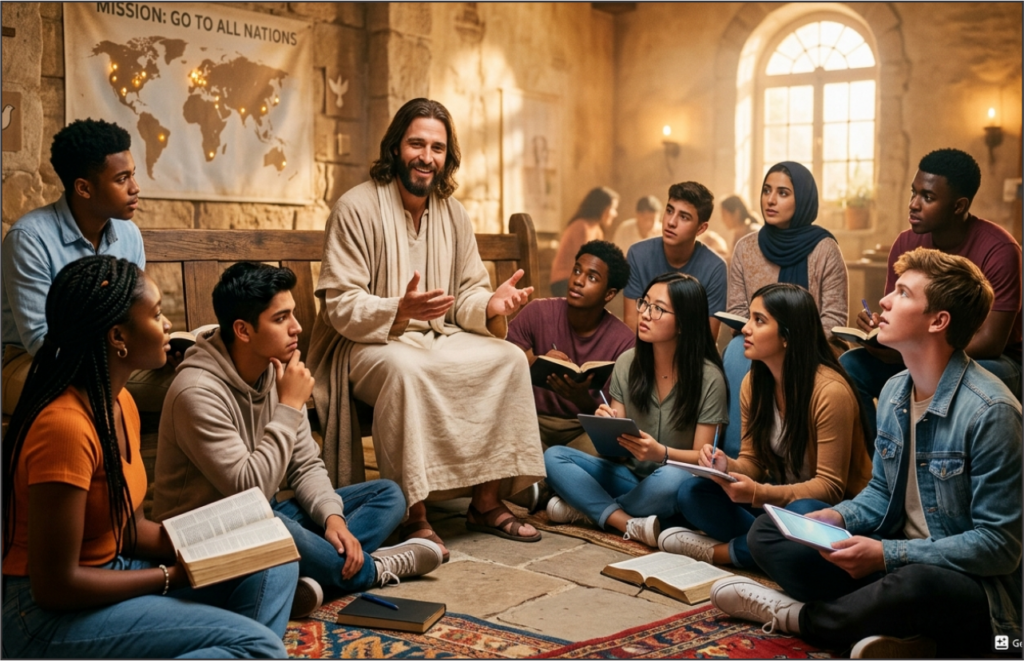
According to data available from the military website militaryhistorynow.com, a momentous event happened in Pelham Manor, New York just after America’s declaration of war against Germany in 1917. A 40-year-old veteran magazine illustrator composed a drawing for the United States Army‘s recruitment campaign that has used been used to colourfully introduce this material. As can be seen above, the drawing featured a stern-faced Uncle Sam pointing outward with his right index finger, his eyes glaring directly at the viewer. Even though the original caption below in bold red and blue capital letters read: “I Want YOU for U.S. Army”; we’ve however edited it to appropriately read: ‘I WANT YOU AT THE FEET OF JESUS’. So just how was this simple poster powerful then and even till now?
Well history informs us that immediately after the initial draft, four million copies of the poster were quickly printed and plastered onto walls and signposts from Maine to California. Within weeks, just about every American citizen had seen it. Now if a simple poster could go viral within weeks to recruit men not for a feast of pleasure but rather for a war of death, what then is it that the US Army got right that we in Transformational Youth Ministry can also get right? It is therefore the aim of this writing to attempt to draft a Christ-centred curriculum and mission strategy that mobilizes youth for Transformational Youth Ministry by designing Christo-centric and needs sensitive curriculum for teaching youth, addressing contemporary youth issues and Crafting missional strategy for youth engagement.
2. The Key Elements in the Transformational Youth Ministry Curriculum and Mission Strategy
According to Sirett, C. (2011) Curriculum in its broadest meaning includes every activity, experience and all the content information that is planned for learners in a teaching session. Curriculum in its narrow meaning refers to the printed lesson outline and materials, purchased or self-designed from which the teacher teaches. According to Oyugi, P.M. (2018), there are four key things that must be considered when designing a winning Youth Ministry strategy. Analysed, these include: Biblical value formation, addressing worldview and identity crisis, establishing a sound theological basis and a proper structure. In view of this, how do we navigate through transformational teaching in youth ministry?
2.1 The Spirit and the Word
Foundationally, the Word of God according to Oyugi is the basis for the Transformational Youth Ministry. Therefore the first element to consider in the curriculum is God’s Word as inspired by the Holy Spirit. He declares: The key to sustaining the mission of the church on earth is a structured and strategized youth ministry based on the biblical principles founded on the Holy Scriptures. Every mission oriented church should have a well structured and strategized youth ministry that exemplifies the life of Jesus Christ. Cole, Cameron and Jon Nielson (2016) concludes: a slick youth program is no substitute for a youth pastor who unapologetically teaches the Bible
Therefore the primary call is to model the entire Ministry as per the Word as the Spirit provides illumination. This modelling should be done through anointed teaching, application and practice of the Word during: Bible Studies, retreats, service projects and mission trips. However since all these are not happening in a vacuum: how then do we address the contemporary youth issues especially what most of them currently face in order to see them transformed?
2.2 Current Issues
A transformational youth curriculum cannot forget or ignore issues that they may face in their daily lives since it has a great effect on their spirituality. Therefore opportunities for the youth to discuss these issues and incorporate their faith into them must be created. A good way to do this is to periodically incorporate issues into the typical youth group gatherings by offering gatherings focused on issues. Examples can include dating, social media, drugs and alcohol, peer pressure, etc. Now how do we handle their relationships?
2.3 Social (especially Relationships)
Transformational Youth Ministry must contain a strong and healthy social setting because Jesus’s own ministry approach was very social in nature. He would meet people where they were at and engage them through things as simple as meals in order to build relationship and ultimately teach them. Thus the parents and where possible the wider family must never ever be left out during these ministry sessions! Examples of social events are game nights, movie nights, sports, bonfires, etc. How about their overall spiritual life?
2.4 Spiritual
Probably the most important aspect of Transformational Youth Ministry is leading teenagers into a relationship with Christ through an encounter with the Holy Spirit. Anointed spiritual elements should, to a great measure, be a part of any ministry experience. According to Foster. R.J. (1978), there’re Inward Disciplines namely: Meditation, Prayer, Fasting, Study. Again, there’re outward Disciplines namely: Simplicity, Solitude, Submission and Service. Finally there’re corporate Disciplines namely: Confession, Worship, Guidance and Celebration. This is how to stir up the spiritual aspects of the Transformational journey. How then do we activate them for the call ahead?
2.5 Service (especially the Great Commission)
According to Matthew 28:18-20, the Gospel message is a charge to go out and serve. Offering activities geared toward service gives Youths a practical way to incorporate their faith. Examples can include service projects, mission trips, or visiting nursing homes or orphanages. How then do we handle these practical matters of preparing the transformational youth to handle these practical aspects of the Great Commission?
3. Work Plan Mobilization Strategy
In order to put these things into practice, we will have to begin with a year plan. How will it look like?
3.1 Suggested Theme
Example: AT THE FEET OF JESUS!
3.2 Suggested Meeting Time
Example: Every Sunday 9:30 AM once a week or every other week or twice a month, or once a month.
3.3 Creating a focus for each semester
A bi-annual breaking of the theme into: At the Feet of Jesus through the Word (Theory Lessons) and Missioning from the Feet of Jesus by the Spirit’s Power (Practical Lessons)
3.4 Mapping out the year
Itemizing each month of the year to clearly capture the two focus elements of: Word at the Feet of Jesus Sessions and Mission by the Spirit’s Power Sessions
4. The Meeting Outlines and Contents
Here we simply roll out the schedule per unit after mapping the year. Following is the breakdown of every month as guided by Sirret.
January – Word at the Feet of Jesus Sessions & Mission by the Spirit’s Power Sessions
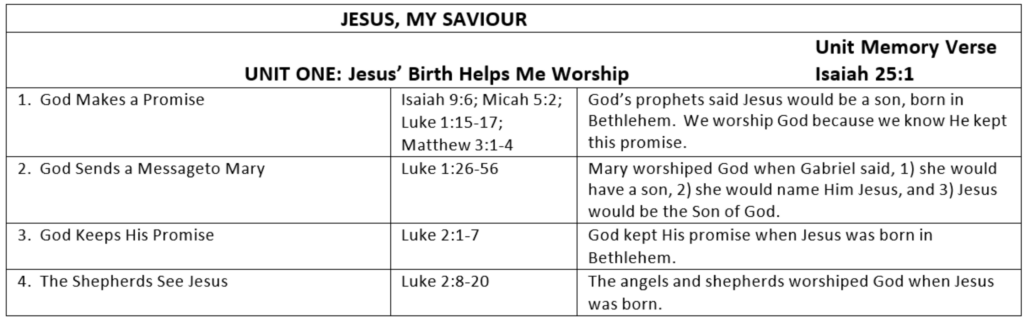
*Orientation – Return from the Christmas Break *1st Session – Unit Kick-off through Introductions *2nd Session – Intro the Person of Jesus *Discussion & Debate – Pro-life issues
February – Word at the Feet of Jesus Sessions & Mission by the Spirit’s Power Sessions

*1st Session – Reconciliation and Reflections *2nd Session –Almsgiving (incorporate service project) *Social Moments – Sports Day/Fireside Chats
March – Word at the Feet of Jesus Sessions & Mission by the Spirit’s Power Sessions
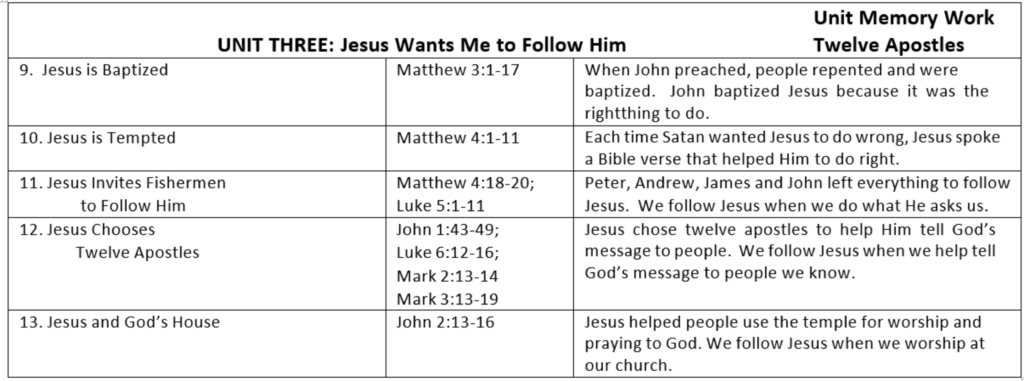
*1st Session – Baptism Service *2nd Session – Christian Dating *Social Moments – Mountain Hiking Outing *Discussion & Debate – What is the Lord’s Table?
April – Word at the Feet of Jesus Sessions & Mission by the Spirit’s Power Sessions

*1st Session – Confession Moments *2nd Session – Living out the Christian Life and Call *Social Moments – Community Outreach through Environmental Initiative like Tree Planting *Discussion & Debate – The Lord’s Call
May – Word at the Feet of Jesus Sessions & Mission by the Spirit’s Power Sessions
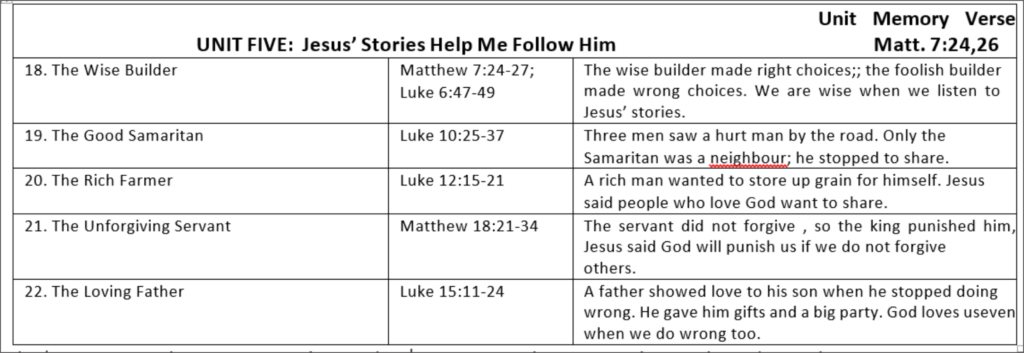
*1st Session – Christian Foundation *2nd Session – Christian Relationships *Social Moments – Charity Drive for a Children’s Home *Discussion & Debate – What is Love?
June – Word at the Feet of Jesus Sessions & Mission by the Spirit’s Power Sessions

*1st Session – Worship Sunday *2nd Session – Worship Tutorials *Social Moments – Receiving a Surprise Christian Worship Guest Minister *Discussion & Debate – What is Fame?
Last Part of the Half-Year i.e. July-December: Word at the Feet of Jesus Sessions and Mission by the Spirit’s Power Sessions
July – Word at the Feet of Jesus Sessions and Mission by the Spirit’s Power Sessions
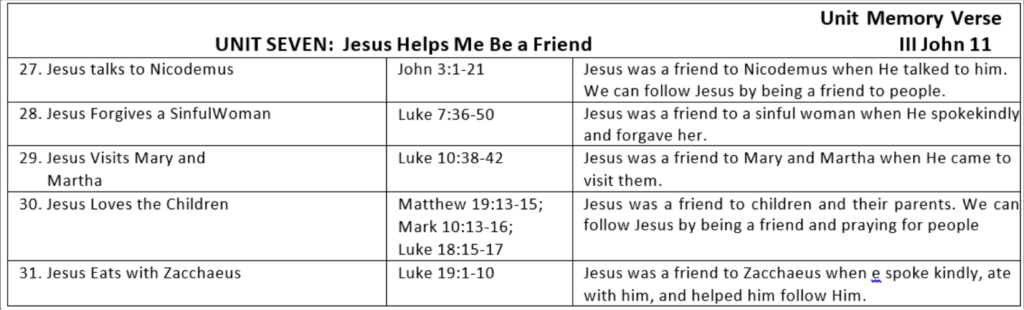
*1st Session – Christian Friendships *2nd Session – Peace and Reconciliation Initiative *Social Moments – Surprising Your Best Friend *Discussion & Debate – Who is a Friend?
August- Word at the Feet of Jesus Sessions and Mission by the Spirit’s Power Sessions
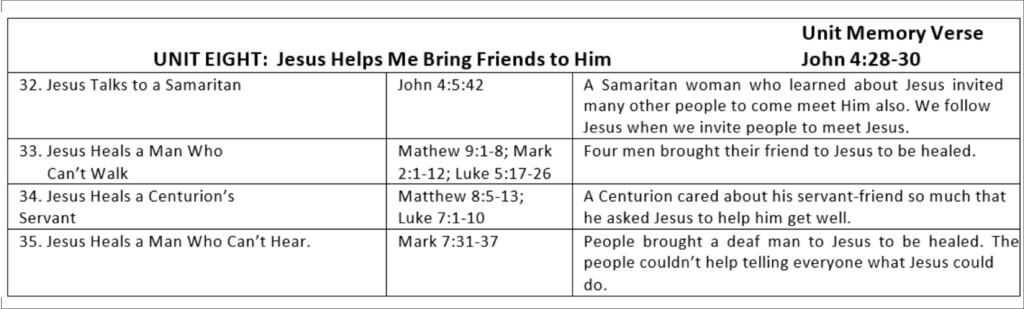
*1st Session – Evangelism *2nd Session – Revival Service *Social Moments – Street Evangelism *Discussion & Debate – What is Soul Winning?
September – Word at the Feet of Jesus Sessions and Mission by the Spirit’s Power Sessions
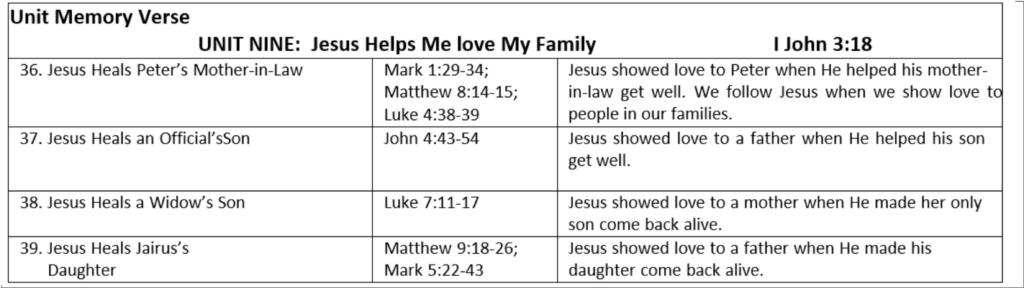
*1st Session – Divine Health *2nd Session – Healing Service *Social Moments – Hospital Visitation *Discussion & Debate – What is Divine Health?
October: – Word at the Feet of Jesus Sessions and Mission by the Spirit’s Power Sessions

*1st Session – Dealing with Sufferings *2nd Session – Intercession and Prayer *Social Moments – Visiting a Widow or Homeless *Discussion & Debate – Why Does God Allow Suffering?
November – Word at the Feet of Jesus Sessions and Mission by the Spirit’s Power Sessions

*Special Youth Group Session– Prayer for the End of Year National Exams *1st Session – Understanding Deliverance *2nd Session – Deliverance Service *Social Moments – Hosting a Christian Mental Health Expert *Discussion and Debate – What is Demonology?
December – Word at the Feet of Jesus Sessions and Mission by the Spirit’s Power Sessions

*Special Youth Group Session– Christmas Preparations *1st Session – End-times *2nd Session – Commissioning and Impartation Service *Social Moments – A Drama about the Second Coming of Jesus Christ *Discussion & Debate – What are the Signs of the End-times?
5. Other Events and Ideas to Consider
5.1 Service Projects
To consider offering a few service projects throughout the year since these can either be incorporated into some of your normal gatherings, or can be done separately. Ideas to consider would be a Thanksgiving meal for homeless, Christmas carolling at a nursing home, and making Valentine cards for nursing homes.
5.2 Retreats
Another very effective idea is offering a retreat for your youth group either once a year or once a semester like a weekend retreat away from the City/Village. Retreats are a great way to catechize and also to meet some of the social and relational needs of teenagers.
5.3 Small Group Gatherings
With enough time and resources, these types of events can be really effective. Small group gatherings can include things such as Bible Studies, Discipleship Groups, or a weekly group that attends the Church normal meetings.
6. Conclusion
Transformative ministry issues targeting the Youth are dynamic. However the best approach to tackling them is by simply designing a Christo-centric and needs sensitive curriculum for teaching the youth, addressing their contemporary issues and crafting missional strategy for youth engagement. However in order to fully achieve this, the program must disciple
each teenager, engage every parent because it has oftentimes been said that when the church and home come together, the faith of the next generation thrives. However in order to logistically thrive while at this, careful attention should be taken to elevate every volunteer while at the same time develop every promising leader. How then do we weave all of these? By simply having a very watertight curriculum like the one shown above. This is hopefully how the youth will be successfully be mobilized for transformational youth ministry just like the US Army did in 1917 and went ahead not only to win the immediate war but every other successive one after that
7. References:
Foster. R.J. (1978). Celebrations of Disciplines, The Path To Spiritual Growth. (20th Anniversary edition.)
Hodge, D.W. & Otaola, P. (2016). Reconciling The Divide: The Need For Contextual And Just Models Of Fundraising In Vocational Youth Ministry, The Journal of Youth Ministry, Volume 15 Number 1 Fall 2016
MilitaryHistoryNow.com. (12 December, 2016). “I Want YOU!” – The Story Behind One of the Most Famous Wartime Posters in History. Retrieved from
Olson, G. and Work, M. (2014).Youth Ministry Management Tools 2.0: Everything You Need to Successfully Manage Your Ministry. Grand Rapids, MI: Zondervan, 474 pp.
Oyugi, P.M. (2018). Youth Ministry Is Vital To A Sustained Church Mission, A Paper Presented To The Faculty For PhD In Theological Studies, International Leadership University, Nairobi, Kenya, May 2018
Robbins, D.W. (2010). Youth Ministry Nuts and Bolts, Revised and Updated, Zondervan, Grand Rapids, Michigan.
Sirett, Carol. (2011).Transformational Children’s Ministry. Revised Edition. Nairobi: Evangel Publishing House