
CASE STUDIES
Sowing The Mustard Seed of Social Mobilization ~ A Compilation Report For The Transformational Community Project Of Alcoholism Eradication In Mutuini Ward
1. Introduction
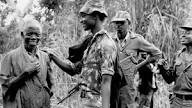
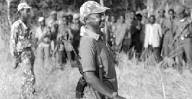
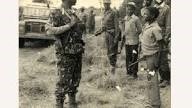
Figure 1 Shows a NRA Guerrilla Jet Mwebaze with an old citizen in Luwero in July 1984. Courtesy William Pike, The East African. https://www.theeastafrican.co.ke/tea/magazine/preservation-vs-control-why-the-nra-beat-obote-at-every-turn-1439078
Figure 2 Shows some of the soldiers during the NRA in the 80s. Courtesy Independent New Analysis. https://www.independent.co.ug/tag/kashilingi/
Figure 3 Shows Museveni delivering instructions to young NRA fighters in 1986. Courtesy Nation Media Group © 2026. https://www.monitor.co.ug/uganda/magazines/people-power/selfishness-killing-nra-bush-war-objectives-says-col-mwesigye-1505038
On July 27, 1985, a ragtag militia that had fought for five years in a guerrilla warfare campaign toppled President Milton Obote as the world watched with great angst. Six months later, they again toppled General Tito Okello and Bazilio Okello’s military commission-led regime. Consequently, two months later, the entire nation of Uganda was firmly within their control. Writing eloquently about this transformational journey, Museveni, Y. K. (1997) reveals that before he could sow the mustard seed of freedom and mature democracy, the entire landscape of Uganda had to be rid of stumbling rocks and the corrupt systematic weeds, which were the main precursors to the sectarian tyranny and violence that had ruined the land since the 1970s. This meant that Uganda’s national transformational Project was a process, not an event. Closer home, a merciless murder by a local drug lord named Congo had provoked the entire location of Mutuini to assemble for a protest that was covered nationally on April 12, 2025. This merciless murder, where the victim (who was trying to escape addiction) was devilishly chopped into small pieces as the police and the public watched on in horror, was a long, systematic, ugly tail of a serpent whose real head the residents unanimously identified as Alcoholism. This is because once the alcoholics were done sipping, they moved to the grimmer pricks of the needle and became hard substance abusers. In the conveyor belt of this destruction, alcohol opened the door while the hard drugs closed it. No wonder Mutuini Location was now the leading hard drugs capital of Nairobi, with an over 25% addiction rate. How, then, did we arrive at these descriptions? What systematic mustard seed did we offer to sow together with the community as and what was the result of sowing this mustard seed? The following work, therefore, is the compilation report of the four-fold community-led transformational development process, namely, Mapping, Planning, Implementation and Monitoring, and Evaluation, as we sought to organize the community-led efforts of sowing the mustard seed of social mobilization to eradicate Alcoholism in Dagoretti Market, in Mutuini Ward, Dagoretti South Constituency, in Nairobi County, Kenya. How did we go about the first phase of the Project?
1. Mapping ~ The First Phase Towards Sowing the Mustard Seed of Social Mobilization
Like Museveni, we needed to properly know the community by profiling it demographically, ascertaining stakeholders, nurturing relationships, considering urgent needs, and finally identifying available assets and resources before we could sow the mustard seed of transformational change within the troubled Mutuini Location that still stank of unjustly spilled blood. How did we conduct the first step of this five-fold mapping process?
1.1 #1st step of mapping ~ Systematically Developing a Community Profile of Mutuini
We meticulously developed the community’s profile to better comprehend its overall nature and quality of daily life. According to Smith, Miriam and Suzanne Hurst (2008), this knowledge would help us to answer questions like population count, gender distribution matrix, marital status of its people, age distribution, living settings, main fiscal activities, average earnings, availability of basic amenities, dietary habits, common diseases, and physical blueprint of the community. How did we go about it?
1.1.1 Elaborately Capturing Mutuini’s Demography ~ the eight demographic elements
We investigated eight key elements constituting Mutuini’s demography to understand it well. These included Specific Location, Features of the Surrounding Areas, Physical and Natural Resources, Climate Characteristics, Leadership and Governance, Population Growth, Education, and Age Structure. Having exhaustively undertaken this profiling exercise, what next step followed in the mapping exercise?
1.2 #2nd step of mapping ~ Systematically Identifying the Key Stakeholders within Mutuini
We met the following five key people whose clout was bound to positively or negatively influence the projected change process: Anne, the Owner and Operator of Purefresh Water Dispenser; Alex, the Transport Manager within the Dagoretti Market Stage; Njambi, the Operator of Betpalace; Tony Njuguna, the Brilliant Mechanic; and Sammy, the Motorcycle (Boda Boda) Rider. How did we get our feet past their doors?
1.3 #3rd step of mapping ~ Systematically Building Relationships with the Key Stakeholders within Mutuini
Since each of these relationships held a possibility to witness and to even eventually impact the Project, we dutifully tilled them through stakeholder mapping to justify why they had to form the team. What need did these patrons eventually identify within their community?
1.4 #4th step of mapping ~ Systematically Conducting a Needs Assessment with the Key Stakeholders within Mutuini
Njambi and Anne immediately revealed with profound insight that Alcoholism was the starting point for all who eventually ended up on hard drugs as they sought deeper waters. Therefore, the people eventually agreed that Alcoholism was the wicked serpent that had to leave the garden immediately! Did the official report agree or disagree with them? We fact-checked the claims of Alcoholism in Mutuini, and according to Anyanzwa, B. (2021), 25% of Dagoretti South Sub-County in Nairobi County, under which Mutuini falls, is severely affected by drug abuse, according to NACADA’s survey. Sadly, this is the highest in the entire country, with Kibera and Mathare following at 23% and 22% respectively. What ability did the community then jointly wield to solve this scourge?
1.5 #5th step of mapping ~ Systematically Identifying the Assets or Resources within Mutuini
We helped the poor see their riches and wealth by helping them identify the Divine gifts and skills they already had. They discovered that some were planners, orators, mobilizers, counselors, skilled evaluators, etc. Further, they had great physical resources such as arable land, physical structures, reliable water sources, and foliage. Again, they had community resources such as services or agencies within their reach, such as community programs, nongovernmental organizations, and other church-based programs offering particular relevant services. Therefore, as outsiders, we could not do much lest we create dependency by suppressing local initiatives. What were the reflections from this phase?
1.6 Recommendations for the Mapping Phase
After this, we discovered we needed a better venue, a better means of communication, and a robust outreach and recruitment of more experts. With this, we headed to the next phase.
2. Planning ~ The Second Phase Towards Sowing the Mustard Seed of Social Mobilization
Three days after finishing the mapping phase, we were back on March 18 to begin the four-step community planning process: properly building a team, prioritizing and delineating objectives and goals, delineating specific objectives and goals, and creating an action plan. How did we build the team?
2.1 #1st step of planning ~ Building a Team of Core Individuals
Though KNBS. (2019) data puts Mutuini’s total population at around 8785.5 people per square kilometer; we could only use a small team to represent them. According to the wisdom of Mbede, P. (2025), the team’s key qualifications were that these exceptional individuals were most likely willing to give their time and resources to help with the community’s transformational development. Who were these key players? 1. Anne ~ Became the Project’s Patron, 2. Alex ~ Became the Project’s Coordinator, 3. Njambi ~ Became the Project’s Treasurer, 4. Tony Njuguna ~ Became the Project’s Secretary-General and Spokesman, 5. Sammy ~ Became the Project’s Light Transport Errand, and 6. Njoroge ~ The New Entrant became the Project’s Evaluator and the Youth Representative. What goals and objectives did these key representatives have?
2.2 #2nd step of planning ~ Prioritizing and Delineating Objectives and Goals
The select team then realistically prioritized and delineated their objectives and goals around the key principles of information management, intentional inclusivity, and the empowerment of the team, active participation, and identification of the opportunity cost. After this sobering deliberative process, how did they arrive at the clear “winner”?
2.3 #3rd step of planning ~ Delineating Specific Objectives and Goals
The majority of the community readily agreed that the goal was alcoholism eradication, while the objective was social mobilization against Alcoholism, as explained by Muga, W. (2015). This objective involved finer elements, which were SMART. How did they act out the plan?
2.4 #4th step of planning ~ Action Plan
Understanding the magic objective of eradicating Alcoholism from their community, they formulated an action plan on March 18, 2025, capturing the What, Who, When, How Much, and Materials Needed. Afterward, they reviewed the action plan by checking its spirituality, incorporation of the Church and the community members, and viability. What were the observations at this stage?
2.5 Recommendations for the Planning Phase
We discovered the need for flexible methods and forms of information gathering and openness to continuous learning going forward. Thus, it was time to act and observe the Project!
3. Implementation and Monitoring ~ The Third Phase Towards Sowing the Mustard Seed of Social Mobilization
Two days after finishing their capacity-strengthening plan, the team met for the next phase on April 5, 2025. They began the actual work of eradicating Alcoholism in Mutuini by executing their goals, objectives, and detailed action plan, which helped them to know precisely where and how to begin. Where did the implementation process begin?
3.1 The Activities Follow-Up Report
In a show of integrity, the group met on April 5, 2025, and Anne, their patron, guided them on how to establish and plan for action by forming an Established/Planned Organizational structure consisting of the Project’s Implementation Body, the Project’s Steering Committee, and the Project’s Communication Committee. What did the group achieve? *On April 6, a community-led technical workshop was launched to review the Project’s upcoming activities. **On April 9, there was a communitywide launch of the community project workshop to fine-tune the Project’s different components before the Project’s official launch. ***On the late evening of April 9, the steering committee meeting finally validated and put the plan on the tarmac for the flagging off.
3.2 The Various Social Mobilization Activities Implemented within the Leadership and Eventually within the Community
Before the committee set out to work on the four main elements of social mobilization, they spiritually discovered the need to tackle their challenges through peer counseling and support. This approach’s key achievements were giving the Project a precious sacramental moment, graciously roping in the aggrieved family members, and generating new resolve for ministry transcending beyond the Project’s immediate scope. Later, they learned and committed to the character qualities of a good transformational and agent and learned the requisite cross-cultural skills. From there, it was time to face the community!
3.2.1 #1st step of social mobilization ~ Advocacy and Awareness Creation
On April 8, the team directly engaged with all the key leaders within the local community by texting, calling, and flooding the social media handles of several leading community personalities. This included the area MCA Hon. Mato, the local pastor of Deliverance Church Waithaka, Bishop Demetrius Karanja of Christ the King Fellowship, Mutego, the Dagoretti Slaughterhouse Chairman, the local area Chief and his Assistant, and even the far-flung St. Matthias ACK in Dagoretti Corner. What were the milestones? *They helped the community to have a better understanding of Alcoholism as a curable disease, according to the data provided by W. Kanina, J.W. (2014). **Facilitated an open dialogue on emerging alternatives.
3.2.2 #2nd step of social mobilization ~ Social Marketing
On April 11, they secured the needed buy-in with the critical community pillars, took the raw materials emerging from their conversations, and tailored them to ensure effectiveness, efficiency, equity, and sustainability over and above being acceptable in Mutuini. What were the results? *They helped the community have greater online community discussions on the local community’s Facebook Group, Voice Of Dagoretti South – VODS. **They began to demand accessible and affordable programs for the victims, as their counterparts in Christ the King. What was this awakened corporate awareness leading to?
3.2.3 #3rd step of social mobilization ~ Behavioural Change Communication
They began to demand an importation of the success stories into their community, and on April 12, they petitioned their local MCA, Hon. Mato, to consider approaching the County Government to help build local rehabilitation centers within the community equipped with counselors who will expedite the pathway of reform of behavior. What was the result? *Their petition to their MCA set the following plans on record: the planned rehabilitation centers would double as training centers, and the inclusive homecoming of the rehabilitated. What was the final activity of this spectacular team?
3.2.4 #4th step of social mobilization ~ Capacity Strengthening
Thinking long-term, the leaders experimented with different policy frameworks to help the current victims and the younger generation. Consequently, they planned to visit the five local educational institutions on April 14 to seek an audience with the learners. Besides, they planned to reach out to genuine distillers and sellers of genuine alcoholic drinks to help them seize those selling the poisonous counterfeits. How did they go about monitoring these implementations?
4. The Monitoring
They initiated a monitoring mechanism for an ongoing, regular process of tracking program activities, using tools such as record keeping and regular verbal and written assessments while also appreciating the worth of monitoring the process of transformational development activities. What methods were to be used to obtain the necessary project information?
4.1 The Types of Methods and Forms Used for the Project’s Information Gathering
They utilized the following: On-site inspection by simply tracking the public conversations online, Informal oral reports by the community members, and Activity or progress reports. Notably, since different rules applied to the volunteers, they had to modify the monitoring systems before finally reviewing the monitoring modification systems online on April 16. From the reflections and responses to the monitoring modification systems, it was agreed that the Project was indeed transformational! How was this Monitoring further done?
4.2 Preparing to Answer the Questions from the Monitoring Reviews
The team agreed to write down digitally the entire story of one of the beneficiaries of the social awareness initiative regularly and to write the principles of transformational development intentionally into the activities to ensure the Project becomes truly transformational. Further, the monitoring assignment was not to be viewed as a power position but rather as tracking and documenting various activities. What wisdom did they capture at this level?
4.3 Recommendations for the Implementation and Monitoring Phase
One key note emerged after reflection: valuing the people more than the Project. They captured this philosophy in the Project’s last phase of Evaluation. How did they go about this?
5 Evaluation ~ The Fourth Phase Towards Sowing the Mustard Seed of Social Mobilization
As the team met on the fateful day of April 17, they wanted answers to several questions, chief among which was this: had they failed or succeeded? Thus, they started the evaluation phase by reviewing the program activities, human resources, material resources, information, facts, and figures to assess the progress and effectiveness of the community-led efforts to eradicate Alcoholism in Mutuini. What were the events before this grave moment?
5.1 The Background to the Evaluation ~ Reviewing the Program’s Activities
The great noble goal of eradicating Alcoholism was initially conceived after the infamous murder incident that took place on February 12. After this initial conception, the following events followed: the formal commencement of the community transformational project exercise on March 15, and the implementation phase on April 5. Thereafter, the four-pronged social awareness objective was diligently executed between April 8-14, and the monitoring report finally came in on April 16. Who were the Project’s key personnel, and what resources did they need?
5.2 The People and Their Tools ~ Human Resources and the Material Resources Needed
The Project began with five key people, with an additional one added later to enhance inclusivity, and since all the work was voluntary, with the only cost being the internet, there was no concern about cost. What did they learn at the opening of the meeting?
5.3 Helping the Community to Understand the Need for Evaluation
On Thursday afternoon of April 17, they crystallized Mbede’s wisdom about the merits of Evaluation. They then reported with an evaluation report two days later, on Saturday evening of April 19. How had they evaluated their Project?
5.4 Revealing the Methodology ~ Who Did the Evaluation?
The Secretary-General, Njuguna, reported about them using the Participatory Evaluation method, which was imperfect because it had opened up room for bias since the community members were not as free to air their negative sentiments about the Project. They did on-site inspections by going to the various social media handles of the leaders within Mutuini Ward and obtained the needed feedback. Again, they had gathered informal oral reports from their community members who had proved generous with their time and views. What did they find?
5.5 Assessing the Information, Facts, and Figures to Assess Progress and Effectiveness, Consider Cost versus Efficiency
5.5.1 The Findings ~ the three broad disclosures
Intending to measure both quantity (numbers or measurements) and quality (attitudes and quality of life issues), the team undertook outcome Evaluation, impact evaluation, and process evaluation as follows:
5.5.1.1 #the 1st disclosure ~ Outcome Evaluation
Here, they measured the final results’ outcome by answering the question, “Has the community accomplished what it wanted to?” After carefully listening and weighing the feedback, it was clear that the goals and objectives were partly met. It means that the overall outcome was partial and not complete! What did the next recorder reveal?
5.5.1.2 #the 2nd disclosure ~ Impact Evaluation
Here, the team sought to assess the fundamental change the community wanted to see in their social or spiritual situation as follows: Overall Impact: It had awakened and united a previously sleepy and disunited community. Social Improvement: The community was now more socially inclusive, with all the social cadres ready to cooperate for the overall betterment of all. Spiritual Growth of the Community: There was a growing hunger for the spiritual, with several either committing to attend Church or to receive ministry for personal challenges. Peer counseling and support were becoming a new norm. The Social, Spiritual, and Relational Processes: Social: There was a heightened need to internally improvise and recycle locally-bred solutions for the community’s ills; Spiritual: God’s help and Word are becoming the key agents of personal and communal transformation and Relational: Several people signaled their willingness to work on restoring broken relationships and forging new ones for their betterment and that of their community.
5.5.1.3 #the 3rd disclosure ~ Process Evaluation
Finally, the team assessed the effectiveness of the chosen action plan and strategies by answering the two questions: *“Would a different action plan or different method have achieved different, or even better, results?” The action plan used was the best available within the context tackled, meaning that the community was profiled fully and correctly; the appropriate goals were chosen, the objectives were SMART, and they addressed the real problems, while good actions were chosen and followed through. **“Did we choose to do things in the correct ways?” There were concerns from the community about the Project’s hurried nature. As a result, where were changes needed, and how could they help to plan more effectively for the future efforts to eradicate Alcoholism in Mutuini Ward?
5.6 Areas for Future Focus
5.6.1 What is there to Learn?
- What Each Phase of Transformational Community Development Signals: a. Mapping: Since this phase represents the necessary research, we should never begin planning without thoroughly doing it. b. Planning: Since this phase represents the critical thinking and reflection necessary, we should never hurry; it will determine how we act going forward. c. Implementation: Since this phase represents the necessary action, we should never treat it as a rehearsal because once the actions are performed, lives are forever impacted for evil or good! d. Evaluation: Since this phase represents the necessary analysis, we should never fail to do it because future projects can be benchmarked based on it.
5.6.2 What would we change?
- Replacing ‘Project’s Completion’ with ‘People’s Transformation’: The Project’s goal is transformation. Henceforth, the people being served must be more important than projects! ii. Changing the Head with the Heart: We should focus on integrating the learning into life experiences. Authentic learning becomes most relevant when built into a life experience.
5.6.3 What would we tell others?
- Involvement is the Greatest Motivator: Instead of whipping the community to be involved in the Project through a lengthy oratory, involve them fully and watch them thrive. This is because Smith advises that the community’s energy for a project is proportional to its members’ involvement in planning the Project and the benefit they will receive from it. ii. The Key Players of Development: People and their cultures are key players in development. iii. The True Repository of Communal Needs: Never rush to consult outside sources about a particular community’s needs. This is because community members know their problems and the solutions that may work better than outsiders!
6.Recommendations
The following were observed after the evaluation: The need for a culture of temperance since prevention is better than a cure. Finally, there was a need for more time since the problem that the Project aimed to solve took decades to get to where we found it. Indeed, as a rule of thumb, community transformation is a process, not an event!
7. Conclusion

Forty years after the Museveni-led revolution that overthrew Obote, Uganda has yet to attain the promised ideals of the revolution since it is still categorized as a lower-middle-income country. However, the mustard seeds of reform have been successfully sown, and the tree of revolution is taking root and growing daily. In a like manner, forty years after Moses began his revolution, Israel had not yet stepped into the Promised Land though he sowed the crucial mustard seed that became the foundation upon which the future conquest of this elusive inheritance became a reality. Thus, from the verdict of the Evaluation, it became clear that forty days after we began the Transformational Community Alcoholism Eradication Project, we had not eradicated Alcoholism from Mutuini Ward. This is because, walking through its sleepy streets, you are still likely to find staggering souls emerging from the dark taverns. However, the social awareness initiatives introduced into the community have become a mustard seed, gradually transforming one soul and household at a time. Soon, there is hope for the withered tree of Mutuini that God will pour out His precious water of revival, and the tree of wholescale transformation will become a reality, leading to holistic development that many honestly cry for. Meanwhile, lifelong relationships have been restored, new ones forged, and wrong ones dismantled. We are already the first partakers this mustard tree!
References:
Anyanzwa, B. (2021). A Dagoretti Story: Say No To Alcohol Addiction And Yes To Wellness. The National Assembly Lady Spouses Association of Kenya (NALSA-K). Retrieved on 4-15-2025 from https://nalsa.co.ke/a-dagoretti-story-say-no-to-alcohol-addiction-and-yes-to-wellness/
ConstitutionNet. (n.a). Dagoretti Constituency. Retrieved on 4-15-2025 from https://constitutionnet.org/sites/default/files/DAGORETI%20CONSTITUENCY.pdf
Kamau, H.W. (2015). Study Of Land Use And Management Practices In The Peri Urban Areas Of Kenya Case Of Mutuini Location, Nairobi County. A Thesis Submitted In Partial Fulfilment Of The Requirements For The Award Of The Degree Of Master Of Arts In Planning, University Of Nairobi. Retrieved on 4-15-2025 from https://erepository.uonbi.ac.ke/bitstream/handle/11295/90140/Kamau_Study%20of%20land%20use%20and%20management%20practices%20in%20the.pdf?sequence=1
Kanina, J.W. (2014). Alcohol Consumption and Healthcare Expenditure in Kenya. Social Sector Division, Kenya Institute for Public Policy Research and Analysis. KIPPRA Discussion Paper No. 164. Retrieved on 4-15-2025 from https://repository.kippra.or.ke/server/api/core/bitstreams/bd4ede5d-0ebd-4646-96d6-805ea92dbf73/content
Kenya National Bureau of Standards (KNBS). (2010). Kenya Demographic and Health Survey (KDHS) 2008-09. Nairobi: KNBS.
Kenya Open Data. (2009). https://www.opendata.go.ke/Population/Dagoretti-Pop-Density-view/vqytin92. Retrieved April 5, 2014, from https://www.opendata.go.ke: https://www.opendata.go.ke/Population/Dagoretti-Pop-Density-view/vqyt-in92
Kirambia, M. (2025, February 12). Dagoretti Traders Light Bonfires & Block Roads While Protesting Drug Influx. Retrieved on 4-15-2025 from https://www.kenyans.co.ke/news/108896-dagoretti-traders-light-bonfires-block-roads-while-protesting-drug-influx
Kiumi, J., Kibe, S., & Nganga, S. (2013). Influence of pupil-teacher ratio and school location on pupils’ performance in exit examination in Kenya’s Free Primary Education Program. International Journal of Economy, Management and Social Sciences , 2 (6), 423-431.
KNBS. (2019). Kenya Population and Housing Census: Volume IV Distribution Of Population By Socio-Economic Characteristics. Kenya National Bureau of Statistics. Retrieved on 4-15-2025 from https://www.knbs.or.ke/wp-content/uploads/2023/09/2019-Kenya-population-and-Housing-Census-Volume-4-Distribution-of-Population-by-Socio-Economic-Characteristics.pdf
Mbede, P. (2025). 5 – TRANSFORMATIONAL_DEVELOPMENT_AND_THE_CHURCH.pdf. Week 5 Lecture 5 Development Process. Retrieved on 2-19-2024 from https://pacu.mrooms.net/mod/folder/view.php?id=288030&forceview=1
Muga, W. (August 7, 2015). Dealing With the Alcoholism Epidemic Through Social Mobilization. Research Assistant, African Population & Health Research Center, APHRC. Retrieved on 4-17-2025 from https://aphrc.org/blogarticle/dealing-with-the-alcoholism-epidemic-through-social-mobilization/#:~:text=The%20first%20step%20is%20to,victims%20should%20also%20be%20reached.
Museveni, Y. K. (1997). Sowing the Mustard Seed: The Struggle for Freedom and Democracy in Uganda. London and Basingstoke: Macmillan Publishers. Retrieved from Amazon.ca
Mutillah, W. (2003). Street vending in African cities: A synthesis of empirical findings from Kenya, Cote D’Ivoire, Ghana, Zimbabwe, Uganda and South Africa. Washington DC: World Bank.
Oyake, L., Njenga, B., & Koech, M. (2003). http://www.unep.org/geo/pdfs/NCEO_Report_FF_New_Text.pdf. Retrieved April 5, 2014, from http://www.unep.org: http://www.unep.org/geo/pdfs/NCEO_Report_FF_New_Text.pdf
Smith, Miriam and Suzanne Hurst (2008). Transformational Development and The Church. Springfield: Africa’s Hope. (pdf). Retrieved on 2-06-2024 from https://pacu.mrooms.net/course/view.php?id=4856#section-3
Voice Of Dagoretti South – VODS. (2023a). Men from Dagoretti market alcohol and drugs. Retrieved on 4-15-2025 from https://www.facebook.com/groups/1660013397463475
Voice Of Dagoretti South – VODS. (2023b). Police know the drug lords of Dagoretti Market and their killer gangs; they know where to find them. Retrieved on 4-15-2025 from https://www.facebook.com/groups/1112008838860236/posts/9468911426503227/