
CASE STUDIES
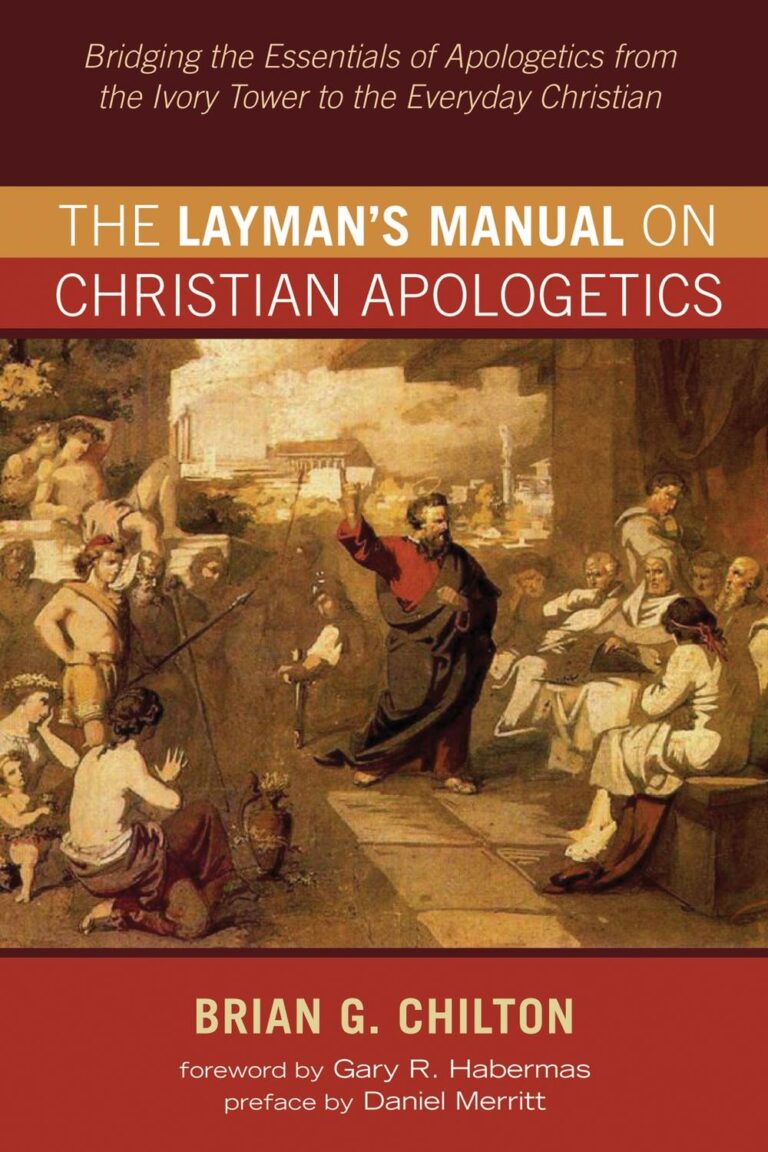
The “Return” Of The General ~ A Book Review Of Chilton, B. G. (2019). The Layman’s Manual On Christian Apologetics: Bridging The Essentials Of Apologetics From The Ivory To The Everyday Christian
Introduction of the Book: Its Subject and Author

According to the National Museum of the United States Army. (2000-2023); in March 17, 1942, after an illustrious stay in the Philippines, the famous American General Douglass MacArthur was forced to evacuate the Island that he had come to love and call home due to a humiliating Japanese invasion. Before he evacuated, he declared, “I shall return.” True to his word, two years later on October 20, 1944, MacArthur waded ashore along with an invasion force on the Filipino island of Leyte, declaring, “People of the Philippines, I have returned!” Reading through Chilton, B. G. (2019). The Layman’s Manual on Christian Apologetics: Bridging the Essentials of Apologetics from the Ivory to the Everyday Christian, we see a ‘return’ of a Gospel General in almost a similar mould of MacArthur. According to both the book and the other information available online, Chilton, who is now a pastor at Bellator Christi (whose main mission is to employ apologetic evangelism and discipleship for the glory of God) and a member of both the Evangelical Theological Society, Evangelical Philosophical Society, International Society of Christian Apologetics; was forced out of the faith majorly through reading the historical reconstructive Jesus Seminar titled The Five Gospels: What Did Jesus Really Say and also getting dissatisfied with the failings of most professing Christians around him. As he desperately reached out with real apologetic questions, no Christian leader was forthcoming with comforting answers. Fortunately, however, 5-years after reading through the apologetic work of both Josh McDowell’s Evidence that Demands a Verdict and Lee Strobel’s The Case for Chris; he was reconverted. However, that was not all!
The Author’s Viewpoint and Purpose for Writing the Book

Fourteen years later after his restoration to the faith, he became an apologetic warrior (read General) and triumphantly authored a powerful book on apologetics whose main theme is to simplify apologetics and where necessary – to rescue any ‘General’ taken hostage like he once was! From this, we can immediately discern the overt motive behind the author’s work. So what is his motive? Chilton’s work is not just scholarship but rather a dodged spiritual rescue mission – no wonder the mission statement of his ministry! Having been snared away from the faith using twisted reconstructs and failing to find ready and sound apologetics to help strengthen and rescue him, he felt duty-bound to make a deliberate effort to remedy this fault. Thus while the other scholars before him might have written to a tasty class, he however wrote his heart out to the forgotten Tom in the trenches out of dutiful purpose. He seeks to recruit apologetic warriors who will willingly step out into the arena and fight for souls. This then sums the viewpoint of the author. So who are his target audience and what is the book’s thesis?
Chilton’s book is directed to two groups according to him namely: those who have not obtained seminary training or for those thinking about attending seminary. What then is the book’s thesis? The purpose according to him is: to make the most important material in Christian apologetics accessible so that anyone can engage their doubting friend or family member. Relevantly reframed, this book’s thesis could also be: declassifying and further decompressing the airtight concepts of apologetics in order to make them readily available and relevant to those who need it the most in the trenches of faith. So how does he go about this aim?
The Kind of Evidence the Author Uses to Prove His Point

He divides his book into three major units namely: unit 1 which discusses the nature of truth and apologetic methodologies; unit 2 which examines the evidences for the existence of God and probes into some of the major questions concerning him and unit 3 which discusses the historical basis for Christianity in the resurrection of Jesus and the authenticity of the Scripture. Thus according to him: The first unit is philosophical, the second unit is theological, and the third unit is historical. Thus he uses philosophy, theology and history to try and justify his thesis. So what philosophical nuggets do we obtain from the first unit?
Being the most dynamic and engaging of all the other two units, this unit goes deeper into the apologetic details because of the great use of thought, perception and as he puts it “the epistemological philosophy behind truth itself”. For example, starting out by elaborately laying a very firm and relatable foundation on the discipline of apologetics, he goes ahead like an able coach to define, illustrate and show how to appropriately apply apologetics. He discusses the Biblical, the Philosophical, the Ministerial reasons why we should do apologetics and further illustrates the various approaches to use namely: the Classical, the Evidentialist, Presuppositionalist, Cumulative, and Reformed Epistemological. In the second chapter, by giving 10 straight-shooting definitions of what is not truth in order to finally reveal what truth really is; you can see a mature philosopher who is passionate about his craft. In the last chapter of this unit, he builds on the previous chapter’s work of truth before introducing the issue of the Role of Logic and Truth by elaborately discussing the Three Primary Laws of Logic and Its Exclusivity; namely: the law of identity, the law of non-contradiction and the excluded middle. So what theological truth do we observe from the second unit?
Since the first unit laid a very concrete platform by elaborately addressing the philosophical bolts and nuts of apologetics, the second unit now makes a very smooth transition by offering relatable and heartfelt explanations. What do we mean? Having elaborately explained the nature and the Person of truth namely Jesus, the author now goes further and offers 5 solid chapters to build on the experiential tokens of truth. Here God is about to come alive both intellectually, emotionally and most importantly spiritually! How exciting! So how does he arrange these 5 chapters in order to prove God?
Well in chapter 4, he separates fiction, fables, and popular culture’s depiction of God and offers a sound Biblical view of God. How does he do this? By elaborately illustrating the non-communicable (i.e. the characteristics that only God possess) and the communicable attributes of God (i.e. the characteristics that He shares with other beings). What then does this great revelations bring us to?
Having ably looked at the unique attributes of God, the author can now front the classical arguments for God’s existence. Chapter 6 discusses the cosmological and ontological arguments while chapter 7 explores the teleological (design), the aesthetic, the information argument, and the argument from consciousness. It is to be noted that the author particularly vouches for the information argument since it proves that the both information and the universe itself was designed by intelligence-the very intelligence that the sceptics try to use to disapprove God. In chapter 8, he deals with the moral argument for God’s existence while in chapter 9 he elaborates on the miraculous before finally exhorting all to believe in a loving God in the midst of evil in chapter 10.
The final unit which is historic in nature, now addresses The Historicity of Jesus and the Veracity of Scripture. Using historic methodologies, the author reliably uses Habermas’s minimal facts approach before innovating his own RISEN acronym in chapter 11. The next chapter evaluates the manuscript evidence of the New Testament before discussing the canons is chapter 13. Going current, he now lists and explains the latest archaeological finds verifying the biblical message in order to prepare the ground to refute the debate over inconsistencies of Scripture before finally introducing the prophecies around Jesus. Critically he finishes the work by advancing the central place of the resurrection since it is; “the lynchpin of Christianity is found in the resurrection of Jesus,” as he calls it. What a masterpiece. The question then is this? Did Chilton succeed in meeting his objective? Though he laboured hard, does he get rewarded?
My Reaction to the Book
As a former backslider whose main fault was lack of a strong apologetic community, Chilton in my view has outdone himself. Picking a local knife-fight that directly targeted his own soul, he managed to go global and make the fight an all-out machinegun warfare. The mere fact that my neighbours in Africa are warmly interacting with his book speaks to show how much he has achieved! Thus the author stepped out with an individual lesson which he managed to make a global gem – available to all in need. The book therefore in my view promises to be an apologetic must-have for many ordinary Christians in the future owing to its readability, authenticity and above all; the passionate spirit of its author.
Conclusion

In conclusion, how then does the General “return”. How does the discouraged turn out to be the comeback kid? Well the review of Chilton’s book shows us a very strange but exciting phenomenon: that the true birthing of an apologist might not necessarily begin in the corridors of academia. No. It can begin in the dark corners of the soul. However once the initial light of philosophy begins shining, the ropes of theology must be generously lowered down in order to fish out the drowning man. Afterwards he should be guided through the history of where it all started from in order to show him why he should be confident to walk into the future. This in layman’s terms are the three approaches that Chilton used after regaining his soul back: philosophy, theology and history. These three remain however the greatest aim of all of them is still to prepare the soul for evangelism for that is the end goal of apologetics. Chilton achieves just that!
References
Bellator Christi. (2023). Meet Dr. Brian Chilton. Retrieved from https://bellatorchristi.com/meet-dr-brian-chilton/
Chilton, B. G. (2019). The Layman’s Manual on Christian Apologetics: Bridging the Essentials of Apologetics from the Ivory to the Everyday Christian. Retrieved from Perlego
National Museum of the United States Army. (2000-2023). Biographies Douglas Macarthur. Retrieved from https://www.thenmusa.org/biographies/douglas-macarthur/