

How Abraham ‘Divided’ Himself 318 Times and Defeated 5 Great Kings
: A Biblical Commentary on the Need for a Radical Transformational Youth Ministry in the Local Church
1. Introduction
An oftentimes quoted passage of Scripture really stands out and forever vindicates the truth that the things of the Spirit can only be spiritually discerned as Paul teaches in 1 Corinthians 2:14. Reading from the original KJV (authorized to be read in all Churches); you come across the following:
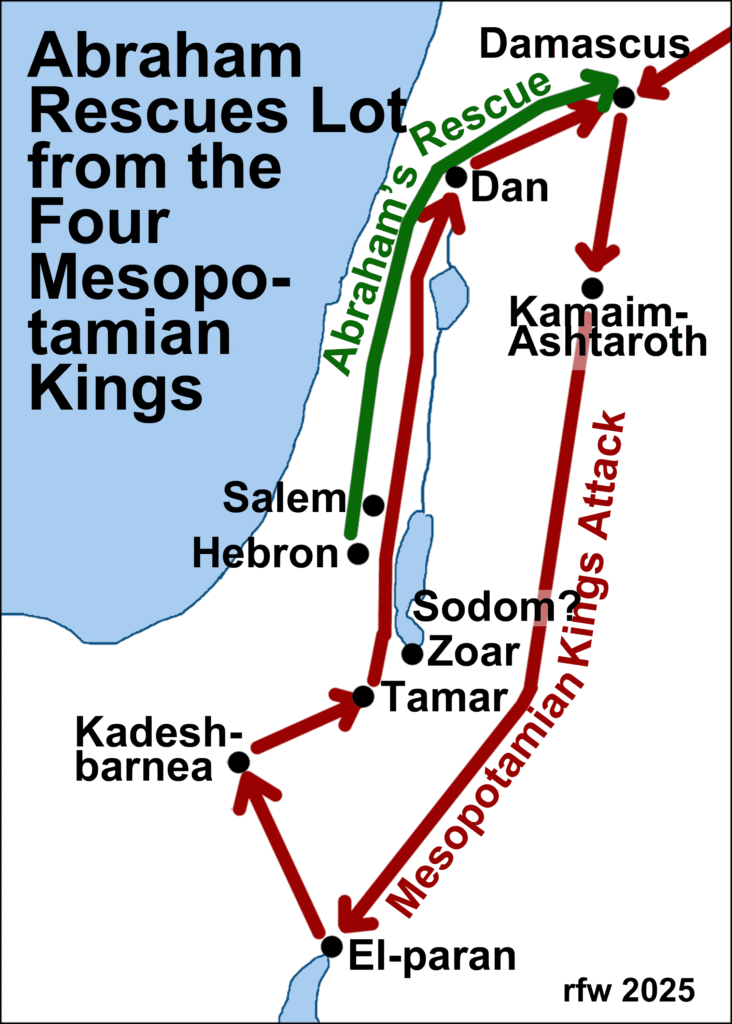
14 And when Abram heard that his brother was taken captive, he armed his trained servants, born in his own house, three hundred and eighteen, and pursued them unto Dan. 15 And he divided himself against them, he and his servants, by night, and smote them, and pursued them unto Hobah, which is on the left hand of Damascus. Genesis 14:15 [emphasis mine]
So what do we make of the emphasis above? It is the startling realization that before Abraham went out into battle accompanied by his inbred servants (who most likely were youths), he first divided himself. Yes, taken literally Abraham divided himself just like a mysterious organism can mutate from one form into another before multiplying and getting out of hand! Now does it mean that it is within natural ability for man to mutate and multiply? Well according to this particular Scripture, a man of Abraham’s stature can (and should) be able to mutate and ‘get out of hand’ during special circumstances. Now exactly 10 chapters later, we now read of the following:
60 And they blessed Rebekah, and said unto her, Thou art our sister, be thou the mother of thousands of millions, and let thy seed possess the gate of those which hate them. Genesis 24:60 [emphasis mine]
From the above, a single lady (obviously a youth); is leaving Syria. However according to strategic Transformational Youth Leaders from her local ‘Church’; Abraham’s future daughter-in-law is not alone but rather carries within her thousands of millions. This means that even though a Young spinster was walking down the long aisle to meet her future husband, the possibilities within her were nonetheless thousands of millions-courtesy of what her Youth Leaders had made her believe. Years later, she proved them right. What a matter! It is therefore the aim of this paper to prove what, why, how, when and where a Youth Leader should be able to ‘divide’ himself countless times in order to achieve Transformational Youth Ministry in the local Church so as to not only stir up the Youth interest but most importantly to disciple them to maturity in faith. So to begin with: what is Transformational Youth Ministry and why must a Youth Leader like Abraham ‘divide’ himself in order to successfully actualize it?
2. The Overall Definition: Introducing the Subject
Transformational Youth Ministry can be described as a mission commitment by a Christian Church or Organization to intentionally take the message of the Gospel of the Lord Jesus Christ to a group of young people in order to help them to receive, live and eventually propagate the message of Christ to the next generation. Simply stated according to Cole, Cameron and Jon Nielson (2016), it is: forming young disciples with lasting faith. However just how did this seemingly new branch of ministry evolve?
2.1 A Brief History
Writing about the History of Youth Ministry, Oyugi P.M. (2023a) says: Youth ministry started as a post world war needs to reach out and minister to the needs of the young people of the post war in the 1950s… It forced the Bible believing churches to rethink ministry to young people. So what is the main component of this ministry?
The foundation of the Youth Ministry is simply the Lord Jesus Christ. Any Youth Minister must therefore be fully appraised about the core Person of Jesus Christ as the sole substance to be consumed in this ministry. This helps us to define the what of the ministry.

However, in the context of Abraham ‘dividing’ himself; what does Transformational Youth Ministry entail?
2.2 Contextual Definition and Application: Abraham ‘Dividing’ Himself
Transformational Youth Ministry in the context of Genesis 14 means that a Leader (like in the case of Abraham), takes a group of servants who are obviously below him in rank and leads them to do what they could not do on their own. In the case of Abraham, we see that all the men accompanying him into battle were born and raised to serve his interests domestically and not to fight international battles in the sophisticated fields of international relations. This means that these slaves were all born into a culture of slavery and not of dominion. Therefore, before there was a military war to fight and win, Abraham had a cultural war to identify, fight and win. So beyond Abraham’s situation, just how vitally does the concept of culture relate to Transformational Youth Ministry?
3. Youth Culture

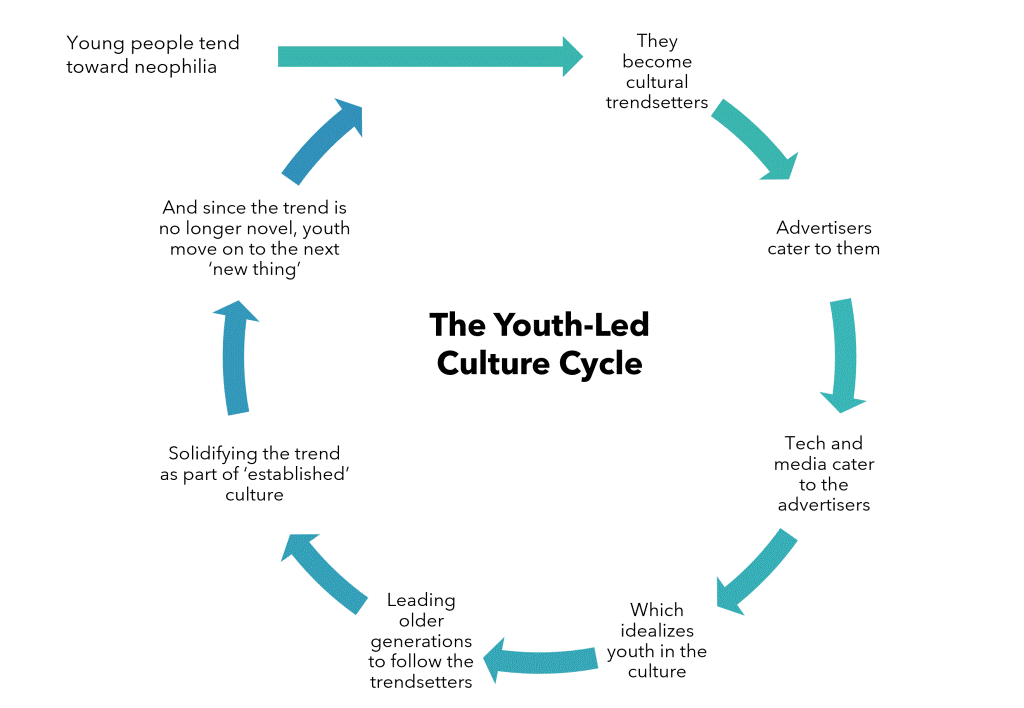
Speaking on the key issue of Youth Culture, Oyugi (a) tells us the following: Youth culture is the way young people live, and the norms, values, and practices they share. Culture is the shared symbolic systems, and processes of maintaining and transforming those systems. Elements of youth culture include beliefs, behaviors, styles, and interests. An emphasis on clothes, popular music, sports, vocabulary, and dating set adolescents apart from other age groups, giving them what many believe is a distinct culture of their own.
From the above key definition, we can effectively conclude that the backbone of diagnosing the need and operation of Transformational Youth Ministry is in the comprehension of youth culture. Until this vital concept is understood, then we have no lab work from where to base our diagnosis. Therefore, even though he was born and raised free, Abraham like many Youth Leaders was however surrounded by slaves (read irresponsible and immature souls). However, as a Transformational Leader, he had to take a personal initiative of understanding his crew in order to eventually lead them into battle as we shall shortly see. This called for a cultural paradigm preparation. So what did he do that every other Leader should do?
3.1 Peeling off the Culture to Further Expose Subcultures
Even though the battle obviously took place within a day or so, we have to be informed however that the raising up of these men started off from birth. This means that from the very day when they were born, Abraham’s slaves were already being groomed for the day of the inevitable. This called for a constant peeling away of their inferior disposition in order for them to eventually stand before 5 kings. This is another burden of Transformational Youth Ministry: constantly and deliberately peeling away subcultural layers.

Talking of this, Oyugi (a) tells us: Within youth culture, there are many distinct and constantly changing youth subcultures… Understanding what adolescents and young adults think and do is fundamental to understanding the relationship between structure and agency, social patterns and individual action. So what was the importance of this subcultural orientation exercise?
3.2 The Importance of Understanding Youth Culture
In the case of Abraham, as each and every passing day brought him closer and closer to the Promised Land and the Promised heir meant to rule from it, it however conversely brought his slaves further and further to the dungeons of bondage and backwardness. Hence as one man prepared to colonize, the other was preparing to perpetuate systematic bondage to the next generation. The same thing applies to Transformational Youth Ministry. Even though the Youth Leader could be privately growing in his relationship with God and achieving destiny, the Youths around him however could be sinking deeper and deeper into endless challenges. What then to do?
Oyugi (a) advices: Youth ministry requires that we understand the youth culture, their philosophy of life, worldviews and perspectives of issues. “it is vital in planning for ministry with youth that we understand the styles in which youth tend to think and feel, and shape our ministries to what they are, not what we might think they ought to be.” Examine the values of youth to understand the cultural forces that affect them. So why was Abraham able to effectively close in this elusive culture gap?
3.3 Current Youth Culture
One of the surest ways to close in on the culture gap and to be able to effectively carry out Transformational Youth Ministry is to deliberately update yourself. In the case of Abraham, he kept himself abreast to the fact that the children who were once born in his house were now grown men who needed to be prepared for war. This simple awareness of physiological transition from childhood to adulthood on the part of Abraham was sufficient in order for him to stay updated. This means that for any Transformational Youth Ministry to take place, there must be a competent upgrading of the Leader’s cultural software from the slaves being ‘born children’ to ‘battle-ready men’. So what are the characteristics of some of these cultural trends that a Youth Leader must be on the lookout for?

Writing about contemporary youth culture, Oyugi (a) tells us: Living one day at a time – many youth live in the now, one day at a time, hour by hour, moment by moment. They are spontaneous, pragmatic and oriented towards to experience. So what is the root cause of this postmodern youth culture?
He continues to tell us: “The root of this “whatever” attitude can be found in a contemporary youth culture that is somewhat cynical about the demands and responsibilities of its cultural surroundings” So just how can we handle this tough demand of the ever evolving Youth Culture?
3.4 Tackling Youth Culture: Perspectives and Response
In the opening of Genesis 14:14, we read that Abraham armed his trained servants. This means that until Abraham armed them, they were unarmed and until he trained them, they were untrained. The same applies to the Youth Ministry. Until the Youth Leader deliberately decides to arm and train them as we shall later on see, there cannot be any army going into the battle. So how could this arming and training have taken place?
Writing on the matter of Perspectives of Youth Culture and how a Christian should respond, Oyugi (a) directs as follows: Participation- encourages involvement and enjoyment of youth cultural activities… Be conversant with both the state of the heart of the young people and the state of the art (internet and the use of gadgets of technology).
Thus for born slaves to suddenly turn into warriors and eventually participate in an international post war treaty in Genesis 14, a definite Transformational Youth Ministry had really occurred. This then is the essence of Transformational Youth Ministry: taking them in as spiritual rookies and transforming them into international faith giants through the Word in the power of the Holy Spirit. Our father Abraham did this in-house and so should we!

So just why did Abraham do this? Couldn’t he have let the simple slaves be as many will often advice? Did he really have to shake the socio-spiritual strata? This brings us now to the why of Transformational Youth Ministry. Why must Abraham divide himself 318 times? Why can’t he let the boys to come ‘just as I am’ to paraphrase the old beloved hymn?
4. Necessity: The Philosophy of the Subject
Taken exegetically, there were two types of men going into this particular battle of Genesis 14. The first type of the warrior was a Master who had never known slavery, inferiority or subjection. This master was none other than Abraham. The second type of warrior was the servant. These servants were none other than the 318 men born and bred in Abraham’s house who had never owned, ruled or achieved anything like their Master. Therefore, why was Transformational Youth Ministry important in all these? Transformational Youth Ministry was important because before these two types of men could successfully step out and win, they first needed to synergize. The Master, as great as he was, could not afford to be pulled down by the limitations of the slave. At the same time, the slave, as obedient as he was, could not afford to assume equality with the Master. Thus one had to even himself out while the other had to update himself up.
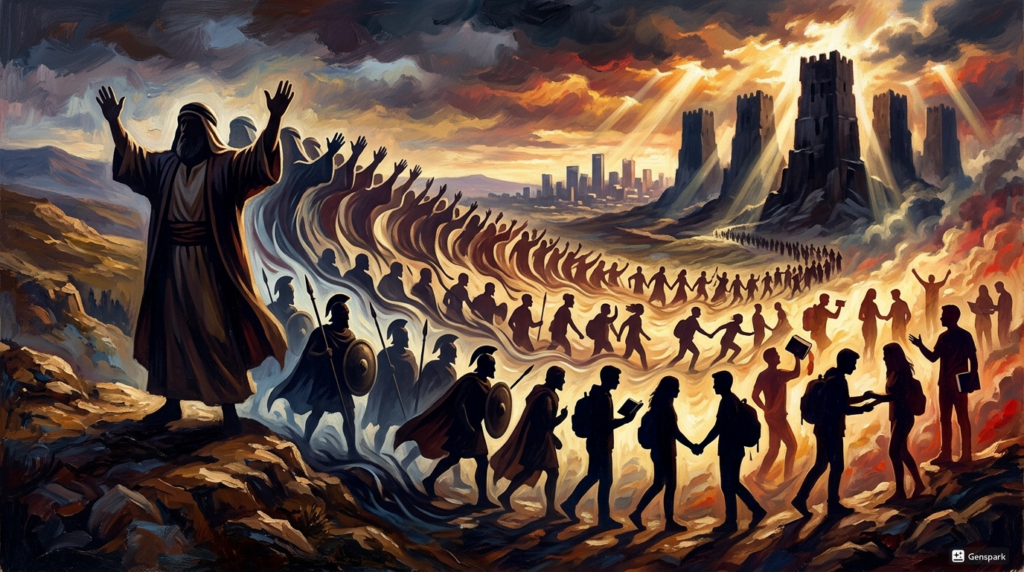
This reveals to us the sobering fact that before a unit be it Church or any other Organization can ever go into any battle and win, the Master must take over the servants and ‘master’ himself over into them. Simply stated: before servants can effectively fight alongside their Master and win; they must first allow their Master to duplicate himself into them so that when they step out, it is several ‘pieces’ of the Master stepping out and not them. This means that the what that stepped out to fight that day were 318 versions of Abraham embodied within his 318 servants. Abraham was thus alive in 318 human vessels hence 318 ‘Abrahams’ fought in battle and won. What a mystery-and a possibility in Transformational Youth Ministry! So just who is the Master in the context of the Transformational Youth Ministry?
Well accurately spoken, the Master was, is and forever will be the Lord Jesus Christ. On the other hand since He lives in faith through the Youth Leader, it follows that each and every other aspect of His Being that the Youth Leader allows to be projected through him/her whether through the Word or the Spirit will emerge as the Master. Therefore the Youth Leader is a very vital player in the ‘Abrahamic mutation’ since through him, Christ will ‘divide’ Himself endless times (depending on the number of the available souls) and win every battle. So who are the slaves?
While careful attention should be taken not to demean anyone, we however have to remember that according to Galatians 4, there’s no difference between a child and a slave when it comes to inheritance. This is because none of them are ever qualified to inherit anything. Therefore, the slave within the Genesis 14 context is any spiritually immature soul who cannot yet handle heavy spiritual responsibility. What then must be done in order for them to eventually be able to become masters just like the Lord Jesus? Well that will now be handled in the rest of the portion of this work. First we now look at how the slave (who is equal to a child in the inheritance food chain) can now be transformed into a master like Abraham.
5. Foundation: The Value-Set of the Subject
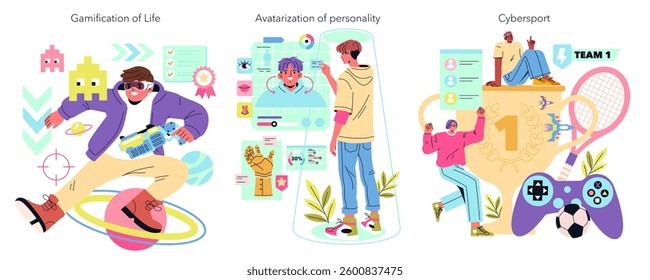
Commenting on the contemporary issues confronting youth and youth ministry, Oyugi, P.M. (2023b) mentions six namely: Sociological Issues, Economic Issues, Political Issues, Technological Issues, Spiritual and Moral Issues. Seeing that at the core of who we truly are is the timeless reality that we are either free or bound, mature or immature; we now appreciate why Abraham seemingly took many years grooming his slaves from birth before eventually marching out with them into battle. The Youth Minister must be willing to do the same.
5.1 The Master Builder Role
Just like a Master builder in the mold of 1 Corinthians 3:10-15 will attest, Transformational Youth Ministry is a series of foundation laying proceeded by subsequent layering of the other parts in order to form a full building. However before the full building can be up and standing, a sure foundation is needed. This is because the Lord Jesus Himself promised three definite tests that each and every building will go through at one point or another in Matthew 7:24-27.
According to the Lord Jesus, every building will face rain, floods and winds. The rain will oftentimes target the overall building, the floods will target the foundation while the winds will oftentimes target the roof which is the symbol of the crown or achievement that one holds. This is why foundation is important. So just how does a Master lay this foundation?
5.2 The Biblical Basis for Youth Ministry
Discussing the Biblical Basis for Youth Ministry, Oyugi (b) shares the following: The ministry to the young people should be grounded in the Holy Scripture for in it are the answers to life questions and a model of life on earth that is pleasing to God. The scripture retains the ability to satisfy the needs of young people and ensure stability and focus in this world of eventualities. Therefore both the message to be communicated and the methods used must be based on the scriptures.
So how can we structure this foundation to see to it that the Transformational Youth Ministry agenda succeeds? In order to become Master Builders in the mould of Paul in Transformational Youth Ministry, we need to heed to the following from Oyugi (b) as he shares on the Biblical Reasons for Youth Ministry: The gospel is the foundation of life- God created the world and orders it the way it should go. The Bible is the source of all truth that a youth may need for life and godliness i.e. View of self, view of God, view of the world etc. So on what other basis do we place our ministry?
5.3 The Theological Framework for Youth Ministry
Again sharing on Theological Framework for Youth Ministry, Oyugi (b) tells us the following: A theological framework for youth ministry consists of three components: theological foundations, personal implications, and ministry applications. Theological foundations are the raw materials necessary for developing a life and ministry that reflect the knowledge of God. So where does all these practical take place from?
5.4 The Role of the Faith Community
Geographically as he shares on the vital role of the Faith Community Oyugi (b) tells us: How can we Call the Young People to the mission of the church? 1. Adopt a holistic approach to church life and ministry. {New Testament ecclesiology is family-focused. The youth need to belong to an intergenerational faith community. 2. Catechize children, teens and youth.. 3. Teach the word {expository preaching and teaching} and consistently present the mega-narrative. 4. Intentional and consistent mentorship through shared experiences… 5. The principle of LOVE – Love them, no one can refuse love, love wins it all. So when are we to begin the delicate work of Transformational Youth Ministry?
6. Techniques: The Methodologies of the Subject
In seeking to know when Transformational Youth Ministry can be undertaken, we need to go back to Genesis 14:14. Here we see that Abraham had 318 men born in his own house. Now while the physical house of the Transformational Youth Minister might not have the physical capacity to host such a large maternity ward, the spiritual House of God where his assignment holds however has the spiritual capacity and more. This brings us to a very vital realization: that according to God, the very day a man is spiritually born under His house (where you preside over), is the day you immediately take charge of his growth until he attains to the possibility of fighting 5 kings alongside you and winning!
Therefore for any Youth Leader to have slaves who cannot hold the line in battle is to fail the Abrahamic standard of Transformational Youth Ministry. So in technical terms how do we take these 318 men from infancy to battle? This brings us to the surest Transformational Youth Ministry concept of Evangelism and Discipleship.
7. Ministry Structures
Writing about organizational principles in youth ministry/structuring youth ministry, Oyugi, P.M. (2023c) advices: to have an effective and transformational youth ministry, one requires an organized and structured ministry. How then does he propose that we tackle this delicate matter? Well he advocates for a broad form of outreach known as Relational Evangelism. Under Relational Evangelism which he says is sometimes referred to us as lifestyle evangelism or earning the right to be heard; he proposes for the following: Contact Work Evangelism, Follow –Up Evangelism, Event Evangelism and Campus Ministry Evangelism.
So finally where are these grown 318 men expected to go? What is the vision that the Transformational Youth Minister holds as he ‘divides’ himself into them?
8. Outcomes: Preserving the Gains
Like Abraham, no one knows the day of battle when even the most decorated king must dutifully leave the comfort of his palace in order to go into battle. However when finally the day arrives, every Master Abraham should effortlessly be able to ‘divide’ himself into each and every slave and fight alongside them as one. Thus the entire vision of Transformational Youth Ministry is to be ready to leave the comfort zone with competency in order to go and meet the enemy at the gate. However there’s always going to be a cost for this to be achieved. So how will this future be achieved?
8.1 Building a Community through Small Groups
Again writing about building a community through small groups, Oyugi (c) tells us: “One of the most glaring needs for teenagers is the need for community and relational connection with others.” So which model of community building does he propose? Well he proposes the Coleman’s Model which summarized captures the following: History giving where adequate familiarization is initiated and Deeper sharing where a heightened sense of safety is realized. Only then can there be a depth of Christian community where the Youths can simply become a strong family.
Further on in his proposition, Oyugi advocates for small groups. Here there’s interpersonal relationships leading to effective discipleship. Small groups also help in relationship building and leadership development. This results into what he calls a leadership community where likeminded people work together in the cause of Christ. However just like God found Abraham before Abraham founded the slaves who eventually helped him with the work, Oyugi now finishes by advising: “first find the leader who will guide the ministry before creating a ministry.” Experience like what we read of in Genesis 14 reveals that once the right leader like Abraham has been found, even born slaves will soon take on 5 kings. Therefore the surest way to experience amazing Transformational Youth Ministry is not to be bogged down with endless programs but rather to initiate and deepen local relationships. Abraham did this (he leaned on in-house born but trained and armed slaves) and succeeded. So should all of the Transformational Youth Ministers!
5. Conclusion
Transformational Youth Ministry like Abraham’s victorious household is the most assured way of preparing any Church or Organization to win in the day of adversity. However in order to be successful, five things namely the: what, why, how, when and the where must be very well articulated. This means that a Transformational Youth Minister must know the full definition of the word and the spirit of the ministry (i.e. the what). This will save him/her from taking slaves into battle in order to fight against 5 kings. However before he can articulate the mission (i.e. the what), he must also discern the reason why these born slaves need radical transformation. This is so that both he the vessel embodying the Master Jesus and the spiritual children symbolizing the unqualified slaves can be able to enjoy the process of discipleship. Only after that can the appropriate foundation be laid in the standard of the wise Master Builder like Paul. However this will require them to know the how and the when of the Transformational Youth Ministry call. Only then can the destination namely the where of the ministry be achieved. Thus we can see that Abraham ‘dividing’ himself into the 318 men is still a possibility for any Transformational Youth Ministry.
References:
Cole, Cameron and Jon Nielson (2016). Gospel-Centered Youth Ministry: A Practical Guide (The Gospel Coalition). Wheaton: Crossway. [Kindle Edition]. Retrieved from Amazon.ca
Hodge, D.W. & Otaola, P. (2016). Reconciling The Divide: The Need For Contextual And Just Models Of Fundraising In Vocational Youth Ministry, The Journal of Youth Ministry, Volume 15 Number 1 Fall 2016
HOLY BIBLE (KJV). Retrieved from biblegateway.com
Olson, G. and Work, M. (2014).Youth Ministry Management Tools 2.0: Everything You Need to Successfully Manage Your Ministry. Grand Rapids, MI: Zondervan, 474 pp.
Oyugi, P.M. (2018). Youth Ministry Is Vital To A Sustained Church Mission, A Paper Presented To The Faculty For PhD In Theological Studies, International Leadership University, Nairobi, Kenya, May 2018
Oyugi, P.M. (2023a). 1 – Transformational_Youth_Ministry_20235.pdf
Oyugi, P.M. (2023b). 2- Transformational_Youth_Ministry_20235.pdf
Oyugi, P.M. (2023c). 3- Transformational_Youth_Ministry_20235.pdf
Robbins, Duffy. (2010). Youth Ministry Nuts and Bolts, Revised and Updated: Organizing, Leading, and Managing Your Youth Ministry. Zondervan/Youth Specialities. [Kindle Edition]. Retrieved from Amazon.ca