
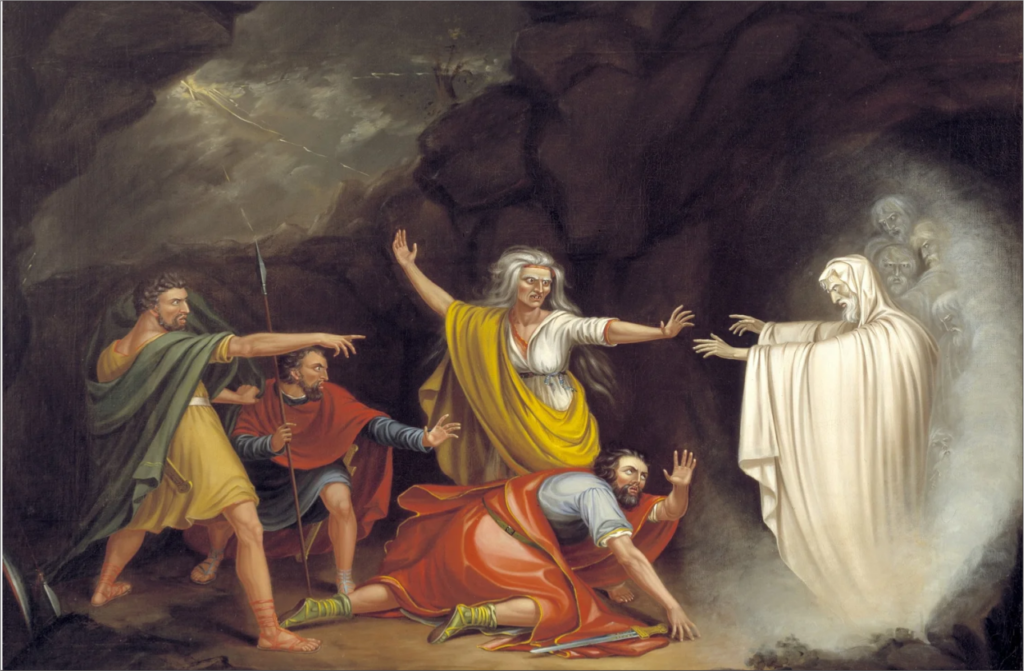
AN EXECUTIVE POLICY HOWEVER SACRED DOES NOT AUTOMATICALLY TRANSLATE INTO PERSONAL POLICY
REVIEWING THE SORDID ROLE OF SAUL’S SERVANT IN THE MATTER OF THE WITCH OF ENDOR” ~ A DEDUCTIVE POSITIONAL ARGUMENT By Schmuel Joshua

1. Introduction
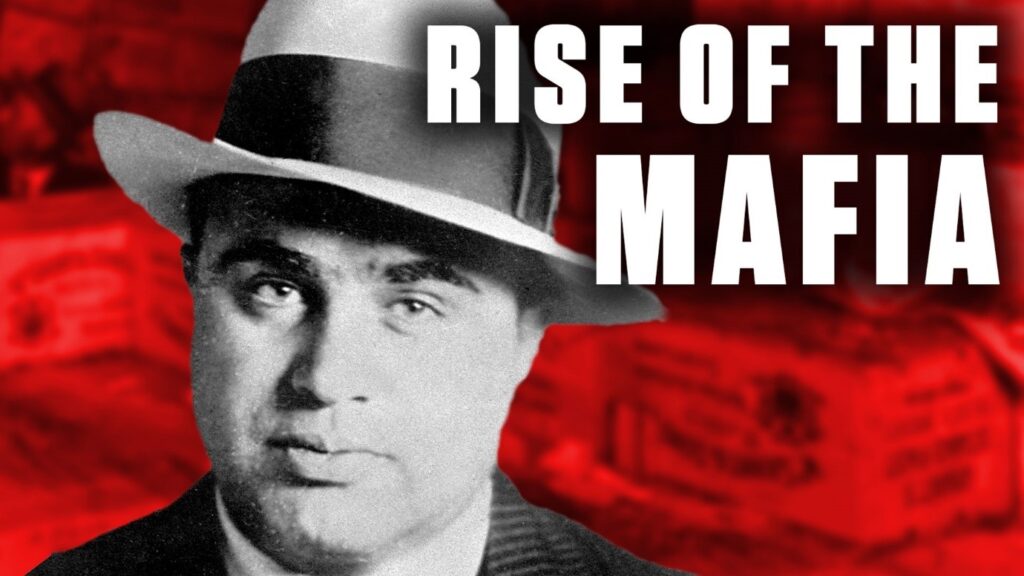
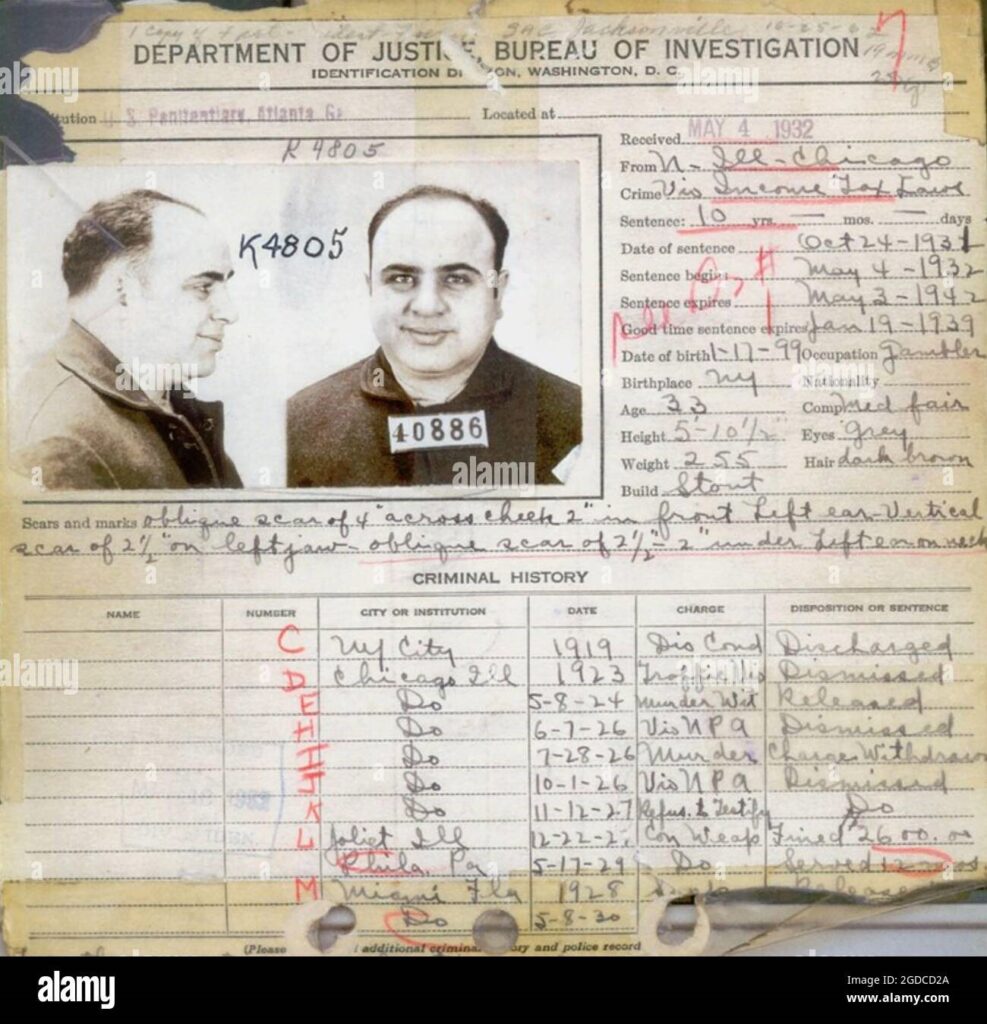
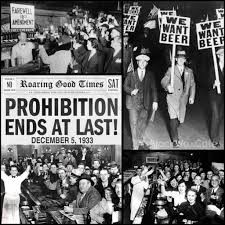
During the prohibition era in those United States, it was a common experience to find that some of the very officials entrusted with enforcing the policy of temperance were, in fact, the ones enabling it! Thus, for a solid 7 years, the famous Al Capone was able to gain worldwide notoriety in the windy City of Chicago because instead of some of the officers within the F.B.I working for the revered Uncle Sam, they were actively working for him and his mafia. In the end, Al Capone was rumored to have boasted openly that, “The F.B.I works for me now!” a line the famous lead actor Raymond Reddington borrowed in the blockbuster series “The Blacklist” when boasting to his shocked underworld brothers who found the F.B.I officers zealously working right within his office and helping him to eliminate competition from his enemies! Leaving the dirty backstreet roamed by the moonshiners and the bootleggers of the slime underworld of the Al Capones and the Reddingtons, we now report to the hallowed, sacred site of the Holy Land. There, we find another preposterous ‘The-F.B.I-works-for-me-now!’ phenomenon that occurred during King Saul’s administration in 1 Samuel 28. After a strict policy of eradicating all the witches in the Land, Saul suddenly decided to seek out the services of one! Thus, when the witch of Endor received the royal delegation of the anointed King of the Holy God of Israel in her dark coven, it left more questions than answers! The first question was this: How exactly did a wicked witch come to enter the payroll of an anointed King of Israel who had systematically destroyed them? How in the Holy Land could a witch receive Holy royal rewards for services proficiently rendered? Another set in this twisted morass is this: Who enabled a dark, wicked witch to service a Holy anointed King of Israel contrary to God’s Law and the King’s administrative policy? The following work is a deductive argument for the position that an executive policy, however sacred, does not automatically translate into personal policy by reviewing the role of Saul’s servant in the matter of the witch of Endor using universal structures of thought while showing the supporting reasons and the loopholes. So, to begin with, what is the basic historical background of the prohibition and Saul’s witch-free policy?
2. The Basic Historical Background of Prohibition and Saul’s Witch-Free Policy

The era of the prohibition enacted through the Volstead Act fronted during Woodrow Wilson’s administration in those United States is similar to that of Saul’s killing of the witches in Israel. This is because, in both instances, the government of the day unsuccessfully attempted to regulate vile human behavior using the state machinery. What was the reason for the failure of both the U.S. government and the royal government of Israel? It was because, as we will shortly show, the government officials were complicit in the crackdown. Spoken bluntly, the government frustrated what it attempted to achieve using its vital resources, namely its employees! So, what made Saul discreetly transgress his policy?
2.1 Saul Transgresses Against His Own Sacred National Policy
In 1 Samuel 28, we read of Saul seeking the Lord earnestly for direction before going into battle. This was in direct response to the Promise given through Moses as recorded in Deuteronomy 20:1, where The Lord had told Israel never to fear as they go into any battle, for He was with them. Therefore, all that they had to do was to follow the wisdom found within the prayer of Solomon in 2 Chronicles 6:34-36. Therefore, in the matter of Saul expectantly seeking the Lord before the battle was not only right within the mores of the Lord’s commandments but also, most importantly was the cultural thing to do as a leader. Unfortunately, God refused to answer him even after his earnest petitions and left him in the dark to dry and fry. What a bitter predicament! So, what did Saul do?
2.2 The Supernatural Replacing the Spiritual
When Saul saw that the Holy God refused to answer him despite his most robust efforts, he turned to one of his trusted officials, who gave him both the GPS location and, most importantly, the resume of a witch. Though Saul had supposedly killed them all, there was a surviving pocket locked away in Endor, who still operated with the direct consent and protection of one of Saul’s henchmen. So, what is the point of view with respect to this issue?
2. The 1st Major Premise: Executive Policies Do not Automatically Translate Into Personal Policies ~ Answering the Point of View with Respect to the Issue
As already shown, both the royal government of Saul and, later on, the one in the United States unsuccessfully attempted to legislate human behavior. Saul’s royal government unsuccessfully tried annihilating witches within the Holy Land. At the same time, the U.S. government also unsuccessfully dared to enforce temperance, and its efforts were thwarted, with the dark world becoming even more successful due to government insiders. So, what does this show us?

The failure of both Saul and the U.S. government shows us that legislation alone cannot change human behavior because the big government with the big executive gun is not necessarily the father and mother of the faithful small bureaucrat with the small executing gun. Contrary to what the totalitarian regimes have attempted to make the world believe, governments can never become the father and the mother of its citizens. This is because true loyalty is always personal and not corporately universal. The macro policies emerging from the top might not automatically pilfer into the micro policies executed at the bottom of the pyramid. Thus, in the very process of trying to enforce executive policies, some of the insiders from the same executive wing might resort to frustrating the same government that they work for.
In consequence, to paraphrase the Words of Jesus in Matthew 15:11, 18, 29, what goeth in within the government does not defile a man, but rather what goeth out of the government is what might defile a man. This is because the weak link within any government is usually the very men working within it! This leads us to the second but minor premise, namely, why do noble policies fail?
4. The 2nd Minor Premise: Why Do Noble Policies Fail? Answering the Key Question by Looking at both the What and the Who
To answer this work’s key question, we must ask ourselves: Why do noble policies fail? Looking at our two leading cases aforementioned, why did the prohibition in the U.S. and the witches’ genocide in Israel fail? To get ahead of ourselves, we can strongly postulate the following: The crime lords like Al Capone thrived during the prohibition because rogue elements within the F.B.I. greatly aided him, as already stated. Earlier in the Holy Land, a wicked witch accumulated a very loathsome boast of being on the royal retainer because one of Saul’s trusted officials directly aided her! In short, he was seemingly working for her! Therefore, the same ‘F.B.I’ Holy officer who must have taken an oath of Holy Orders was a loyal client and enabler of the very witch that he had sworn to eliminate from the land!
Thus, the rogue official took the King to Endor because even he used to go there as a client! From this, we can valiantly conclude that it takes both the what (human depravity and institutional human gaps) and the who (trusted insiders) for a noble policy to fail. Now, seeing that this minor premise can greatly impact institutional policies, practices, and cultures around the world, we turn to directly ask: What are the implications of this reasoning (if it is indeed correct)?
5. Unearthing the Global Institutional Ramifications of Never Tying Executive Policies to Personal Policies ~ Answering the Implications of this Reasoning (if it is indeed correct)
The main reason the most lethal and valuable intelligence assets are usually the ones placed deep inside the government machinery is that deeply placed assets have the best scoop of the crust. This is why the main creed of all intelligence recruiters is to recruit the asset with the deepest access within the government. So, what global institutional ramification does this argument portend?
As already highlighted within this sub-topic, the ramification of this argument is global and not local, meaning that the government is on its own! This means that if the government ever thought that it had 100% loyalty from its foot soldiers, then it thought wrong, and the sooner they woke up from slumber the better for them. So, what are the ramifications on the institutional policies, practices, and cultures around the world?
5.1 Assessing the Ramifications on Institutional Policies, Practices, and Culture
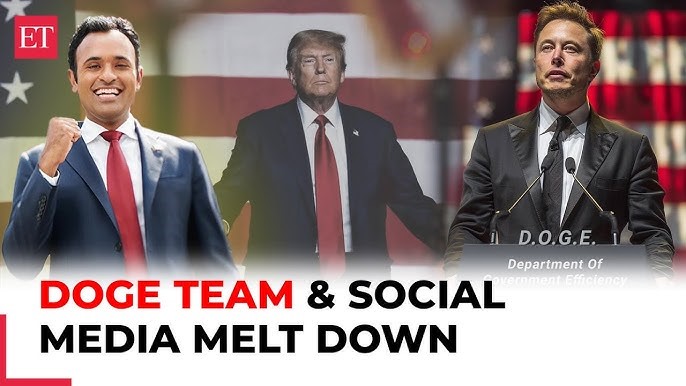
The moment the government realizes that the greatest betrayers are always within its ranks, it will begin to greatly review its policy of absolutely relying on the insiders to wholly execute its policies. It will also review the backward great red tape placed by its unconcerned institutional bodies. This is why the D.O.G.E proposed by the current President-Elect of the United States to be led by the dynamic duo of Elon Musk and Vivek Ramaswamy has drawn great interest.
Finally, since every institutional policy and practice, however noble or ignoble, is directly a result of culture, the ramification of accepting that executive policies do not automatically translate into personal policies on institutional culture is that it will directly lay the responsibility of institutional results on its own internal culture. This means that if ever the institution has success, it will be because of a good culture while if it fails, it is because of a bad culture. So, what is the fundamental purpose of these claims and demands?
6. REDEEMING the What and the Who in the Institutional Conveyer Belt ~ Answering the Fundamental Purpose of Claiming Executive Policies Should Not be Tied to Personal Policies
Having seen from our two leading historical and Biblical cases that corporate policies do not automatically translate into personal policies, by looking at the matter of the prohibition and the destruction of witches, we now turn inwards and attempt to seek lasting solutions. However, before offering the solution, we have to begin by restating the core problem: both of these two noble experiments failed because man was entrusted with dealing directly with devils. This means that man (a mortal being with frail natural faculties), was entrusted to go destroy devils (immortal beings with infinite supernatural dark powers) using natural means. In the case of the prohibition, the F.B.I., with their administrative forces training and armed only with civic authority derived from Washington DC, was feebly expected to march against man’s ancient appetite for alcohol and money. Here, guns were to gun demons, and as we would expect, the guns failed miserably.
In Saul’s case, a royal decree attempting to eliminate witchcraft and the witches who perpetuate them sent out trusted royal officials armed with the decree of an earthly feeble king. The outcome? Well, the royal officials failed. This is because all they had as backing was a mere royal charter backed up by earthly swords as they attempted to march up against diabolic altars of witchcraft. Given this, what, then is the proposed solution?
7. REDEMPTION: The Answer to Both the Fallen Man and His Fallen World ~ The Exceptionality of the Christian Worldview to Man’s Depravity
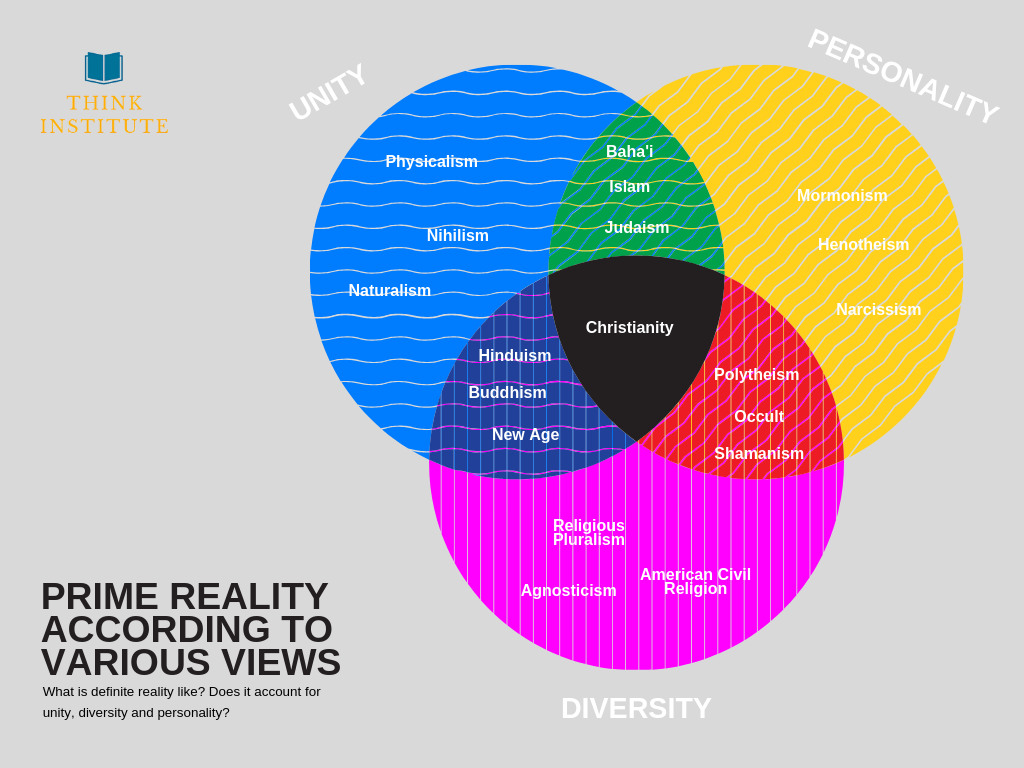
Intellectually, no one can analyze, synthesize, conceptualize, and evaluate any problem to improve it without relying directly on his worldview. Thus, the Christian worldview, according to Horton, S. (2011), when compared to other competing worldviews like Christian Science, Hinduism, and Buddhism, the Positive Thinking of some popular Christianity, much of Psychology, and aspects of the New Age Movement; emerges triumphant because it offers a sound soteriological option for sin as we shall reveal shortly.
7.1 SOTERIOLOGY: The Antidote to Sin and an Invitation to True Freedom and Empowerment ~ An Answer to the Information Needed to Answer the Key Question
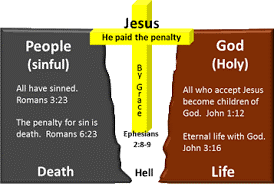
Having seen that the surest way out of systematic institutional failure is simply the curing of sin, we now turn inward to study to obtain clear information on how to prosecute the sin problem. Soteriology that theological discipline that deals with the issue of salvation, then becomes our strong tower of means. This is because through soteriology, we will be able to expertly prove that sin is the sole problem of the world and therefore the surest enemy to combat as we attempt reforms. According to soteriology, sin is indeed the problem of the world at an individual level because it is the reason why an individual’s soul needs salvation, and his entire world needs redemption. Therefore, in arguing for our main question of why noble policies fail, we can now prepare to answer the most basic concept in the question. So, what is the most basic concept in the question?
7.2Sin as Man’s Real Problem: Answering the Why and the How of the Most Basic Concept in the Question by Highlighting the Six Key Soteriological Claims
Now, we have already seen that some of the noble policies fail because of man’s depravity, i.e., his inability to help himself. However, we still have to ask and answer the most basic concept in the question, namely, why and how some of these noble policies fail. Now, there are six key soteriological reasons why sin is the real problem of the world. These are: sin affects the world at a personal level because the original sin became the problem by first introducing personal sin; sin affects the world at a broader cosmic level because the Scripture presents not only the evangelical mold of personal sin but also a broader cosmic story; sin affects the world by corrupting the whole creation according to the inspired narrative since that is what Genesis 2 & 3 invites us to; sin affects the world at a broader cosmic level no wonder the cosmic redemptive agenda of Christ as seen in Colossians 1:15-20; sin affects the world at even a more comprehensive level hence though the problem is still sin, when properly placed, sin is even bigger! Moreover, finally, sin affects the world by innumerably distorting Shalom; hence, soteriology through the Jewish eye enumerates sin’s innumerable distortions! Therefore, the only answer to sin (and consequentially the policy failure that it brings in the society) is through the soteriological approach of preaching the Gospel effectively to every creature. So, are there any assumptions that we are using in this reasoning?
8. Addressing the Key Assumptions in the Reasoning that Executive Policies Should Not be Tied to Personal Policies
We have made several key assumptions in our argument, positioning that executive policy, however sacred, does not automatically translate into personal policy by reviewing the role of Saul’s servant in the matter of the witch of Endor. So, what are these key assumptions?
1st Assumption: Source of Materials ~ That the Key Materials Used are Reliable
Using the HOLY BIBLE to argue for Saul’s case and several key biographical books to argue for the prohibition’s case, we have placed our trust in the veracity of these texts. Therefore, our first assumption is that what the lead material sources reveal is true and can form the source of our argument.
2nd Assumption: Corporate Work Plan ~ That All Executive Policies Need Subordinate Enforcers
In dichotomizing the corporate work into two levels, namely the executive and the subordinate, we have assumed that the two cases argued within this work strictly followed this hierarchical model. Therefore, at the top of this hierarchical pyramid is the executive wing (with the likes of King Saul and the U.S. government); while at the bottom are the policy executors (Saul’s officers or America’s F.B.I.).
3rd Assumption: Corporate Workflow ~ That Once An Executive Policy is Fronted, the Subordinates Assume Full Responsibility for their Outcome
Another corporate assumption is that every organization has a definite workflow. Therefore, we have assumed throughout this work that once an executive policy is fronted, the subordinates must assume full responsibility for their outcome. This is why we placed Saul’s sin of idolatry on his trusted servant while laying the wreath of the death of prohibition on the F.B.I.
4th Assumption: Corporate Auditing ~ That Executive Policies Often Fail Because of the Subordinate Enforcers
Our next assumption is the conclusive matter about the fate of executive policies since we have seen both corporate work plans and workflow. So, what is the assumed conclusion? Executive policies often fail because of the subordinate enforcers. Thus, Saul failed because of being misled by his servant, while the U.S. government failed because of being failed by some rogue elements within the F.B.I. But why the rogueness?
5th Assumption: Soteriological Diagnosis ~ That All Systematic Institutional Failures Are Due to Man’s Sin
Having highlighted the corruption within King Saul’s heart and camp as well as the U.S. society and government, we have assumed that both of these cases failed because of the soteriological issue of sin. Thus, Saul failed because he was a sinner while the American public drank themselves silly while abetting rogue prohibition criminals because of sin.
6th Assumption: Soteriological Remedy ~ That the Christian’s Soteriological Worldview is the Surefire Solution to Man’s Depravity and the Final Remedy for Noble Policies
The final assumption made is that the only remedy for this sin problem (which is the root cause of the policy failure) is salvation. Therefore, both King Saul’s life and regime as well the American society, could have been saved if only there had been internal reconstruction before an attempted external repairs. So, what are the key strengths and weaknesses of these assumptions?
8.1 Revealing the Strengths and the Weaknesses in the Assumptions Made
Like all deductive arguments, our argument also has strengths as well as weaknesses. The following are some of the key strengths as well as the key weaknesses of our argument.
The Key Strengths
*By starting the argument with a general statement or hypothesis, we have been able to carefully examine the possibilities and reach a specific, logical conclusion.
**Linking the Federal U.S government and King Saul’s regime made their experiences be of the same class, hence easily proving that if something is true of a class of things in general, it is also true for all members of that class.
***The reasoning is sound because the hypothesis is also correct.
****Following the first two steps i.e., a premise, then a second premise, aided in making a solid inference in the work.
*****Therefore, the conclusions made are truths inferred based on other propositions assembled with it in a logical argument, as shown in the work. Thus, the conclusion is logical and true.
The Key Weaknesses
*The entire argument is deductive reasoning, which often needs to be revised.
**Some of the premise upon which the conclusion is based is not factual information but rather a presumed fact. Assumptions litter the work!
This leads us to the final question, namely: What are the most fundamental inferences or conclusions of the argument that executive policy, however sacred, does not automatically translate into personal policy by reviewing the role of Saul’s servant in the matter of the witch of Endor?
9. The Most Fundamental Inferences or Conclusions
The position that executive policy, however sacred, does not automatically translate into personal policy by reviewing the role of Saul’s servant in the matter of the witch of Endor is true. Using universal structures of thought, we can answer the eight solid questions about the argument. The point of view concerning this issue, which is our first premise, is that executive policies do not automatically translate into personal policies and, hence, cannot legislate human behavior. Therefore, the second but minor premise is that noble policies fail because of both the what (human depravity and institutional human gaps) and the who (trusted insiders). The implications of this reasoning (if it is indeed correct) will cause global institutional ramifications in policy, practice, and culture. The fundamental purpose of these claims and demands is that both the what and the who in the institutional conveyor belt must be redeemed and the information needed to answer the question of whether sin is indeed the sole problem of the entire earth and man is found in the discipline of soteriology. The key assumptions used in this reasoning are that the key materials used are reliable; all executive policies need subordinate enforcers; once an executive policy is fronted, the subordinates assume full responsibility for their outcome; executive policies often fail because of the subordinate enforcers; all systematic institutional failures are due to man’s sin; and the Christian soteriological worldview is the surefire solution to man’s depravity and the final remedy for noble policies. The key strength of the argument is that it has followed the basic rules of deductive reasoning and scooped all of its critical benefits, while the weakness is that the entire argument is deductive reasoning, which often tends to be faulty because it has several assumptions!
References:
Bair, D. (2016). Al Capone: His Life, Legacy, and Legend. Nan A. Talese; First Edition (stated), First Printing. Retrieved from Amazon.ca
Behr, E. (2011). Prohibition: Thirteen Years That Changed America. Arcade; Reprint edition.Retrieved from Amazon.ca
Binder, John J. (2017). Al Capone’s Beer Wars: A Complete History of Organized Crime in Chicago During Prohibition. Amherst, NY: Prometheus Books. Retrieved from Amazon.ca
Duncan, David D. Sr. (2008). Abundant Life in the Son: A Study of Salvation. Africa’s Hope. (pdf)
Fisher, A. (2004). Critical Thinking: An Introduction. Cambridge: Cambridge University Press.
Hiebert, P. G. (2008). Transforming Worldviews: An Anthropological Understanding of How People Change: Baker Publishing Group.
HOLY BIBLE (ESV)
Honderich, H. (6 December 2024). What we know about Musk’s cost-cutting mission. Retrieved on 14-12-2024 from https://www.bbc.com/news/articles/c23vkd57471o
Horton, S. (2011). Systematic Theology. [edition unavailable]. Logion Press. Available at: https://www.perlego.com/book/2050274 (Accessed: 21 November 2024).
Keefe, R. (2005). The Man Who Got Away: The Bugs Moran Story: A Biography. Cumberland House Publishing. Retrieved from Amazon
Mburu, E. (2019). African Hermeneutics. UK.: Langham Global Library.
McCulley, M. (1999). Evangelism (Discovery Series) Springfield: Africa’s Hope. (pdf)
McGrath, A. E. (2016). Christian theology: A introduction. John Wiley & Sons, Retrieved from https://ebookscentral.proquest.com
Okrent, D. (2011). Last Call: The Rise and Fall of Prohibition. Scribner; 1st edition. Retrieved from Amazon.ca
Oyugi, P.M. (2024a). Moral Reasoning Wanda Teays.pdf. Retrieved on 5-12-2024 from https://pacu.mrooms.net/course/view.php?id=4553#section-3
Oyugi, P.M. (2024b). Moreland Apologetic Reasoning and the Christian Mind.pdf. Retrieved on 5-12-2024 from https://pacu.mrooms.net/course/view.php?id=4553#section-3
Oyugi, P.M. (2024c). Moreland Biblical Portrait of the life of the mind.pdf. Retrieved on 5-12-2024 from https://pacu.mrooms.net/course/view.php?id=4553#section-3
Oyugi, P.M. (2024d). study of eschatology.pdf. Retrieved on 5-12-2024 from https://pacu.mrooms.net/course/view.php?id=4553#section-3
Oyugi, P.M. (2024e). The Merits of Using Worldview in Religious Education.pdf. Retrieved on 5-12-2024 from https://pacu.mrooms.net/course/view.php?id=4553#section-3
Oyugi, P.M. (2024f). Lecture 1 n 2_Worldview_Definition-Importance.pdf. Retrieved on 5-12-2024 from https://pacu.mrooms.net/mod/folder/view.php?id=270121&forceview=1
Oyugi, P.M. (2024g). Lecture 3 n 4a_The Christian worldview-Introduction.pdf. Retrieved on 5-12-2024 from https://pacu.mrooms.net/mod/folder/view.php?id=270122&forceview=1
Oyugi, P.M. (2024h). Lecture 3 n 4b_The_Christian_worlview_cont.pdf. Retrieved on 5-12-2024 from https://pacu.mrooms.net/mod/folder/view.php?id=270123&forceview=1
Oyugi, P.M. (2024i). Lecture 5 n 6a_African-Worldview (1).pdf. Retrieved on 5-12-2024 from https://pacu.mrooms.net/mod/folder/view.php?id=270124&forceview=1
Oyugi, P.M. (2024j). Lecture 7_Critical_Thinking.pdf. Retrieved on 5-12-2024 from https://pacu.mrooms.net/mod/folder/view.php?id=270125&forceview=1
Oyugi, P.M. (2024k). Lecture 8_Deductive_and_Inductive_Arguments.pdf. Retrieved on 5-12-2024 from https://pacu.mrooms.net/mod/folder/view.php?id=270126&forceview=1
Oyugi, P.M. (2024m). Lecture 9_Thinking_Critically_within_a_discipline.pdf. Retrieved on 5-12-2024 from https://pacu.mrooms.net/mod/folder/view.php?id=270127&forceview=1
Oyugi, P.M. (2024n). Lecture 10 n11a_Critical_Thinking_and_Moral_Issues.pdf. Retrieved on 5-12-2024 from https://pacu.mrooms.net/mod/folder/view.php?id=270127&forceview=1
Paul, Richard, and Elder, Linda (2014). Critical Thinking: Tools for Taking Charge of Your Learning and Your Life. Edinburgh, England: Pearson Education Limited.
Poplin, Mary. (2014). Is Reality Secular?: Testing the Assumptions of Four Global Worldviews. Downers Grove: IVP. [Kindle Edition]. Retrieved from Amazon.ca
Solomon, M. (Jan 25, 2024). SOTERIOLOGY: What Is the Problem? Retrieved on 27 October 2024 from https://www.youtube.com/watch?v=04SzgzH09aQ