
THE REWRITER OF SHRINES AND TEMPLES
EXAMINING THE WORD CHURCH AND HER PURPOSE ON THE EARTH AS IT RELATES TO JESUS’ DECLARATION IN MATHEW 16:18
1. Introduction
The other day in history, two different men stood up and spoke in those troubled zones of God’s green earth known as the Middle East. One of them stood up in present-day Baghdad, while the other one stood up about 40 kilometres (27 miles) from the Sea of Galilee in present Israel. When Nebuchadnezzar spoke in Daniel 4:30, he declared that he had built Babylon by his mighty power as a royal palace for the glory of his majesty. What a boast! Far down in the south of Baghdad, another ‘builder’ also stood up to speak not to Himself but rather to His humble followers. Speaking in Matthew 16:18, looking over the abandoned cave that had been used as a shrine to worship Baal and Pan before being turned into a politicoreligious edifice unto Caesar, the Lord Jesus, too, declared that He would build. Looking back, when Nebuchadnezzar (who had built) was done speaking, a 7-year feast of grass was served to him as he went mad. Furthermore, in the great coming apocalypse, Babylon is going to fall, never to rise again for eternity. Contrarily, down South, when Jesus was done speaking (humbly promising that He would build), the Cross happened, the Upper Room followed, and over 2,000 years later, the Church still remains the single most powerful entity on the earth. As for the feast served for over these 2,000 years, the celebrants are always happy to remind us that it is not the grass of mad men but rather the bread and wine of the sanctified. What, then, is the Church, and what is its purpose? The following work, therefore, highlights the meaning of the word Church and her purpose on earth as it relates to Jesus’s declaration in Matthew 16:18.
2. Historically Restating Matthew 16:18 ~ The Historical Background of the Canaanite and Greek Shrine and the Herodian Temple

As a Master Teacher, the Lord Jesus was intentional with every move that He made. Thus, to make the powerful Matthew 16:18 Declaration, He strategically chose Caesarea Philippi at the foot of Mt. Hermon. Crabtree, J. (2015) reveals that this particular spot from where He was speaking was previously a cave used by Canaanite worshippers of Baal as a shrine, as recorded in Joshua 11:17, Judges 3:3, and 1 Chronicles 5:23. Later on, the Greeks dedicated this cave to their god of nature called Pan and renamed it Paneion. Eventually, regional politics took sway, with Herod the Great honouring Caesar Augustus with a marble temple in 20 B.C. after Caesar had given him control of this prime region. Summed up, there was a satanic trinity of the Canaanites, the Greeks, and the political class led by Herod, each fraternizing at this cave. Therefore, we can see the Lord in His wisdom, promising to displace both a spiritual Canaanite and Greek shrine and a politicoreligious national monument through the simple act of building His Church. To Him, the answer to this satanic trinity was His Church. What did Jesus do when He came to this historically competitive ‘building’ zone as He sought to build His Church?
3. Reviewing the Contextual Background of Matthew 16:18
After arriving in this area, Crabtree reveals that the Lord Jesus did not immediately make the Declaration but began with an extended moment of prayer alone and away from His disciples, as recorded in Luke 9:18. What triggered His promise to build His Church?
Reviewing the Immediate Context
After interviewing His disciples to establish both what people said that He was and what they, as His followers, said that He was, Jesus finally got the right anointed answer to His questionnaire. This is when Peter shot up and powerfully spoke with heaven’s revelation about Him. In response to Peter’s anointed revelation, as seen in verse 16, the Lord now made His famous Declaration of verse 18.
Reviewing the Subsequent Context
The next verses 21-23 indicate three immediate things: His will, His reprimand, and His mindset. Later, after the Declaration, He stayed on in the areas ministering for one week, as seen in the next chapter of Matthew 17:1, before leaving Caesarea Philippi. Since He promised to build His Church, this leads us to ask: What is His Church?
4. Defining the Church as it Relates to Matthew 16:18
Douglas, J., Tenney, M. and Silva, M. (2011) state that the Church, as an English word, is a Greek adjective derivative of the Kyriakos to signify “belonging to the Lord” or “the Lord’s.” However, the NT uses Ekklēsia as a verb to signify “to call out.” Douglas contends that the term Ekklēsia is found only in Matthew 16:18 and 18:17 in the Gospels. The not-yet-finished work of Christ perhaps informs this scarcity and comes to a birthing climax in Acts 2, where everything about the Church’s situation changes. Thus, the term Ekklēsia that Jesus uses in this verse to define the Church is Assembly. This means that He was talking about building an Assembly of people who are “called out.”
Easley, Kendell H., and Christopher W. Morgan (2013) designate the term Church as a Specific, Intentional, Regularly Meeting, Local Association of Jesus’ Followers. Easley adds that the Church had its historical inception in the Book of Acts and will have its future consummation in the Book of Revelation. From this basic definition, we can see that the Church started in the Book of Acts, and her final destiny will climax in the Book of Revelation. What, then, identifies the Church?
5. The Natural “Marks” of the Church
Douglas informs us that according to Ephesians 4:4, Jesus has one temple, body, and bride; hence the Church is one. Secondly, the Church is Holy according to Ephesians 5:26 and Galatians 1:4 because it has been set apart and sanctified by Jesus Himself. Thirdly, the Church is Catholic according to Colossians 1:6, 3:11, Ephesians 2:14, and Revelation 5:9 because it is universal and consists of all men from every race, place, and age. Fourthly, the Church is Apostolic according to Ephesians 2:20 since it rests on the Prophetic and the Apostolic foundation because they have been raised as the authoritative witnesses of the Church (Acts 1:8). What is Jesus’s statement of intention in the Matthew 16:18 Declaration?
6. The Exegesis of Jesus’s Key Statements in Matthew 16:18
6.1 #1st statement: “And I tell you, you are Peter, and on this rock.”
The Rock ~ The Various Interpretations of the Church’s Key Building Materials

6.1.1 #1st rock ~ Peter as the Human Leader
This view suggests that Peter was the rock Jesus was referring to, using the play on the words “Peter [petros], and on this rock [petra].” Consequently, Peter was greatly used to lay the Church’s foundation, and he was the first to proclaim the Gospel (Acts 2) and the first witness to reach the Gentile world (Acts 10).
6.1.2 #2nd rock ~ Peter’s Truthful Confession
Peter’s truthful statement, in which he states the God-revealed truth about Jesus’s identity in Matthew 16:16, has become another prominent view. By his God-revealed statement, Peter demonstrated his stability while standing on the truth of his given revelation, which solidified his nickname (John 1:42).
6.1.3 #3rd rock ~ Peter’s Faith
When God, by the act of His sovereignty, opened Peter’s eyes to Jesus’s identity (Matthew 16:17), he was able to demonstrate the power of personal faith. Since this personal faith is what marks out a true Christian, this moment marked the standard by which the real Church is measured. Therefore, until there is a personal faith, there cannot be the Church since this is what makes them the living stones (1 Peter 2:4-5).
6.1.4 #4th rock ~ Jesus the Cornerstone

There are two rocks mentioned by Jesus, namely Petros, which is a masculine noun referring to a detached stone or a stone that might be thrown or easily moved, according to Zodhiates, S. (1992). Zodhiates adds that another word is petra, which is a feminine noun used to refer to a mass of rock or a cliff that can be used in a foundation (Matthew 7:24-25). These two dissimilarities suggest that Jesus was contrasting Himself with Peter and showing him that although he was a small rock, He was nonetheless the foundation of the Church. 1 Cor 3:11 and 10:4 strongly support this view.
6.2 #2nd statement: “I will build My church” in Matthew 16:18
#1st testimonial: “I”: This refers to the Authority that Jesus possessed to build His Church. Thus, He spoke from the place of ability and not inability.
#2nd testimonial: “will”: The Lord had a clear resolve and purpose to build His Church. No one needed to nudge or coerce Him since it was an agreeable desire within Him.
#3rd testimonial: “build”: The tense used here is future continuous tense. This means that the building project would take place over time.
#4th testimonial: “my”: The Lord alone wields absolute ownership of His Church. As His possession, His chosen ones are only delegates representing Him.
#5th statement: “church”: The name that He designated the completed project was the Church. As the ‘parent,’ the Lord wields the right to name His project as He deems fit!
6.3 #3rd statement: “and the gates of hell[b] shall not prevail against it.”
The Church is both militant and triumphant. Therefore, the gates of hell cannot prevail against her because she carries four essential characteristics of greatness as follows:
6.3.1 #1st greatness ~ Her DNA
Ryle, JC (2015) argues that the Church’s DNA is composed of a mystical, imperishable Body of Christ, which, unlike Adam and Eve’s first creation, can never decay or face defeat. This is her first characteristic of greatness, which makes it indomitable against the gates of hell.
6.3.2 #2nd greatness ~ Her Founder, Owner, and Protector
As the founder, owner, and protector of the Church, Jesus is its foundation. As the Omnipotent God in the flesh who cannot be overcome, His omnipotent nature permeates throughout the Church and makes her prevail against all hell’s attacks.
6.3.3 #3rd greatness ~ Her Opposition
Though the Church’s opposition is great, the prevailing power of the Church is, however, greater. Therefore, though hell’s constant attacks against the Church are innumerable, she keeps triumphing over them all because her Owner and Leader is the Lord of Hosts Himself.
6.3.4 #4th greatness ~ Her Security
The final characteristic of the Church is the greatness of her security. Drawing from the promises and the Person of Christ, the Church is more than secure as she advances God’s agenda on earth. What then is the Church’s purpose?
7. The Purpose of the Matthew 16:18 “Ekklēsia” Church ~ its means of life and continuing function
Why did He promise to build a body of the called-out ones? What is Ekklēsia’s earthly purpose?
7.1 Fulfilment of the Great Commission through Evangelism and Discipleship ~ The Main Purpose of the Matthew 16:18 “Ekklēsia ”
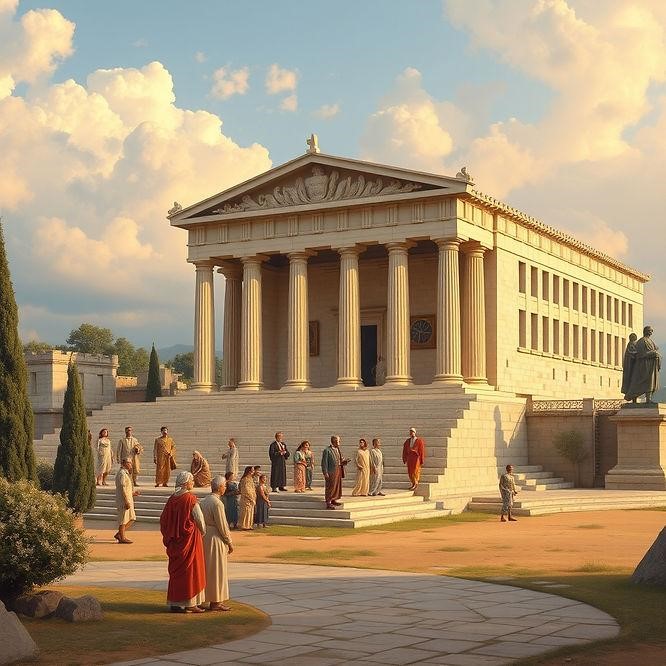
The Church to be built in Matthew 16:18 consists of people who are “living stones” (1 Peter 2:5), and they aim to offer up to God spiritual sacrifices through Jesus. Therefore, just like the Jewish OT Temple, Matthew 16:18 “Ekklēsia” primarily exists as a means for gathering and equipping a royal priesthood unto God for the realization of the Matthew 28:18-20 Great Commission. This gathering is Evangelism, while the equipping is Discipleship. However, whereas men’s hands built and decorated the OT Jewish Temple to serve as a national center for the priesthood, the NT “Ekklēsia” is being built by Jesus Himself and universally exists to gather people from all the nations of the earth and to bring them into a covenant relationship with God through Christ. According to 1 Corinthians 6:19, 3:16-17, and Ephesians 2:21-22, the collective Church, as well as each member, is a Temple. Therefore, the same functions that God did in the OT Temple, He now undertakes in the NT Temple through the indwelling of His Holy Spirit. Therefore, “Ekklēsia” in the Matthew 16:18 context is God’s NT Temple for the High Priesthood of Christ. How is the Church then to execute these main twin purposes?
7.1.1 #1st execution ~ Evangelism: The First Step Into God’s Kingdom
In Mathew 28:18-20 and Acts 1:8, the Lord gave His Church the Great Commission and instructed them to boldly proclaim the Gospel to every creature everywhere so that they could be saved. The sharing of the Gospel through word and deed in the Holy Spirit’s power then becomes the first way of evangelism as the Church becomes a lighthouse in the community. Every member of the Church ought to participate in this sacred venture. Notably, this promotion of the Gospel also entails the training of the members to do so as advised in 1 Peter 3:15. How are they to train these members?
7.1.2 #2nd execution ~ Discipleship: The Key Requirement For Church Membership
Proper evangelism is never complete until the entire process of discipleship terminates. Therefore, the next core purpose of the Church (as captured in the second part of the Great Commission) is to graduate the converts into Disciples of Christ by teaching Biblical doctrines to ground them in the faith to fulfil the ministry goal of Ephesians 4:14. To achieve this ministry climate, the Church must strive to be a place of love (1 John 3:11), a place of encouragement (1 Thessalonians 5:11), a place of kindness and compassion (Ephesians 4:32), and a place of instruction (Romans 15:14). Therefore, contrary to what many denominations out there claim, there was only one requirement namely Discipleship, that it took to be a member of the Church then and even now. What are the Disciples’ key characteristics?
7.1.2.1Key Characteristics of a True Disciple
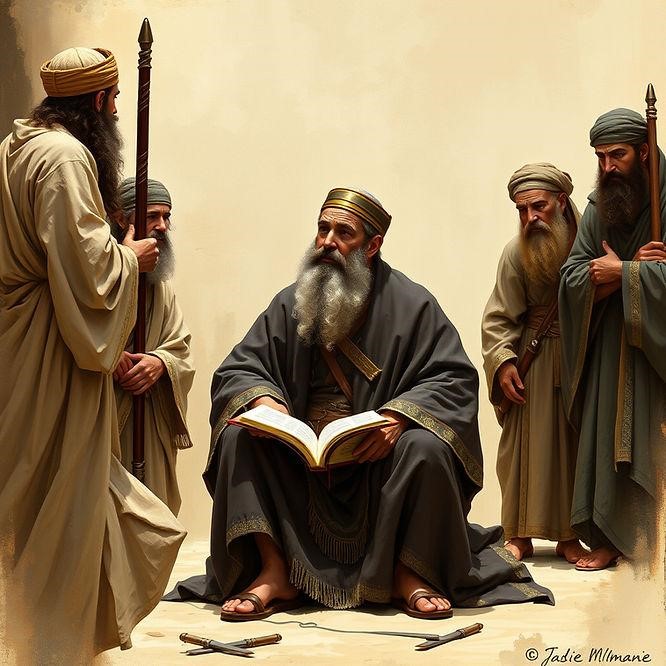
#1st ~ A Decision: This commences at conversion and terminates at glorification, meaning he had to make up his mind to follow Jesus.
#2nd ~ A Death: After forsaking all, he dies to himself, meaning he forfeits his life and everything else that he loves apart from the Lord and then follows after Jesus.
#3rd ~ A Lifelong Determination: Aiming to endure to the end to be saved, he had to put his hand on the plow and never look back until the end. Since the early Church embodied the best Discipleship, what was their secret that can help today’s global Church?
7.1.2.2 Mature Fellowship ~ The Secret Recipe for Great Discipleship
Four preoccupations namely the doctrine of the Apostles, fellowship of the brethren, bread breaking, and prayer as Acts 2:42 records, defined the early Church’s Discipleship. From here, we see a beautiful four-process recipe: devotion to the Biblical doctrine, availing an appropriate venue of fellowship for believers, keeping the Lord’s Table, and prayerfulness. As one of the most solemn ceremonies, the Lord’s Table must be observed diligently within a local Church setting as instructed in 1 Corinthians 11:23-26. Again, breaking bread regularly, as espoused in Acts 2:42 and the zealous practice of heartfelt corporate prayer must be encouraged.
8. Conclusion

Babylon has already built its wicked temple, and soon, it will witness the final decisive apocalyptic judgment as the demonic system that it is. As an ongoing work still awaiting a glorious rapture, the Church triumphant, as a promised Body of Christ, however, is still building. Thus, Babylon’s finished building and Christ’s continuing building are two realities of two contrary kingdoms. To vanquish Babylon as a wicked system, Christ has purposed to rewrite the order of things through the ongoing building of His Church. Since the Canaanite and Greek shrines and Herod’s Temple, historically located in Caesarea Philippi, are still a commonplace Babylonian nuisance found in many communities and nations, Jesus, in His wisdom, promised an absolute antithesis to them through the building of His Church as the Ekklēsia. Therefore, the Church militant or the Assembly of the called-out ones is heaven’s displacement tool of the evil shrines and the vain temples of men wherever they can be found. To achieve this, the Church has to commit to its primary purpose, namely obedience to the Great Commission in the Holy Spirit’s power, which is Christ’s Master-builder strategy of rewriting these shrines and the temples. Thus, the Church will effectively rewrite the shrines and the vain temples that still massively litter our earth through evangelism and discipleship in the authentic Acts 2 Pentecostal fashion. Then, Christ’s promise to build His Church and the gates of hell not prevailing against it, as Declared in Matthew 16:18, will be fulfilled. We are already on board!
References:
Benestad, J. Brian and Robert Benne (2015). Five Views on the Church and Politics (Counterpoints: Bible and Theology). Grand Rapids: Zondervan. [Kindle Edition]. Retrieved from Amazon.ca
Crabtree, J. (2015). The Randall House Bible Commentary: Matthew. [edition unavailable]. Randall House. Available at: https://www.perlego.com/book/3239931 (Accessed: 2 February 2025).
Douglas, J., Tenney, M. and Silva, M. (2011). Zondervan Illustrated Bible Dictionary. [edition unavailable]. Zondervan. Available at: https://www.perlego.com/book/559070 (Accessed: 2 February 2025).
Easley, Kendell H. and Christopher W. Morgan (2013). The Community of Jesus: A Theology of the Church. Downers Grove: B&H Publishing Group. [Kindle Edition]. Retrieved from Amazon.ca
Eastman and David, L. (2021). Early North African Christianity. [edition unavailable]. Baker Academic. Available at: https://www.perlego.com/book/2063298 (Accessed: 2 February 2025). Deressa, S. (2022). Leadership Formation in the African Context. [edition unavailable]. Wipf and Stock. Available at: https://www.perlego.com/book/3422373 (Accessed: 2 February 2025).
Heaney. (2015). From Historical to Critical Post-Colonial Theology. [edition unavailable]. Pickwick Publications. Available at: https://www.perlego.com/book/881022 (Accessed: 2 February 2025).
HOLY BIBLE (ESV)
Lugano, R. (2023a). 06PPPT1 Church and Politics.pptx
Lukano, R. (June 2024b). Theological Foundations for Family and Ministry. Retrieved on 6-20-2024 from https://pacu.mrooms.net/course/view.php?id=4265#section-3
Richards, L. (2016). New International Encyclopedia of Bible Words. [edition unavailable]. Zondervan. Available at: https://www.perlego.com/book/561010 (Accessed: 2 February 2025).
Ryle, JC. (2015). Bible commentary – The Gospel of Matthew. 1st edn. Editora Oxigênio. Available at: https://www.perlego.com/book/3971537 (Accessed: 2 February 2025).
Shirley, C. (2018). Family Ministry & the Church. A Leader’s Guide for Ministry through Families. Randall House.
Spain, S. (2017). A history of the Church in Africa: A survey from a Pentecostal Perspective. Africa’s Hope 580 West central Street. Missouri.
Webster (2009). Christ Will Build His Church. [edition unavailable]. Resource Publications. Available at: https://www.perlego.com/book/881105 (Accessed: 2 February 2025).
Zodhiates, S. (1992). The Complete Word Study Dictionary: New Testament Hardcover. Third edition. AMG Publishers. [Kindle Edition]. Retrieved from Amazon.ca