
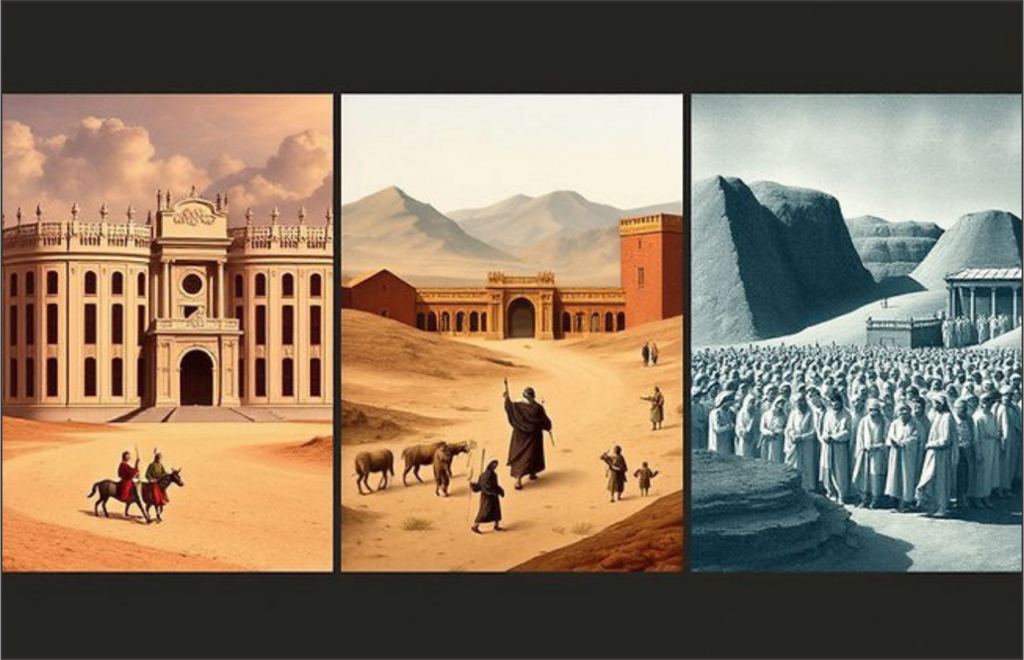
The Palace, the Desert, and the Assignment
1. Introduction
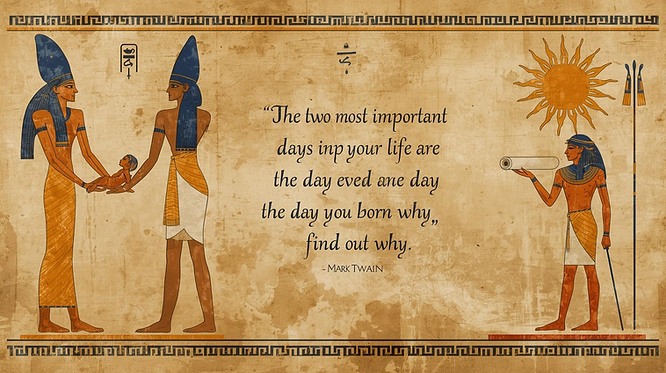
What are the two most important days in your life? “The day you are born and the day you find out why,” so wrote Mark Twain. However in the case of the legendary Moses, there were three important days in his life namely: the day he was born and eventually raised in the greatest palace of his day, the day he was banished into the dreadful desert away from his birth country and eventually the day he made a comeback to the birth country as an anointed deliverer. Thus as a young man, he was a royal adopted prince; as a wanderer in the wilderness he was a shepherd; but as a comeback kid, he was an anointed Prophet whose credentials remain unrivalled to date. Interestingly, these three palace-desert-and-assignment periods took exactly 40 years each! How prophetic! Given that he was called to pioneer a Nation like no other, every facet of his life therefore underwent a ruthless governmental dealing. Consequently, like the first arm of government that functions as the Executive, Moses did his royal share of governmental training for a solid 40 years. Again as the Legislative arm that formulates the laws, Moses did his 40 years of preparation in the desert to write the Law that still shapes many civilized cultures to date. Finally, as the Judicial arm that interprets the Law, Moses’s labors as a writer and teacher of the Law for 40 years are peerless. Therefore in seeking to discuss the life of Moses, we will briefly list and explain each of these three 40 momentous governmental years to show God’s intent and sovereignty throughout all of them. So to begin with: how were the first 40 years of Moses?
2. THE FIRST PERIOD: The Palace
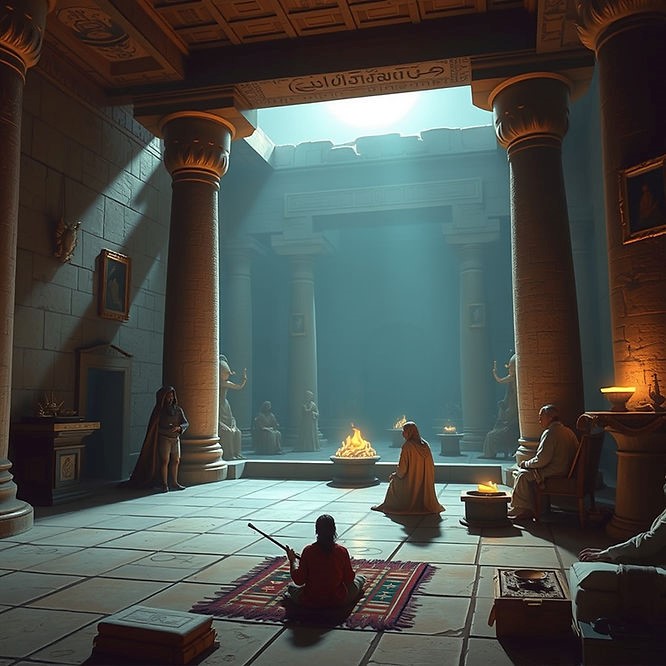
2.1 Overview of this Introductory Period
Even though they say that life begins at 40, Moses’s life however nearly ended at 40- and did in the Egyptian sense of it! This is because, at 40, he’d already exhausted the royal pass that had allowed him to pass as an Egyptian prince. At 40, his cover was blown and he was now forced to choose whether to live out the true Hebrew that he was or to flee for dear life. Moses fled. Only that in his flight, he didn’t use the Nile. No. The water that had saved him as a vulnerable infant had now been turned into a searing hot sand.
Now having seemingly started the story from the end instead of the beginning, we will now be forced to go way back and start from the very beginning. Therefore to begin with: who were Moses’s parents or siblings? Why had he been floated in the Nile as an infant? Why had he been raised as an Egyptian and not as a Jew? Why was he even called Moses and not some other Levitical name like his ancestors? Why did Moses need to flee Egypt at 40? To get the answers to this myriad of questions, we will need to now highlight the main events of Moses’s life during the early 40-year period in Egypt. To begin with: who were Moses’s parents or siblings?
2.2 The Main Events
2.2.1 Date of Birth (D.O.B)
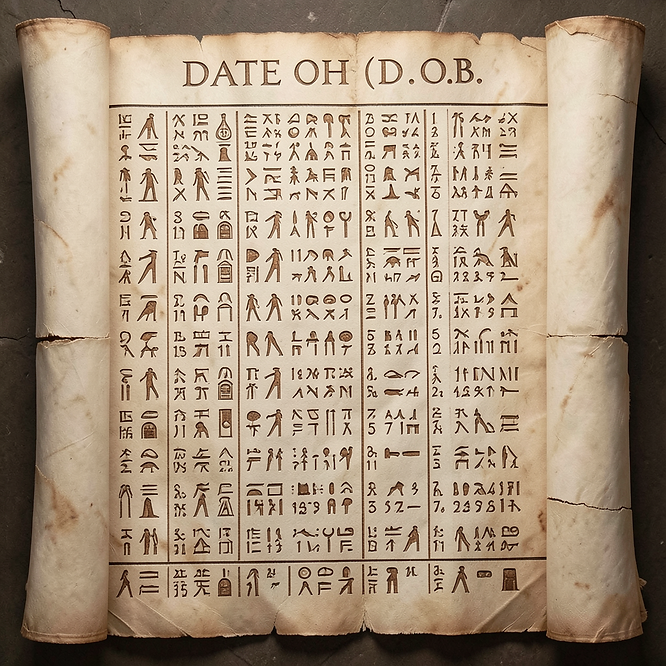
Opinions vary about the exact date of Moses’s birth and the actual surroundings of his era. Moreover, ‘the Exodus 1:8- Pharaoh mentioned as the ruler during his era cannot be accurately verified. However, Kaiser Jr., W. C., & Wegner, P.D. (2017a) contend as follows: If Moses was born about 1526 BC, then his arrival was very close to the death of the first pharaoh of the Eighteenth Dynasty, Ahmose I (ca. 1550–1525 BC) or the beginning of his son, Amenhotep I’s reign (ca. 1525–1504 BC). So how was his birth?
2.2.2Moses’s Birth
Exodus 2 vividly narrates the birth of Moses though it does not immediately capture the names of his parents but only that of his tribe namely the Levite tribe. Now, even though the young child would live to work some of the greatest supernatural wonders ever done through a mortal vessel, nothing unusual accompanied Moses’s birth. Notably, his birth has however found some interesting parallels as argued by Baker, D. A. and Desmond, T.A. (2020): The story of Moses’ birth in Exodus 2 has long been compared to the Legend of Sargon of Akkad, a Mesopotamian monarch who ruled from approximately 2371 to 2316 B.C. (Childs). So who were exactly his parents?
2.2.3Moses’s Parents
Even though they are not immediately mentioned by name in Exodus 2, they are however eventually mentioned in chapter 6. Kirsch, William A. (2011) now offers the following closure: The genealogy in Exodus 6 gives the names of Moses’ parents, Amram and Jochebed (v. 20). However, this Amram-Jochebed duality does not finalize his childhood!
2.2.4 The Two Mothers
Now, even though Jochebed was his biological mother, Moses later on had another woman whom he claimed as his mother. Meier, Levi. (1999) argues: that Moses had two mothers—a biological mother who gave birth to him, and an adoptive mother who helped save his life and then raised him. So who were his siblings?
2.2.5 Moses’s Siblings
Moses had two siblings. Kaiser Jr., W. C. (2017b) clarifies: that Moses is not the firstborn or oldest child, as the story may at first seem to imply; his brother Aaron is three years older and his sister Miriam is a young girl already by the time of Moses’ birth. So why and how was he spared seeing that all his fellow male contemporaries perished in the infanticide of his day?
2.3 Moses’s Miraculous Deliverance
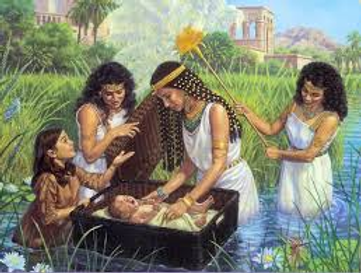
Even though it is the Lord who sovereignly intervened to have Moses’s life favorably spared, He, however, needed to put a visible signal to trigger this favor. Consequently, right from birth, Moses was found irresistibly too good to dispose of. So what did his good attributes point to? Kaiser (b) clarifies: The fact that he is a “fine child” (v.2) may relate to his physical appearance (cf. Ge 39:6) as well as to the qualities of his heart (cf. Ac 7:20, asteios tō theō, “fair in the sight of God” [NIV mg.]; and Hebrews 11:23, asteion paidion, “fair, proper child” [NIV, “no ordinary child”]). As a result, as his contemporaries were being slaughtered, Moses was boldly spared when his mother organized for him to be floated down the Nile in a basket for him to meet Pharaoh’s daughter. After embracing and adopting him, she called his name Moses.
2.3.1 Moses’s Naming
Moses’s name was not Hebraic but rather Egyptian. It was given by his adopted mother as stated in Exodus 2:10. Baker explains: Moses’s name is explained in the biblical text by the fact that he was drawn (Heb māšâ) out of the water (Ex 2:10). Although some argue that the word comes from Egyptian msi, a common element in many theophoric names of Egyptian monarchs (Griffiths; Hoffmeier, 140-41), recent studies have argued against any Egyptian derivation of Moses’s name (Muchiki). Papyri and inscriptions from the Ramesside era contain several references to Mose as a personal name, and some have in vain tried to identify one of these persons with the biblical Moses. Having quietly grown up in Pharaoh’s palace, how did the youth turn out?
2.3.2 Moses as a Youth
Following a possible tradition of his day, Pharaoh absorbed Moses as a Semitic foreigner and trained him fully in the Proto-Sinaitic writing system, a script used for inscriptions by Semitic captives employed in the turquoise mines in the Egyptian Delta; according to Baker. Acts 7:22 further verify these formative days: that he was instructed in all the wisdom of the Egyptians, and he was mighty in his words and deeds.
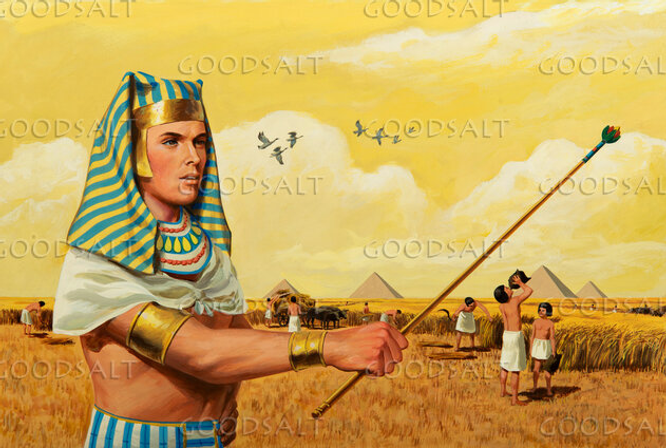
So what happened to the bustling Egyptian educated Prince? Well, he jumped from the sweet golden pan of the palace straight into the fiery lonely fires of the desert. Life changed for him suddenly and he found himself forsaking prince-hood for shepherd-hood- for another 40 years! The second period had dramatically arrived.
3. THE SECOND PERIOD: The Wilderness
3.1 Overview of this Training Period
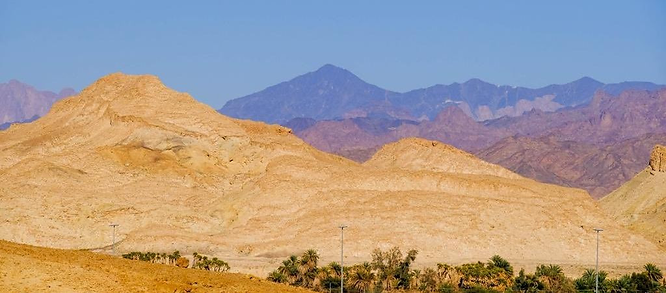
In Exodus 2:12-15, Moses fled Egypt at 40 after killing an Egyptian who had attacked a fellow Jew. What could have possibly triggered this unlikely meltdown from a well-trained Prince? Kaiser (b) suggests: Somewhere along the line Moses becomes aware of his Hebrew descent. When he is forty years old (Ac 7:23; cf. Heb 11:24–25; Jub 48:1 says he was forty-two), he strikes and kills an Egyptian for beating a fellow Hebrew (v.11). So what happened next? After escaping for his life, he found himself in Midian, which was a confederation of five seminomadic tribes (Gen 25:2; Num 31:8) [and] appear to have ranged over a wide area from the Gulf of Aqabah to the Arabian Desert and the borders of Israel according to Baker. So what exactly kept him busy for the next 40 years in this lonely desert?
3.2 The Main Events
3.2.1 The House of Jethro Campus ~ Where Leaders Are Humbled Then Made!
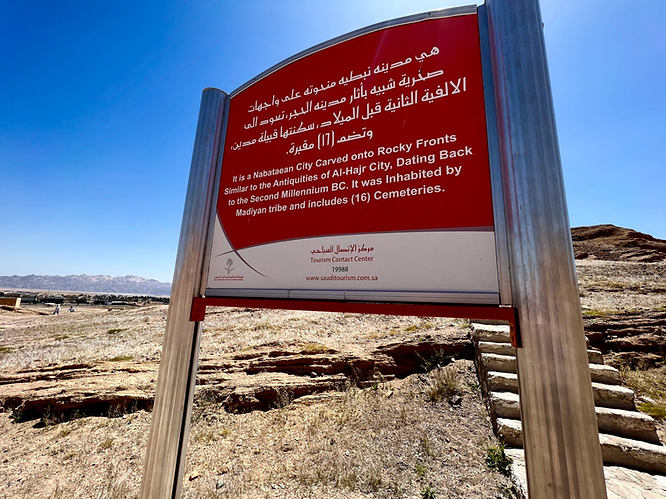
Outwardly, Midian was a still and boring desert with no sense of excitement or purpose. However, as a supernatural school of God, it had a very critical curriculum that this singular graduate would use in founding the greatest Nation (and Godly civilization) and forever change the world. So what did Moses learn in the school of the desert? Kirsch summarizes: What he learned in Midian was even more important than the best education Egypt had to offer. In Midian, he learned the ways of the wilderness where he would one day lead Israel. More importantly, he learned lessons from God in the school of the Spirit. He learned to be both emotionally and spiritually prepared to deliver Israel from their bondage in Egypt by learning dependence on God. The impetuous, desperate, self-appointed deliverer was transformed into a person who was modest, humble, and meekly dependent upon God’s empowering strength. So who were the teachers in this ‘desert school’? What subjects did they silently teach? Where were their campus and laboratories located?
3.2.2 The Student Marries
For Moses to enroll to the “House of Jethro Campus”, he needed admission which came through Jethro’s daughter Zipporah as recounted in Exodus 2:21. This narrative is however twisted when in Number 12:1, we are told that he married a Cushite woman. Despite all that, Moses’s life for the next 40 years changed the moment he committed to marriage. Through the institution of marriage, God was able to find a platform to train him for the next period of his life as he served as a humble shepherd. So who was his father-in-law?
3.2.3 The Student has a Priestly Father
Like the other Prophets coming after him, Moses’s biological father did not necessarily train him for the ministry. God raised another father for him in Jethro when he joined the “House of Jethro Campus” where he resided patiently for the next 40 years. So what did this solid teacher engage in and how did it impact Moses?
Arriving from Egypt, Moses was so steeped in Egyptian culture that when Jethro’s seven daughters first met him, he passed as an Egyptian. Therefore the runaway Prince who entered Jethro’s house was not a Prophet but rather an Egyptian. What to do? Well, the man to be used to mold him would need a title, a teaching specimen, and most importantly a lifestyle. According to Heaven, the moment Moses mastered these three, he was ready to transition from a heathen Prince to a holy Prophet. So what was Jethro’s title for his class?
Exodus 2:16: 3:1; 18:1 reveals his title as “Priest of Midian”. Once he had introduced himself with this title, the long 40-year training session could commence. What to use for the class to justify the title?
Exodus 18:12 reveals Jethro’s main teaching aid namely the sacrifices. Finally, what was his lifestyle? Exodus 18:10 says that Jethro called upon the Name of Yahweh. When Moses mastered these three patterns after 40 years, he was ready to be the greatest leader of his time for the next 40 years. So what did this bring him into?
4. THE THIRD PERIOD: The Assignment
4.1 Overview of this Ministry Period

Like the Wonder that He is, the Lord did not tell the graduate that he was officially graduated and ready to take up the mantle in the marketplace of slavery. No. With the lessons well learned, God simply showed up in the burning bush and immediately began to read the job description of His chosen man. Thus Moses arrived at the next period of his life without a dream, a vision, or even a desire. This is because since the desert of Midian had killed and buried his princely ambitions, the adopted son of Pharaoh was now ready to become the greatest human Prophet to have ever walked the earth. In death to self, he had arisen to the newness of the spirit.
Now, even though many can interpret the burning bush as an incident, to God’s eternal plan, it was nonetheless a climax of an arduous journey of training. Thus soon after this commission, the entire written history would be forced to suspend their lunch to come gaze at the wonder through the hand of a man. Meier, Levi. (1999) now hints at the next showdown: The saga of the Israelites’ Exodus from Egypt is the greatest story of liberation from enslavement ever told. It is a metaphor for all people and all times. So what life-changing events forever changed Moses and defined his ministry?
4.2 The Main Events
4.2.1 The Burning Bush
The graduation and commission ceremony did not take place in the palace of Pharaoh or even on the altar of Jethro. No. After his encounter at the burning bush, Moses was released to go and wield fire and power. Exodus 3 thus brings to an unstoppable crescendo the promises made to the Patriarchs concerning their descendants (who were now deeply groaning under slavery in Egypt). Thus the first key event of Moses’s third period was his encounter at the burning bush where he was commissioned to go vindicate the covenants made to the Patriarchs. So what language would the tin god Pharaoh hear seeing that the commissioned Prophet was simply a stammerer and a humbled prince-turned-shepherd? Well, Pharaoh would not hear the Hebrew of the humble messenger and his people but rather the power of the Hebrew God, and therefore the rod of power rather than the oration of words would have to dictate the day. It was showtime!
4.2.2 The Return of the Former Prince now Prophet
Accompanied by his elder brother Aaron, Moses stepped out into Egypt at 80 years according to Exodus 7:7 after the near-death incident which his wife resolved through the speedy circumcision of their son. Leaving his family behind (even though they later on re-joined him in Exodus 18:1–2, 6); Moses entered into Egypt and began turning tables upside down until Pharaoh finally let the people go as per the Word of the Lord. So how were the tables turned in Egypt?
4.2.3 The Meeting with Pharaoh- the acclaimed descendant of the sun
After a difficult attempt, Moses finally secured an appointment with Pharaoh and his officials and requested for a 3-day journey into the wilderness for the Israelites to go and worship God. Being hardened in heart, Pharaoh flatly refused. Consequently, he brutally flexed his muscles and doubled down on the heavy load of the Jews. This was the beginning of a ten-fold hardening of the heart which eventually led to the first nine plagues that defined this hot contest.
4.2.4The Nine Plagues for every Egyptian god!

With his heart hardened, Pharaoh’s ears consequently lacked enough air to help him hear and his eyes also became deficient in discerning. Therefore there was nothing left to do except for God to strike at the hard stone until it broke. Thus nine different times, God used Moses to strike the land of Egypt with plagues but Pharaoh would not bulge. It should be noted that all these plagues were symbols of Egyptian gods hence God revealed His purpose for destroying them completely in Exodus 9:14-16. Kirsch adds: The ten plagues of Egypt were not random acts of an angry God but a direct confrontation between the false gods of Egypt and the true God of Israel. Every plague was designed to mock the Egyptian religious system, showing the slaves the powerlessness of the false gods. Now, since Pharaoh couldn’t see or hear the nine plagues, what finally did God do?
4.2.5 The Last Straw and the Institution of the Passover
Finally, two fathers were about to experience their son’s birthdays differently. This is because as the father to the heir apparent to the throne, Pharaoh was about to forget his son’s birthday forever since the firstborn son would shortly die in a plague. In addition to this royal grief, even his officials were also just about to watch their firstborn sons die. What about Jehovah?
As the Father who claimed Israel as His firstborn son (Exodus 4:22-23), God was about to institute the official birthday of His son Israel as He smashed Pharaoh while saving Israel. Thus as Egypt mourned their dead, God together with His people was in a deep celebration. This was the final business that Israel forever conducted with Egypt! So in brief, how did this ceremony play out?
Kirsch reveals that two celebrations took place during this period namely: the Feast of Unleavened Bread at the beginning of the grain harvest when they made an offering of first fruits and the Feast of Passover on the 14th of Nisan at twilight (Leviticus 23:5). At first, each family brought the sacrifice privately, but later Jerusalem became the center of celebration. So what followed after the celebration?
4.2.6 The Long Journey and the Institutionalization of the Law
After miraculously crossing the Red Sea, Moses’s assignment took another turn whereby he ceased being a contender against Pharaoh and chose to again become a shepherd to God’s people. Whence he had previously served as a shepherd to physical sheep in the deserts of Midian, he was now about to undertake the shepherding of God’s people for almost the exact number of years as Midian! So how did he get God’s sheep ready for the feed?
4.2.7 The Tabernacle and the Ark
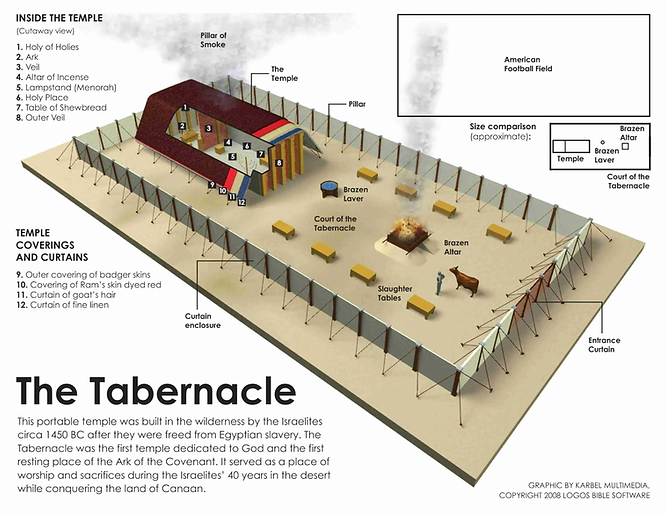
When he was in Jethro’s school waiting to graduate for his destiny, Moses had a house with learning material together with a very committed teacher as already discussed. However, here in the wilderness, the children of Israel were being taught real truths about the God of their fathers for them to be ready for their destiny in Canaan. So what were these learning elements and who was the teacher?
The classroom was called the Tabernacle, the Ark was the token for the lesson and Moses was the teacher. By the time the Tabernacle and the Ark were fully made and the lessons thereof understood, Moses had fulfilled his destiny and the people were now ready to begin theirs in the Promised Land.
4.2.8 The Golden Calf
In Exodus 32, the whole camp of Israel sins by making the golden calf and worshipping it. After the dramatic response by the devout Moses, the sin is atoned for and Moses goes back to the Mountain to receive fresh Tablets of the Law. This incident however temporary-looking was very delicate in symbolism. This is because even though the golden calf was indeed destroyed and its ashes scattered, the image and the lust it provoked in the people would nonetheless remain within the Israelites to this day. As unfaithful worshippers, it’s been a tedious battle of the golden calf versus Yahweh among the Israelites to date! Thus the incident was very prophetic of the Land and its people. So how was the spiritual journey?
4.2.9 The Progressive Evolution: From Polytheism, Henotheism and Monotheism
When they stayed in Egypt, the Jews were surrounded by many false gods like the one above. This was because the land was polytheistic. However, as they left Egypt and pursued destiny, they were continually confronted with the choice between the One True God and other gods. This is what resulted in the henotheistic conundrum above and it continued throughout Moses’s assignment. Eventually, as they now matured as a Nation in the late 8th century BC during the days of the Judean Prophets, it became clear that the whole Land and its people had no otherwise but to fully devote themselves to the One God-Yahweh. This was now the final stage of purity known as monotheism. Therefore it can be argued that one of the key motives of the wilderness and by extension, Moses’s assignment was the deliberate evolution of the people from Polytheism to Henotheism and eventually to Monotheism even though he couldn’t actualize this last ideal. Historically, few leaders have ever attained this except by special grace! So what did Moses attempt to use to realize this monotheistic ideal?
4.2.10 The Giving of the Law
Exodus 19-25 reveals the momentous Nation-making periods at Sinai. This is because a Sinai, God initiated a covenant with Israel to prepare them to become a Nation-His special Nation. Thus Sinai became significant because it created the Legal system that helped the people to distinguish between right and wrong; and helped to shape their identity as “a kingdom of priests and a holy nation”. This resulted in them becoming the “missionary people” who were ready to impact the whole earth. Finally, Sinai took them from a physical birth in Egypt into a spiritual birth in the wilderness as a Nation. Therefore without Mount Sinai, Israel would be free from Egypt but insignificant spiritually as a Nation. This was another defining moment of Moses’s assignment and seemed to have laid the ground for his eventual.
4.2.11 The “Farewell Speech”- The Succession Planning
Like George Washington who delivered his “Farewell Speech” calling for unity while warning the young nation against foreign and domestic enemies, Moses too pioneered a similar act through his final work in Deuteronomy. In this final Book, Moses centered around three themes just like Washington namely: Loyalty to Yahweh, the Blessing and the Curse, and finally, the Law. Even though all these three themes seem disjointed, they are nonetheless tied around by a singular thread of relationship between Yahweh and Israel through His special covenant. Afterward having anointed Joshua his servant to take over as the next leader, Moses died in the Mountain and was buried by the Lord. The leader had indeed led the next leader. Leadership success now knew Moses’s name!
5. The Conclusion
Rarely has an innocent child born to ordinary parents survived infanticide, lived in the palace of the oppressor for 40 years at the taxpayer’s expense, ran away into the wilderness for another 40 years, and lived at a humble priest’s expense before making the most memorable comeback in history as a deliverer-Prophet-statesman. To try and fathom these three intricate possibilities occurring at three separate but equal parts of 40 years is simply mindboggling. Yet as the usual tributes poured out after his demise, the Nation of Israel was no longer waiting for Pharoah to whip their backs and his gods to torment them but rather were now staring at the overflowing Jordan where their Promised Land lay yonder; all thanks to Moses. Moses thus used 40 years in the palace learning how to be an Executive governor of a nation, 40 years in the desert learning how to be a legislator of the Law, and an eventual 40 years of his life writing, teaching, and enforcing the Law. Thus his life from the palace into the desert and eventually into the wilderness was one long governmental narrative that few have ever matched to date. Meier believes: To think of either Judaism or Christianity without Moses is impossible; and even Islam rests on this mighty, towering, half-mythical figure. I heartily agree!
References:
Baker, D. A. and Desmond, T.A. (2020). Dictionary of the Old Testament: Pentateuch. IVP.
Briggs, Richard S. and Lohr, Noel N. Editors. (2012). A Theological Introduction to the Pentateuch: Interpreting the Torah as Christian Scripture. Grand Rapids: Baker Academic. [Kindle Edition]. Retrieved from Amazon.ca.
Dallaire, Helene. (2003). Joshua (The Expositor’s Bible Commentary). (Zondervan). [Kindle Edition]. Retrieved from Amazon.ca.
Grisanti, M.A. (2017). (Deuteronomy (The Expositor’s Bible Commentary). Zondervan Academic. [Kindle Edition]. Retrieved from Amazon.ca.
Kaiser Jr., W. C. (2017). Exodus (The Expositor’s Bible Commentary) Zondervan Academic. [Kindle Edition]. Retrieved from Amazon.ca.
Kaiser Jr., W. C., & Wegner, P.D. (2017). A History of Israel: From the bronze age through the Jewish wars. Nashville: B&H Books. [Kindle Edition]. Retrieved from Amazon.ca.
Kirsch, William A. (2011). The Pentateuch: The Five Books of Moses. Springfield: Africa’s Hope. (pdf).
Lugano, R. (2024). Introduction to the Pentateuch.docx.
Meier, Levi. (1999). Moses: The Prince, the Prophet – His Life, Legend and Message for Our Lives. Jewish Lights.
The Holy Bible (ESV).