
Why Apostle Paul Qualifies To Be Called An Authentic Missiologis
1. Introduction
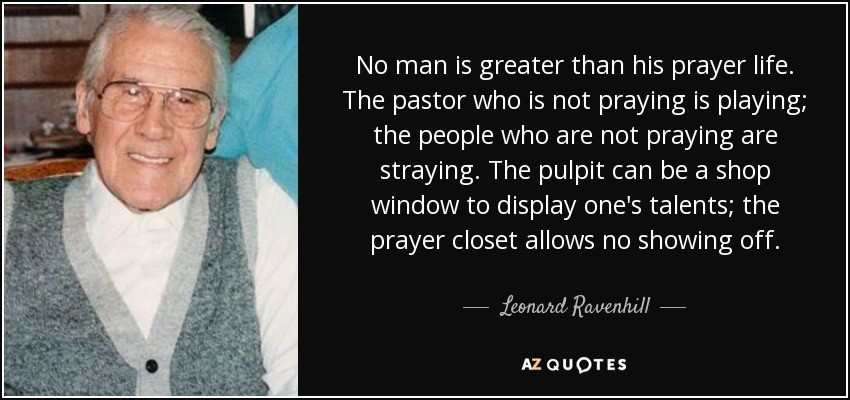
In his typical curt humor, Ravenhill, L. (2004) tells the story of a big-time preacher who called people to a night vigil, but when they came, he was nowhere to be found because he was in bed! So, who is an authentic missiologist, and what makes Paul such a peerless candidate of this title compared to this ‘bedtime’ preacher? The following discussion attempts to justify the statement that Apostle Paul qualifies to be called an authentic missiologist by citing examples. So, to begin, what informs an authentic missiologist?
2. Defining an Authentic Missiologist
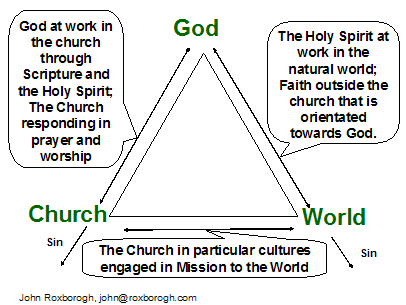
Newell, M.J. (2019) defines missiology as the reflective discipline that undergirds and guides the Church’s propagation endeavors as it advances the knowledge of the Gospel in all its fullness to every people, everywhere.
2.1 Role: Directing and Protecting
Using the analogy of a ship’s rudder, Newell argues that a missiologist is like a ship’s rudder that provides direction as the voyage progresses toward its course. Further, he offers a parallel function of missiology, namely protection akin to the protective firewall that shields it from external injurious elements that might deter its world effectiveness. Having seen the double role of a missiologist, we now turn and ask: What is the missiologist’s main task?
2.2 Main Task: The Evaluator
Apart from being active missionary agents themselves, he argues that the missiologist also has to evaluate contemporary trends, ideas, issues, and influences to determine if they align with the biblical mission entrusted to the Church. Some of these ideas and influences are internal. Others are external and often a threat. Both need to be professionally critiqued and some need to be challenged. That becomes the task of informed persons – the missiologists.
So, was Paul this kind of ‘informed person’? Was he the authentic missiologist that we all believe he was? The remaining portion now seeks to validate him as such with clear examples!
3. The Four Elements that Authenticate Paul as an Authentic Missiologist

Burke, T. and Rosner, B. (2011) list four key elements that validated Paul as an authentic missiologist: his identity, activity, missionary theology, and missionary practice. So, to the first pillar: Identity. So, what within his identity qualifies Paul to be called an authentic missiologist of his day?
3.1 a) Paul’s Identity
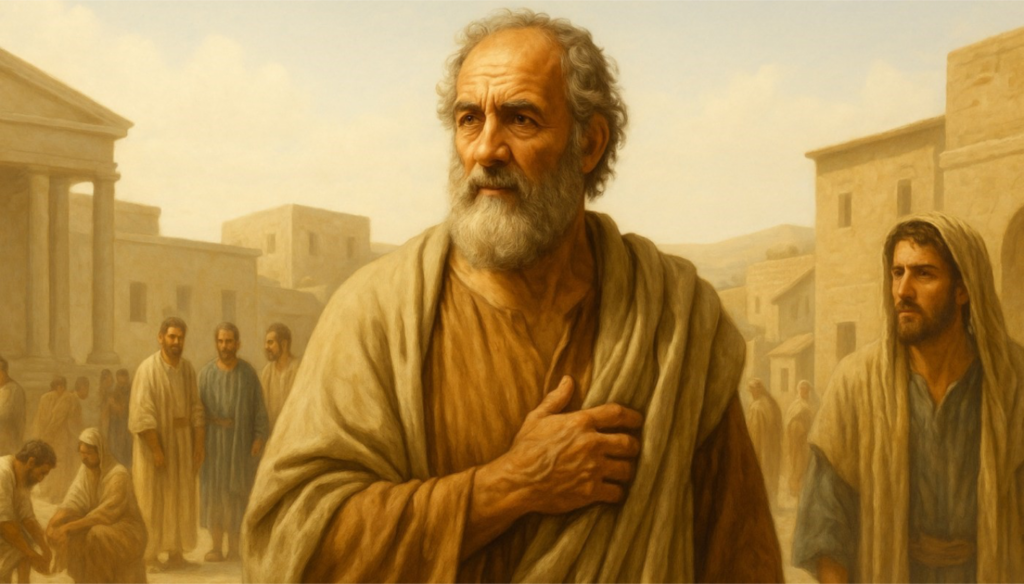
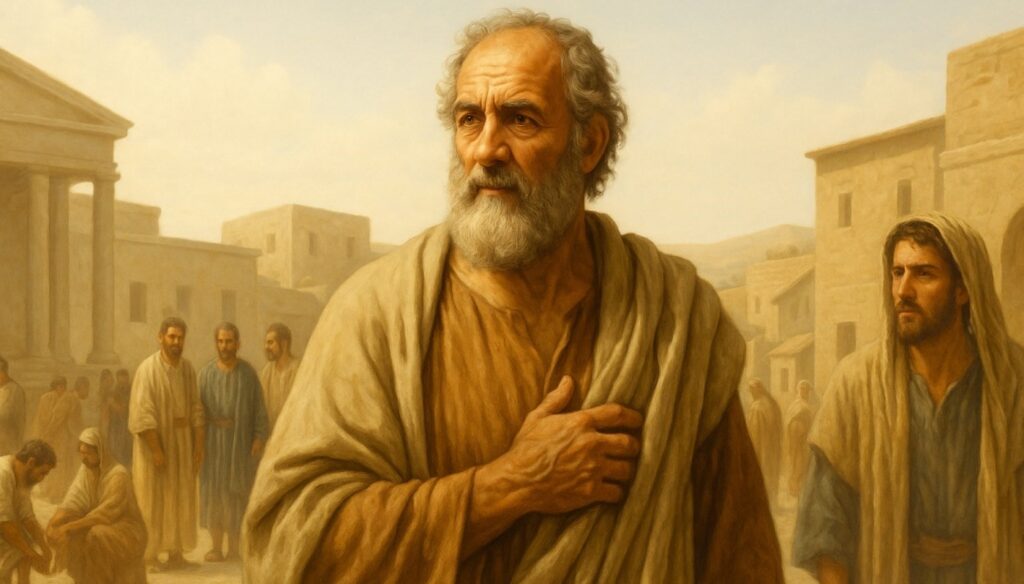
When looking at Paul’s missiological credentials by interrogating his identity, we have to realize that before he burst into the scene, there was a very pressing need that he alone was used to meet on God’s behalf. So, what was this need? It was necessary to bring the Gentiles as an entire harvest to Jerusalem to fulfill the Messianic promises in Isaiah 40-60. Paul thus became the vessel through which this prophetic hope was realized. In the words of Burke, Paul became, at that moment, an eschatological herald of the Gospel. Thus, as opposed to some of the lightweight, self-seeking celebrity ministers that straddle our streets today, Paul became the choice vessel that helped vindicate great Prophets like Isaiah. He did this when he entered Jerusalem with an incredible Gentile-harvest-trophy as the Apostle to the Gentiles, helping the Church expand Eastwards before eventually heading West. However, wait. So what were Paul’s unique activities that helped to vindicate his missiological claims?
3.2 b) Paul’s Activity
As he left Jerusalem to now head Westward as a seasoned traveling missionary, Paul took a voyage that forever vindicated him both in the book of Acts and the Epistles as a missionary per excellence and church planter whose sole motto was; ‘PREACHING CHRIST WHERE HE HAD NOT BEEN NAMED!’ From this single motto, we quickly discern his activities and ready ourselves to easily verify his credentials as an authentic missiologist. The few key activities justifying this claim are as follows:
3.2.1 i. His Main Activity and Concern as a Missionary Pastor
As a missionary pastor, Paul earned his crown as an authentic missiologist by not concerning himself with making converts but instead seeing to it that the emerging Christian churches and communities around them were, in the words of 2 Corinthians 3.18: “transformed from glory to glory.” Only a true missiologist could afford that motive and commit to such a noble activity!
3.2.2 ii. Paul’s Main Pastoral Ambition as a Missionary Pastor
Looking through the books of 1 Corinthians 1.8 and 1 Thess. 3.13; 5.23; we see Paul’s ambition as a missionary Pastor. Paul’s only ambition is that his converts will be “blameless” at the coming of Christ. What a sacred ambition! So, what does he do to achieve this ambition?
3.2.3 iii. Paul’s Primary Responsibility as a Missionary Pastor
As an ambitious missionary Pastor eager to see his converts be “blameless” at the coming of Christ, Paul now enters God’s great House. He takes on dynamic spiritual aprons as follows:
- Paul as a father:In 1 Thessalonians 2.12, to achieve his missionary Pastoral ambitions, Paul assumes the responsibilities of a father.
- Paul as a father of the Bride:Again, in 2 Corinthians 11.3, Paul assumes the bride’s father’s role to secure his ambitions.
- Paul as an expectant Mother:In Galatians 4.19, Paul assumes the role of an expectant mother.
All these were dynamic ways of Paul assuming Responsibility for the Church as a peerless authentic missiologist. So, seeing the broad scope of all these responsibilities, how did Paul conduct his operations?
3.2.4 iv. Paul’s Main Mode of Operation as a Missionary Pastor
To ensure the tremendous success of the missionary pastoral work at hand, Paul committed to three significant modes of Operation:
- Wrote letters
- Sends messengers, and
- Establishes local ministries to ensure the successful outcome of his mission.
So, what was contained in these letters? In short, what was Paul’s missionary theology? We now come to the third main thrust of Paul’s credential as an authentic missionary: Paul’s Missionary Theology.
3.3 c) Paul’s Missionary Theology
Having penned almost two-thirds of the NT, Paul was, without a doubt, a peerless human theologian. His life and ministry have influenced many, and it is a credited fact that his Gospel ministry to the Gentiles is responsible for the Gospel’s spread outside 1st-century Palestine. So, what aspect of his theology vindicated his claim as an authentic missiologist?
3.3.1 i. Missionary First before Theologian
When Paul wrote, he did not present unproven theories of a brilliant mind. No, Paul wrote from first-hand experience as a missionary. Thus, his words came from the hot crucible of experience, carrying great life and light. This was his first secret as a missionary theologian, thus authenticating his claim as an authentic missiologist.
3.3.2 ii. Wrote to Real-Time Issues
As a foremost spiritual commentator, Paul took the front seat in the spiritual affairs of his day and did not withhold his anointed opinion whenever the need arose. Unlike some leaders today who stay mum or who speak or write out of convenience, Paul earned his pay-slip as a topnotch and active theologian!
3.3.3 iii. Theology Drove Paul’s Message and Ministry Strategy
As an ardent Messianic Jew, both Paul’s teachings and practice were rooted in Jesus’s fulfillment of Old Testament narratives, themes, prophecies, and promises; claims Robinson, J. (2002). Looking at Romans 25:24-21, we see Paul regarding his ministry of preaching the Gospel where Christ had not been named as part of the flow of salvation history, fulfilling what the Old Testament had foretold, adds Robinson. All these prove just how solid his theological understanding was.
3.4 d) Paul’s Missionary Practice
Another critical facet that firmly anchors Paul’s claim as an authentic missiologist is his practice as a missiologist. As an Apostle deeply committed to doing everything in order and decency, a keen review of the outworking of Paul’s theology and mission can now reveal his missiological culture as follows.
3.4.1 i. Thorough Empowerment of the Body of Believers

As seen in Acts 202:20, 27, immediately after Paul arrived in any city, his first aim was to establish a body of believers and to train them intensely. So, what were some of the results of this? The result was in places like 1 Thessalonians 1:7-8. So, what was the next thing that he did as a missiologist?
3.4.2 ii. Taking the Spiritual Beachheads like the Synagogue
Rather than struggle to establish the body of believers in any city that he had entered, Paul often reported first to the city’s Synagogue as repeatedly seen in Acts 13:5,14-15; 14:1; 17:2, 10, 16-17; 18:4, 19; 28:17, 28. This quickly afforded him a ready audience and a soft belly to punch while fulfilling the Scripture to go to the Jew first. So, what did he do next?
3.4.3 iii. Finding a Relatable Point of Contact

As a seasoned speaker, Paul’s approach was dynamic since his audience was often varied. Thus, he goes agricultural when speaking to the peasants in Acts 14:14-18, philosophical when touting the philosophers in Acts 17:22-23, and the like. So, how did he follow up on the converts?
3.4.4 iv. Appointment of Elders
At the foundation of Paul’s ministry was his keen appointment of elders in every Church he planted. These immensely helped him with the follow-up of the flock, as seen in Acts 20:28-31, 1 Timothy 1:3-7.
3.4.5 v. Paul’s Stance on Personal Income
In 1 Corinthians 9:7-12 Paul made it very clear that even though he could expect to receive an income from preaching the Gospel, he nonetheless opted to work with his hands as seen in Acts 18:3, 20:34. This forever sealed his impeccable credentials as an authentic missiologist.
4 Conclusion
In sum, four key things, namely the person’s identity, activity, missionary theology, and missionary practice, constitute Paul’s claim as an authentic missiologist. Identity-wise, Paul met the pressing need to bring in the Gentiles as a full harvest to Jerusalem in fulfillment of the Messianic promises found in Isaiah 40-60. Activity-wise, he was a missionary per excellence and church planter whose sole motto was preaching Christ where he had not been named. As a missionary theologian, Paul was a peerless human theologian, having written almost 2/3 of the NT. His life and ministry have influenced many, and it is a credited fact that his Gospel ministry to the Gentiles is responsible for the Gospel’s spread outside the 1st century Palestine. Finally, practice-wise, a keen review of the outworking of Paul’s theology and mission can now reveal that he was a missiologist committed to doing everything in order and decency.

References:
Akin, D. (09 January, 2024). Why Theology and Missions Should Be Integrated. Southeastern Baptist Theological Seminary. Retrieved on 3 October, 2024 from https://www.sebts.edu/news-and-events/headlines/2024/01/why-theology-and-missions-should-be-integrated/#:~:text=Missions%20keeps%20the%20theologian’s%20heart,keeps%20the%20missionary’s%20head%20clear.
Bosch, David J. (1991) Transforming Mission: Paradigm Shifts in Theology of Mission. Maryknoll, New York: Orbis Books. Retrieved on 10 October 2024 from [Kindle Edition]. Retrieved from Amazon.ca
Burke, T. and Rosner, B. (2011). Paul as Missionary. 1st edn. T&T Clark. Available at: https://www.perlego.com/book/803748 (Accessed: 3 October 2024).
Davis, J. (April 11, 2016). Theology of Missions. Retrieved on 10 October 2024 from
HOLY BIBLE (ESV)
Little, C.R. (April 1, 2007). Mission in the Way of Paul: Biblical Mission for the Church in the 21st Century. Evangelism and Missions Information Service (EMIS). Retrieved on 3 October 2024 from https://missionexus.org/mission-in-the-way-of-paul-biblical-mission-for-the-church-in-the-21st-century/
Newell, M.J. (January 9, 2019). What is Missiology? Evangelical Missions Quarterly. Retrieved on 10 October 2024 from https://missionexus.org/what-is-missiology/#:~:text=Missions%20is%20a%20biblical%20task,we%20proclaim%20clear%20and%20uncompromised.
Ravenhill, L. (2004). Why Revival Tarries. Bethany House Publishers. [Kindle Edition]. Retrieved from Amazon.ca
Robinson, J. (January 28, 2002). Paul focused on missions, not theology, Southern prof argues. Southern Baptist Theological Seminary. Retrieved on 3 October 2024 from https://www.baptistpress.com/resource-library/news/paul-focused-on-missions-not-theology-southern-prof-argues/
Theology of Missions | Life Giving Words of Hope & Encouragement by Jeff Davis