
The Must-Have ‘Fertile Crescent
For All True Seekers ~ A Book Review Of Muhammad Afzal Upal And Carole M. Cusack’s Handbook Of Islamic Sects And Movements” - A Book Review
1. Introduction
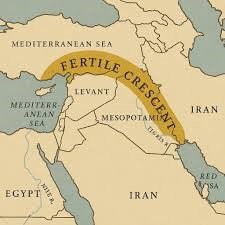
Like the famed “Fertile Crescent” coined by the famous James Henry Breasted, the University of Chicago Egyptologist, to describe the crescent-shaped fertile Western Asia and North Africa region, the great work of Upal, M. A., & Cusack, C. M. (Eds.). (2021) is another palm-held “Fertile Crescent” that helps navigate the Crescent’s religion easily. This magnificent collection captures almost all of today’s leading Islamic movements and sectarian strands in one readable compact volume, coupled with further details about Islam’s historical background. Therefore, one will quickly love the compact resource reference because it scoops the entire worldwide “Fertile Crescent” material through the expert eyes of its multidisciplinary range of scholars-contributors, enlivens it, and avails it within the palm. The work is, therefore, a heaven-sent gesture of goodwill to all those seeking to understand the sophisticated (and sometimes fearsomely closed world) of the followers of the Crescent. So, who are the authors?
2. The Author (s), And The Publisher Of The Book
Totaling 819 pages, the Handbook is a collaboration between Dr Afzal Upal and Prof Carole Cusack and was published by Brill on June 24, 2021. Currently based at the University of Wisconsin-Platteville, Dr. Afzal is a leading Indo-American computer and cognitive science expert. Relevantly, as a former follower of the Ahmadiyya movement, he has carved his statue in the area of the Islamic new religious movement by examining this same movement and lettering the impactful Moderate Fundamentalists (Berlin, 2017), which has proved to be a vital multidisciplinary study script in the Cognitive Science of Religion. During his tireless research across the northern hemisphere, he has rubbed shoulders with numerous scholars specializing in Muslim minorities. Key among these scholars is the University of Sydney’s Professor of Religious Studies, Carole Cusack, whose great editorial knack and wide-ranging interests have richly enriched the work. Just how enriching was the work?
3. Body Paragraphs
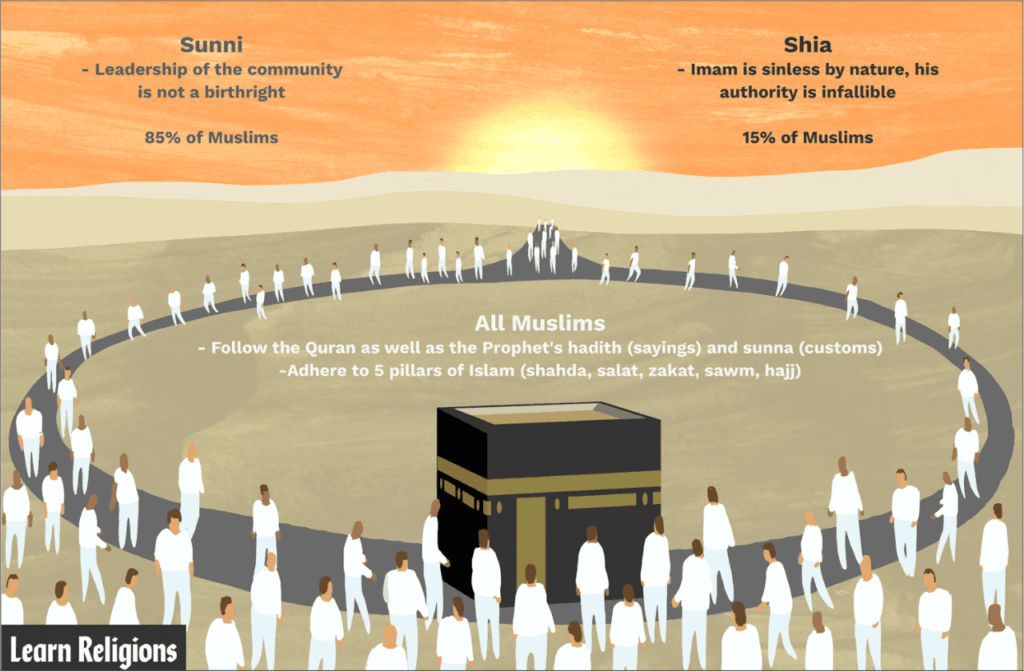
Right from the onset, one cannot avoid noticing how firm the authors grip their pen. This is because after they make a valuable introduction to the work, they immediately organize it into five major parts (almost akin to the five pillars of Islam!) These parts are as follows: PART 1 ~ Sun-ni Traditions; PART 2 ~ Shi’a Traditions; PART 3 ~ Fundamentalisms and Extremisms; PART 4 ~ Sufism and its Influences; and PART 5 ~ In Between and on the Fringes of Islam. How do the authors compact these divergent traditions within Islam that are always unbeknownst to many laities in these five (pillar-like) chapters?
4. Illustrating the Handbook’s Chapters
As can be readily observed, the pillar-like chapters of the Handbook attempt to demonstrate the Islamic reformers’ innovative attempt to walk past Islam’s monolithic boundaries to construct a relatable communal religion. Thus, each chapter vigorously explains each of these five main sects and movements in an unbiased way to show that though they may be dynamic, they still hold on to the basic pentatonic values of the original Islam. How do the authors do this?
4.1 Mini-Prefacing of Each Chapter
To achieve their primary aim of readability and wholesome schooling of their readers, the authors open each chapter with a brilliant and concise explanation of the aims of each chapter. This approach provides a bird-view scoop into the overall contents of the entire chapter and mentally readies the eager reader to navigate through with sound expectations. For instance, in the very first section of the work, Upal and Cusack, who are the work’s editors, apart from availing a short discussion of history, give a brief synopsis of Islam’s sects, movements, and developments. While at it, they further demonstrate the interrelationship between the book’s various chapters by laying out its entire abstracts of articles. So, who is in and out, and which expert breaks this news to us?
4.2Highlighting the Key Details of the Chapters

As a collection of diverse expert authors, the Handbook reads like the presenter mentions the who is who of Islamic study. Thus, we can expect to see the following in its main parts:
4.2.1 Part 1 Highlights
In part one, where they discuss the Sunni tradition, Zacharias Pieri leads the charge as he forcefully introduces groups such as the Tablighi Jama’at, which originate from India. After this, Rickard Lagervall picks the thread and discusses the now-infamous Muslim Brotherhood, whose political influence has been growing massively in some regions like the current Egypt. Caroline Tee now ties up the thread and shares her thoughts on the Turkish Gülen movement. Thus, concludes the first part.
4.2.1 Part 2 Highlights
In the second part, they follow a similar pattern as they discuss the Shi’a Tradition. Here, Mohammad Fazlhashemi counts for us the details of the Twelvers, and Farhad Daftary opens up the closed world of the mostly aristocratic-like and philanthropic Isma’ilis before Yvette Talhamy packs it up with the Alevis. This now readies us for the third part of the Handbook.
4.2.2 Part 3 Highlights
The third part is the noisy and messy one where the fundamentalists and extremists, who have oftentimes dominated the mainstream media headlines around the world, are adequately fact-checked. For those curious to find out more about them, Joas Wagemakers begins the evening tea with the Salafis before rightly handing it over to Jon Armajani to spill it for us about the Taliban. The evening rollercoaster gets even more exciting as Shaul Bartal brings to us Hamas, only for gloom to enter the room as Emin Poljar-evic frogmarches the deadly ISIS to our view. What a ride from the “Fertile Crescent”!
4.2.3 Part 4 Highlights
Part four is slightly mild but not troublesome as we now hear about the Sufi Tradition. Here, Milad Milani takes us to school and admits us to the Ni’matullahu school before Antoon Geels graduates us to the Subud. As fresh graduates from the Subud, Rory Dickson soon lulls us with the reality of Traditionalists such as the René Guénons. With this seasoning, we can now prepare to come to the book’s final part. So, what do we find?
4.2.4 Part 5 Highlights
With helpful editorial introductions to guide the readers in every part, we now prepare to tread the final terrains of the Crescent in the In Between and on the Fringes of Islam of part five. As if to get personal, the lead Author Upal takes the mantle and bears it all out about the Ahmadiyyas (which he has been part of in the past as already mentioned). Passing the baton to Edward Curtis, we afterwards read the scintillating details of Black Islam (while missing the bemusing live shows oratory of the charismatic Luis Farrakhan). As we come to a close, Victoria Arakelova gives the bush telegraph on the Yezidis. How, then, can we assess the Handbook given these key revelations?
5. Evaluating the Handbook ~ Proving if the Crescent is Really Fertile!
The Handbook’s assessment will hinge on two loci: the writer’s purpose and the critique that it evokes. To understand the writer’s purpose, we have to interrogate the what (the content), the why (the motive), and the who (the audience). So, to begin with, what was the writer’s purpose, and did he achieve it?
5.1.1 #1 Evaluating the What ~ A Multinational Study Volume of Islam?
The Handbook seeks to be a multinational study volume of Islam by highlighting Islam’s influences, variants, and neighboring movements through the multidisciplinary lenses of a wide range of scholars. These dynamic scholar-contributors do not disappoint their commission as they vividly reveal Islam’s diversity to us by portraying it as a religion of diverse ideologies and theologies, resulting in many communities holding contemporary manifestations. Thus, looking at the battery of experts littering this dense tome and what they manage to deliver, we can conclude that this goal has been achieved. What is the writer’s motive? Why does he undertake the work?
5.1.2 #2 Evaluating the Why ~ Showcasing the Dynamic Global Impact of the Various Labels of Islam?
As a handbook that captures in depth the various big and small Islamic-related sects and movements worldwide, the Handbook eagerly attempts to showcase Islam’s diversity to experts and newcomers. Do they achieve this motive? Well, the writers attained their motive after laboriously penning five broad parts with in-depth information penned by a diverse pool of run-of-the-mill scholars. Who, then, is their primary target audience?
5.1.3 #3 Evaluating the Who ~ An Audience With Neglible Islamic Background Knowledge?
As stated, the writers aim to reveal Islam’s diversity to readers with either no Islamic background or those with little background. To achieve this, they patiently explain some rudimentary Islamic concepts throughout the volume, hoping the concerned reader will find ready help. In contrast, the mature ones will feel free to skip. Again, in this regard, the Author achieves his purpose. This now leads us to critique the book.
5.2 Critiquing the Handbook ~ Justifying Why and Why Not the Crescent is Fertile!
As can be readily seen, the first part of this review’s title (“The Must-Have’ Fertile Crescent'”) already shows our obvious good bias for the Handbook. This is because it is an excellent compilation of some of the essential Islamic diverse teaching and research. Therefore, we will begin this critique by highlighting some of the work’s strengths before briefly mentioning some of its weaknesses. What are the strengths of the work?
5.2.1 The Exciting Areas of Interests ~ The Strengths
As highly progressive material, the authors show liberal academic practice by gathering a highly diversified assortment of Western scholars and leading in-house Islamic scholars. For instance, to tackle the book’s largest group, the Nahdlatul Ulama from Indonesia, the authors resorted to using a newcomer by the name of Fried Saenong. This brought sanity since the size and fame of the Nahdlatul Ulama can tend to obstruct objectivity and mature articulation from the awestruck scholar.
Another strong point the author scores is the considerate capture of the Zaydis by the witty Najam Haider. This is because this neglected group is always lumped in between the Sunna and Shi’i. The Zaydis have always oscillated between trying to accept either the caliphate of Abu Bakr or Umar while still honouring Ali’s right to succeed the prophet. To squarely enlighten us on these paradoxes, Haider offers a scintillating rendition that greatly endears her as a truly gifted scholar.
Closer home, the celebrated Nigerian Africanist Benson Igboin does not disappoint the homeland as he mops the floor with the Boko Haram. Even though Igboin does not offer alternatives to Boko Haram’s unendurable violence, he however offers an enlightening analysis of their rigid straightjacket anti-Western roots stemming from Salafist philosophies. Western Europe now does the honours through Kaarina Aitamurto, the famed Finnish researcher of Russian pagan activities, as she makes known to us the challenges faced by Islam and other sects in icy contemporary Russia. This is by highlighting the mostly unknown case of the separatist Islamic community of Tartastan that surrounds Faizrakhman Sattorov. So, are there areas of concern within the Handbook?
5.2.2 Areas of Concern ~ The Weaknesses
The book has areas of concern, such as some absence of bibliographies. Though the illustrious Mehmet Ozalph submitted his thesis and later published it in mid-2023, his monumental work should be considered for future editions of the Handbook since they perfectly capture the Gülen movement than Tee’s work. On the other hand, as a leading authority on the Nation of Islam, Dennis Walker’s 2005 epic ‘Islam and the Search for African-American Nationhood’ should have been consulted by Curtis since it could have afforded him a more profound sweep of both Elijah Muhammad and Louis Farrakhan’s ineffable contributions to this movement. Again, like the Gülen movement, any future work on the Druze must capture Daniel de Smet’s 2007 classic, the Druze Sacred Epistles, since it is presumably the best delivery tackling that movement. To top it up, Al-noqat wal daw’ir by Abdul Ghaffar should also not be forgotten alongside it. Overall, the editors have done very well because they contributed vital articles and provided good stage-by-stage models for the readers’ guidance. So how does the Handbook compare to other similar works in its genre?
6. Comparing The Handbook of Islamic Sects and Movements to other similar works
For those with an interest in alternative and emergent religions, there are other volumes under the category of Handbooks of Contemporary Religion published in the Brill series alongside Upal’s book. Some of these include the Handbook of East Asian New Religious Movements and the Handbook of Global Contemporary Christianity.
7. Conclusion
Ongoing archaeological discoveries around the “Fertile Crescent” continue to reveal newer findings about the people dwelling in that region and their culture daily. This means the famed area is an unending elastic library of fresher things. The same analogy can be applied to studying the Islamic Sects and Movements. As a handbook seeking to crystalize Islam’s diverse global identities, practices, and composition, the historical analysis provided is helpful but not final. This is because, as the roughly 1,400 years of Islamic history have shown us, there is still room for more additions, subtractions, or total revisions. That historical reality implies we can still look forward to a newer edition of the Handbook. Until then, we will be waiting to do another review with hopes that the Crescent will still be fertile!
Upal, M. A., & Cusack, C. M. (Eds.). (2021). Handbook of Islamic Sects and Movements. Brill.
uchicago news. (2025). The Fertile Crescent, explained. University of Chicago
Office of Communications. Retrieved on 27-01-2025 from https://news.uchicago.edu/explainer/fertile-crescent-explained#:~:text=The%20Fertile%20Crescent%2C%20often%20referred,%2C%20for%20some%20scholars%2C%20Egypt.