

The Growth In A Local Church
Is As A Result Of Good Leadership And Administration

1. INTRODUCTION

If ever the curious student of Church Leadership and Management desires to enter the exploratory laboratory and see for himself what it means for a church to exponentially grow; he has to be willing to take the journey into those United States. Arriving there, all he has to do is to randomly ask for the city of Houston, known for its leading role in energy, oil, and medicine. There in the plains of Texas’ largest city, he will soon be led to the home of Joel Osteen and Lakewood Church. So what will he find? He will find out that the secret to the exponential growth of one of the largest churches in the world is due to the perfect combination of good leadership and administration. The following discussion is therefore and attempt to reveal the twin roles of leadership and administration in the process of Church growth. So to begin with: how does good leadership fuel Church growth?
2. Leadership Change: The Golden Key of Good Leadership and its Impact on Church Growth
Beginning from the growth laboratory of Houston, Sinitiere P. Luke. (2009) tells us the following: Paving the way for Joel’s ascendency, John Osteen established a reputation as a fiery preacher, impassioned evangelist, charitable giver, and prolific writer. Understanding John Osteen’s Lakewood Church as part of his six-decade ministry puts Joel’s meteoric rise in historical context while chronicling an important chapter in Houston’s religious history.
From the above historic narration, we can see that the first way through which good leadership results into the growth of the local church is through their ability to manage change. So what is leadership change and how does it fuel church growth? According to Kotter, John P. (1999): [leaders] don’t make plans; they don’t solve problems; they don’t even organize people. What leaders really do is prepare organizations for change and help them cope as they struggle through it. This means that the core function of good leadership in a local church is to devote to the issue of change. To neglect the issue of change as a leader is to forfeit your very core assignment and to deny the church the opportunity to grow.
So just why must leaders of a local church be leaders and not merely managers?
According to Kotter: Managers promote stability while leaders press for change, and only organizations that embrace both sides of that contradiction can thrive in turbulent times. This shows us that good leaders help the local church to grow by managing change in turbulent times.
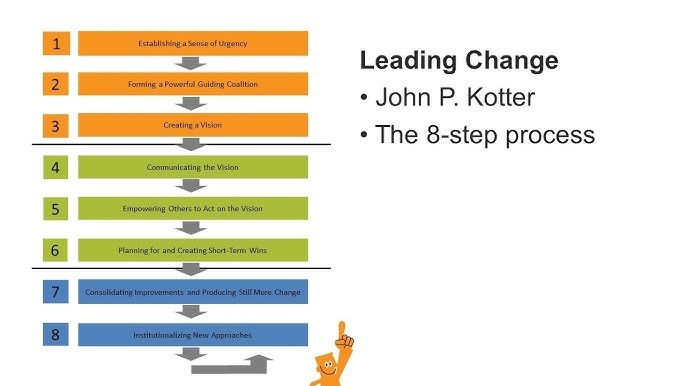
Thus leadership change safeguards a local church’s future and fuels its growth. That is the first way through which John Osteen prepared the way for his son Joel Osteen leading to the exponential growth of Lakewood fivefold after he took over. So what role did character play in all these?
3. Servant Leadership: The Key Characteristic of a Good Leader and its Impact on Church Growth
When it came to John Osteen’s character, Sinitiere tells us the following: A deacon remarked that Osteen was “sound in doctrine, humble and always willing to be led of the Lord.”
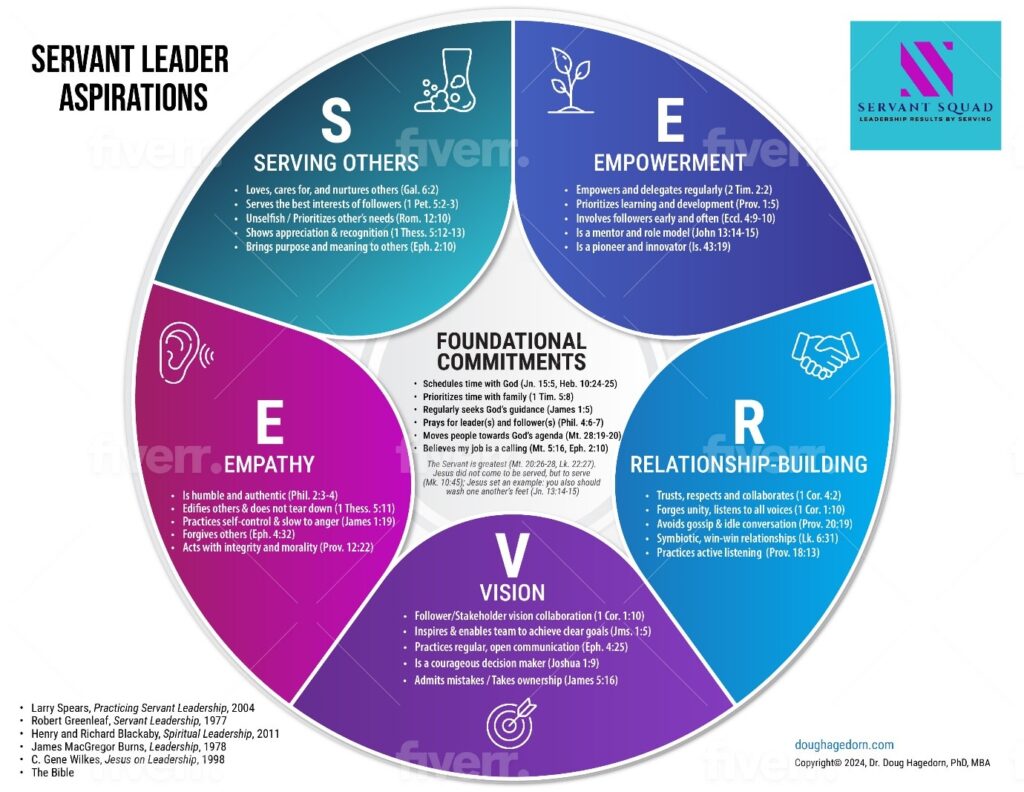
Now if the local church is going to grow, then it is not enough for it to simply have leaders. Further still, it is not even enough for these leaders to be active. What matters more than the local church having leaders who are additionally active is that they must have servant leaders if it is going to grow. What then is servant leadership? Miller, Calvin. (1997) explains: What denotes servant leadership? A strange unawareness of ego. Servant leaders are task-centered. Thus it is this “task-centered” mantra that helps them stir up church growth. So why do they pick up these great tasks and what resultant effect does it have on them?
Miller continues: Because they tend to pick great tasks, they always feel overwhelmed and inadequate. Because they feel inadequate, they seek to look beyond themselves for answers. Again in experience, this “look[ing] beyond themselves for answers” is the greatest way through which servant leaders spur church growth since it allows them access to innumerable sources of help. In addition to “look[ing] beyond themselves for answers”, servant leaders also help in church growth because they crave a strong organization above a good image.
So what is the next characteristic of good leadership that leads to church growth?
4. Competent Vision Articulation: The Clear Windscreen that Powers the Forward Drive of a Church Leading to Growth

After the miraculous healing of his daughter Lisa, John Osteen, an erstwhile practicing Southern Baptist who did not believe in Charismatic Pentecostalism suddenly had a U-turn of vision that forever changed his life and ministry course. Sinitiere reveals: These changing convictions, which contrasted sharply with Southern Baptist teaching, proved instrumental in Osteen experiencing what he called “baptism of the Holy Ghost.” After reading the New Testament account of Pentecost in Acts 2, at a prayer retreat in Houston, Osteen exhibited glossolalia. Osteen’s emerging charismatic Christianity began to reshape his sermons and books, which largely focused on speaking in tongues and offering reports of physical healing. Osteen brought this message to his church in Houston, and, in time, traveled far and wide to teach about spiritual power.
Thus the next characteristic of good leadership in a local church which greatly contributes to church growth is competence in articulating the organization’s vision. Why is this critical? It’s important to a local church growth because it is what will stir up/motivate the people to action. Without good leadership, the vision of the local church might never be well broadcasted to generate the needed growth impact. Kotter says the following on the issue of vision casting: Good leaders motivate people in a variety of ways. First, they always articulate the organization’s vision in a manner that stresses the values of the audience they are addressing. This makes the work important to those individuals. In the case of John Osteen, after embracing a new Charismatic Pentecostal vision, his ministry forever changed and the local church that he pastored greatly grew both spiritually and numerically. So how does administration lead to church growth?
5. Administration: How the ‘Unspiritual’ Supervisors Keep the Spiritual Church Growing

Sinitiere now reveals the administrative side of John: Moreover, Osteen played a leading administrative role in the San Jacinto Baptist Association from 1950-1955. He served on multiple missionary committees, including a program focused on evangelism in Mexico… He nevertheless continued to minister in official capacities in the late 1950s. At Hibbard Memorial Baptist Church, Osteen added a new building, and under his preaching membership had soared to nearly 1,000.
From the above narration, we can see that apart from the patriarch of Lakewood being a great leader, he was additionally a great administrator. These same traits he seems to have passed down to his successor son Joel who continues to fuel the growth of the ministry. So why exactly must a local church have administration in order to realize growth? As he elaborately discusses the basics of the church administration, Welch gives about four broad roles of administrators as follows: administrative planning, administrative organizing, administrative leading and administrative controlling (evaluation). We will now proceed to briefly highlight these four roles.
6. Administrative Planning: How Predetermining the Course of Action Fuels Church Growth
Firstly, further commenting on the critical issue of administrative planning, Welch states: Planning is the work we do to predetermine a course of action. Planning is concerned with the futurity of present decisions—that is, what will happen in the future with the decisions we make now. So what is the direction that the administration will follow in order to deliver on this future leading to church growth?
He adds the following: Planning is reasoning about how a church or organization will get where it wants to go. A basic task of comprehensive planning is to visualize the mission as the pastor and other leaders envision it and to see the church moving in the future. How then does administrative organizing help the local church’s growth?
7. Administrative Organizing: How the Accurate Grouping of People and the Resources Results in Best Performance and Fuels Church Growth
By administrative organizing, we simply mean that complex matters are dissolved into easily manageable portions so that the local church is able to exist harmoniously hence greatly grow. This is when real-time pairing of people and resources is done in order to realize the vision delivery. Elaborating on this, Welch says: Administrative organizing is the work of grouping people and the resources so that the work can best be performed. So what are the key things that an administrator will attempt to focus on as he/she delivers for the church’s growth?
Welch adds: The facet of estimating the future is organization driven—what kinds and who will be the people who will be integral to the ministry. Programs require people. Policies and procedures must be considered and made with the individuals involved in mind. Budgets provide the resources to build the facilities, pay the salaries, and facilitate the programs people use. This now brings us to the crucial matter of administrative leading since once organized, the local church must now be led administratively leading to growth. What is administrative leading?
8. Administrative Leading: How a Well Planned and Organized Communication Creates an Environment Conducive to Participative Action and Spurs Church Growth
Administrative leading according to Welch is: Administrative leading is the work we do to inspire and to impel people to take specific action… Administrative leading is frequently termed as directing by some management/administration writers. So what impact does it have on the local church’s growth?
Welch concludes: Thus, it can be said that leading is not simply or solely directing. It is, instead, a planned and organized communication to create an environment conducive to participative action. The administrative function of leading has five basic administrative activities: decision making, communication, motivation, selecting people, and training or developing people. How then does administrative controlling (evaluation) help the local church’s growth?
9. Administrative Controlling (Evaluation): How Focusing Events to Contribute to Preconceived Plans Ensures that Results Conform to Plans and Fuels Church Growth
Finally with the administrative team well led, the last phase of work is now in administrative controlling (evaluation). Here careful assessment is done to ensure that the local church sticks to the plan so as to realize the overall vision. Describing this critical role, Welch reveals: Administrative evaluation is the work we do to ensure that results conform to plans. It is focusing events to contribute to preconceived plans.
10. Conclusion

In conclusion: the mission of the church of simply to grow inwards and outwards towards the ends of the world. However, in order to realize this, good leadership must help to manage change thereby turning challenges into opportunities. Next good leaders are servant leaders who focus on being a slave to others and not being a tyrant. Lastly good leaders stir church growth by articulating the vision of the local church thereby motivating people in a variety of ways that is necessary to push them towards the future growth goals. In addition to this good administration will help it through its mission by managing the Fiscal Resources, the Human Resources and the Physical Resources. Fiscal Resources will finance the Church mission; Human Resources recruit, train and mobilize to achieve the Church mission and Physical Resources will contain and facilitate the Church community hence leading to growth. It will do this through: Administrative Planning, Administrative Organizing, Administrative Leadership and Administrative Control/Evaluation. The next time one visits the Lakewood Church, these twin factors will be in full display hence vindicating their exponential growth!
11. References
Brady, Kelly. (2013). Following Jesus: Defining Discipleship for the 21st Century. EQUIP. [Kindle Edition]. Retrieved from Amazon.ca
Clarke, Andrew D. (2012). A Pauline Theory of Church Leadership. Bloomsbury Publishing Plc.
Davies, Mervyn; Dodds, (2011). Leadership in the Church for a People of Hope. Graham Bloomsbury Publishing Plc.
Kotter, John P. (1999). John P. Kotter on What Leaders Really Do (Harvard Business Review Book). Harvard Business Review Press. [Kindle Edition]. Retrieved from Amazon.ca.
Lipman-Blumen, Jean. (2000). Connective Leadership: Managing in a Changing World. Oxford University Press. [Kindle Edition]. Retrieved from Amazon.ca.
Miller, Calvin (1997). The Empowered Leader: 10 Key Keys to Servant Leadership. B & H Publishing Group.
Sinitiere P. Luke. (2009). From the Oasis of Love to Your Best Life Now: A Brief History of Lakewood Church. Houston History • Vol.8 • No.3 • 9. Retrieved from houstonhistorymagazine.org
Welch, Robert H. (2011). Church Administration: Creating Efficiency for Effective Ministry. 2nd Edition. Nashville: B&H Academic. [Kindle Edition]. Retrieved from Amazon.ca